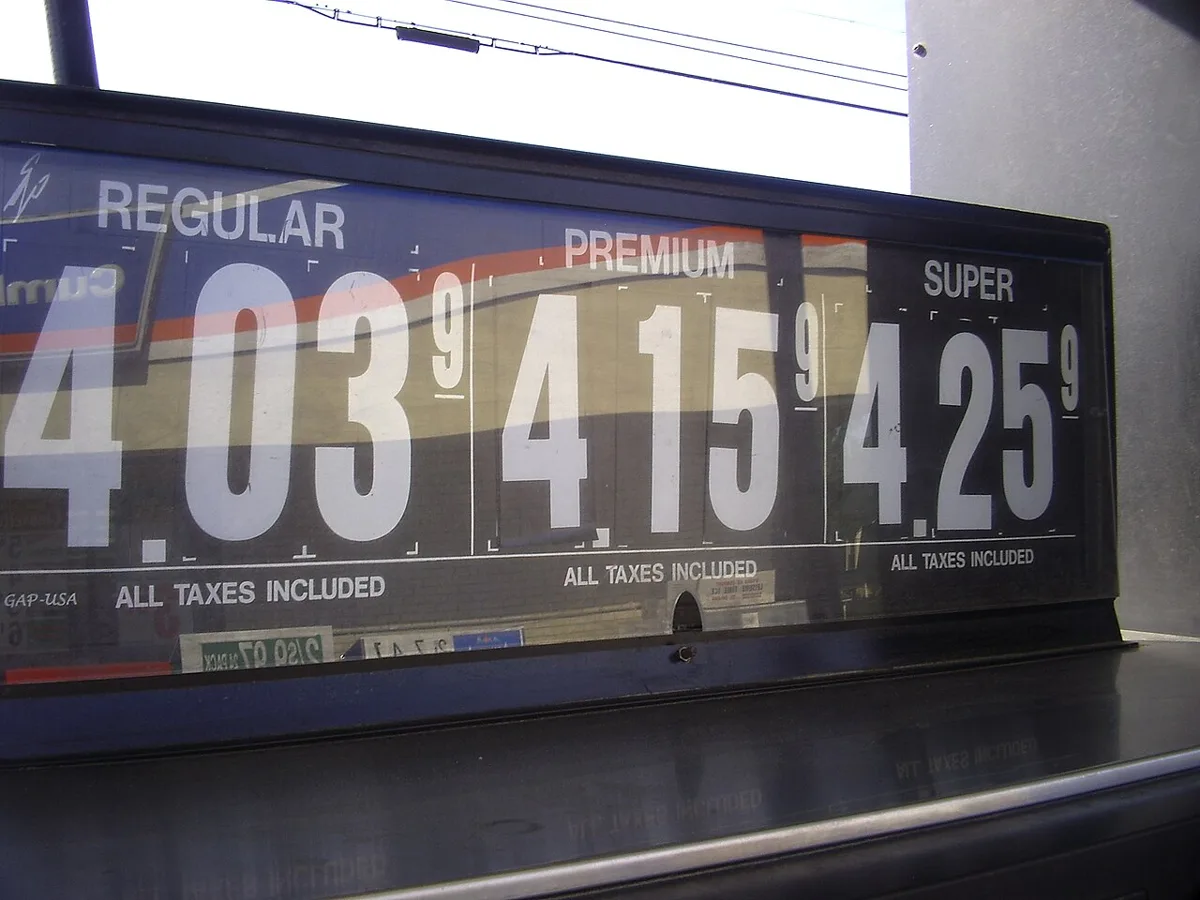
Congratulations, America. Gas is $4 a gallon again. The national average crossed that threshold today, per AAA, right on schedule with the Trump administration's decision to reignite the war in Iran and slap a naval blockade on the Strait of Hormuz. Hope you enjoy paying for this one at the pump.
Four Dollars a Gallon. Again.
The national average gas price hit exactly $4.00 per gallon today, according to AAA. If that number sounds familiar, it should. Americans have been here before, and every time we arrive, someone in Washington is busy doing something catastrophically stupid in the Middle East.
This time the culprit is a combination of reignited U.S.-Iran fighting and a naval blockade that the Trump administration has reinstated around the Strait of Hormuz. Axios is reporting that tanker traffic through the strait is being choked off, which is exactly as bad for oil markets as it sounds. About 20 percent of the world's oil supply passes through that narrow stretch of water. When it gets disrupted, the price of everything that runs on gasoline goes up. Everything.
This is not complicated geopolitics. This is supply and demand with missiles.
The MOU Is Gone and Nobody Seems Surprised
For a brief, shining moment, the U.S. and Iran had a memorandum of understanding in place. It wasn't a full peace deal, wasn't a treaty, wasn't anything with real teeth, but it was something. A framework. A temperature-lowering mechanism. Axios reports that it is now unraveling as the conflict has re-escalated, which tracks perfectly with how this administration handles diplomatic arrangements it didn't invent and doesn't like.
Oil prices have been climbing steadily as the fighting has picked back up and the MOU has fallen apart. Markets hate uncertainty. They especially hate uncertainty that involves blockades of one of the most strategically critical waterways on the planet. Traders saw this coming before most of the public did, which is why prices at the pump didn't wait for a formal declaration of escalation before starting to move.
The blockade itself is the thing that should be getting more attention. Reinstating a naval blockade of Iranian waters is not a minor diplomatic signal. That is a significant act of military force with the potential to drag in other regional actors, spike global energy markets further, and put American sailors in direct harm's way. Trump appears poised to go further still, according to Axios.
Who Gets Hurt First
Gas prices are the most visible, immediate way that military conflict abroad lands in American daily life. Most people will never see a battlefield. Everyone buys gas. When the pump hits $4, $4.50, $5, people feel it in their grocery bills, their commutes, their small businesses, their monthly budgets. The pain is real and it is distributed unevenly, falling hardest on people who can least afford to absorb it.
Low-income workers who commute long distances. People in rural areas with no alternatives to driving. Small trucking operations and delivery businesses that cannot simply pass the cost along. These are the people who pay first and most when Washington decides to mine a shipping lane on the other side of the world.
The wealthy, to be clear, will be fine. A $4 gallon of gas is an annoyance when you earn enough. It is a genuine budget crisis when you don't.
The Strait of Hormuz Is Not a Problem You Can Bluster Through
Here's what makes the Strait of Hormuz so uniquely dangerous as a pressure point. It is narrow, only about 21 miles wide at its tightest point, and Iran sits on one side of it. Iran has spent decades developing the military capacity to threaten shipping through that corridor precisely because they know what it's worth. Mines, anti-ship missiles, fast attack boats. They have all of it, and they have practiced using it.
A U.S. naval blockade does not make that capacity disappear. It puts American ships in direct proximity to it. That is a set of circumstances that can escalate from a naval standoff to an active shooting conflict faster than any press conference can explain. Axios notes that the fighting between Iran and the U.S. has already reignited. The blockade is an additional layer of accelerant on top of a situation that was already burning.
Historically, blockades are considered acts of war under international law. The U.S. is not exactly being shy about what it is doing here. Whether Congress has been consulted in any meaningful way about any of this is a question worth asking loudly.
Where This Goes from Here
Trump appears poised to escalate further, per Axios. That phrase should be doing a lot more work in the national conversation than it currently is. A president who appears poised to escalate a war that is already choking global oil supply and sending gas prices back to levels that caused genuine political pain during the Biden years is a significant story.
The question is whether $4 gas is the ceiling or the floor. If the blockade holds and the fighting intensifies, there is no obvious mechanism that brings oil prices back down in the short term. The MOU that was providing some stability is gone. Diplomatic off-ramps require two parties willing to take them. What exactly is the plan here for bringing this back under control? Has anyone asked?
The Dingo Take
Let's be direct about what is happening. The Trump administration has reinitiated military confrontation with Iran, reinstated a naval blockade on one of the most critical oil shipping corridors in the world, watched the diplomatic agreement that was keeping things from getting worse fall apart, and the most immediate consequence for ordinary Americans is that gas just crossed $4 a gallon with nowhere obvious to go but up. This is the part where someone is supposed to explain what the endgame is. We are waiting.
The $4 number matters politically even if it shouldn't drive foreign policy, because it won't stay at $4. Blockades escalate. Conflicts in the Strait of Hormuz do not typically de-escalate on their own once naval forces are actively engaged. If this drags into late summer driving season, $4 is going to look nostalgic. The people who will scream the loudest about gas prices are the same ones who will wave flags about whatever military action comes next, and they will not connect these two things in any way that inconveniences their politics.
Meanwhile, Trump appears poised to escalate. That's where we are. The war in Iran is getting bigger, the Strait of Hormuz is getting more dangerous, and the national average is $4.00 a gallon on a Sunday in July. Fill up while you can afford to.





Comments