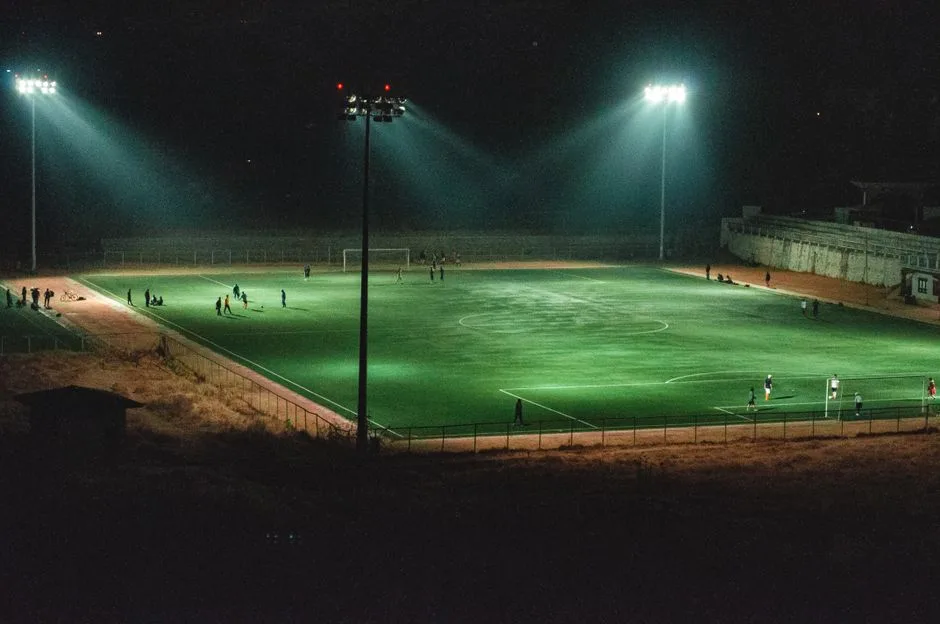
A man named Kalu Singh Tamang was once a national soccer star in Bhutan. His country ethnically cleansed him, he spent nearly two decades coaching fellow refugees in a camp in Nepal, and he died there, never making it out. Every year now, in Harrisburg, Pennsylvania, thousands of people play a tournament in his name. That's the whole story, really. Everything else is just details.
What Bhutan Actually Did
Let's be clear about the history, because it tends to get soft-pedaled in polite company. In the 1980s, the Bhutanese government enacted a series of policies targeting the Lhotshampa, the ethnic Nepali population of Bhutan. The government stripped them of legal status, attacked their culture, and ultimately forced them out of the country in what NPR's reporting describes plainly as an ethnic-cleansing campaign.
The families who fled ended up in refugee camps in Nepal, specifically the Beldangi camps in the Jhapa region. They stayed there for nearly two decades. No work permits. No path out. They built farms and schools to survive, and when the day's work was done, they played soccer. Not as a hobby. As a way to stay sane.
It took until 2007 for the United States, working with the United Nations, to initiate a resettlement program. About 85,000 refugees eventually made it to America. A significant number of them landed in Harrisburg, Pennsylvania, starting in the late 2000s, which is how central Pennsylvania became home to one of the most quietly remarkable refugee communities in the country.
The Man Who Never Made It Out
Kalu Singh Tamang had been a genuine star. Before the expulsion, he played soccer at the national level in Bhutan. After the expulsion, he became something more important: a coach. In the Beldangi camps, he taught thousands of his fellow refugees how to play. The sport became a thread of continuity between the life they'd lost and whatever was coming next.
Tamang died in the camp. He never got resettled. He never saw Pennsylvania or a suburb or a community center or any of the things his former players would eventually build. What he left behind was a generation of people who learned the game from him and carried it across an ocean.
Now his name is on a tournament. According to NPR, co-founder Birkha Gurung started the Kalu Singh Tamang Memorial Championship because, in his words, the adults in the community "are having so many problems with mental health issues" stemming from the camp years, and the tournament was a way to address that. The proceeds fund Soccer for Success, a youth program run by Asian Refugees United that serves over 50 kids a week in Harrisburg.
Building Something From Nothing, Again
Walk through Harrisburg's Bhutanese-Nepali community today and what you find is people who have done something genuinely hard: they built an entire social world from scratch, in a country that wasn't theirs, after losing the country that was. NPR's photo essay documents a jewelry shop owner who learned gold repair from his uncle. A real estate agent and U.S. Army veteran who now helps community members find homes. A boutique selling traditional Nepali and Indian clothing. A karate instructor who started teaching in the camps and kept teaching when he got here.
That last one is worth sitting with. Soke Ran Rai began teaching karate in the Jhapa refugee camps. He relocated to the United States and opened a dojo in Harrisburg, where the American and Bhutanese flags hang on the wall behind him. His students are mostly of Nepali-speaking Bhutanese origin. The dojo hosts Hindu celebrations drawing community members from Ohio and Pennsylvania both.
This is what resettlement actually looks like when it works. Not assimilation as erasure, but community as infrastructure. These are people who lost everything and then built something with the pieces they managed to carry.
The Kids Who Never Saw the Camps
Out on the soccer field in Harrisburg's hills, the children shout in English and Nepali. They chase the ball around in jerseys. Their parents watch from the sidelines. NPR describes a mother cheering for her son, which is the most universal image in sports and also, given this community's history, one of the more quietly devastating ones. That woman spent years in a refugee camp. Her son is playing soccer on a hill in Pennsylvania.
Soccer for Success is how the community passes the tradition down to a generation that has no direct memory of the camps or of Bhutan. The kids in the program may know the history intellectually, the way any child knows their family's history, but they didn't live it. What they're getting instead is the game itself, and through the game, a connection to Tamang and to everyone who came before them.
The tournament named after him brings refugees back to Harrisburg from across the country each year. It is, by any reasonable measure, an extraordinary act of collective memory sustained entirely by a community operating on its own, with very little help from anyone official.
The Dingo Take
Here's what tends to happen in American political coverage of refugees: they appear during election season as a threat, a burden, a talking point. They show up in speeches as abstractions. And then, in between the speeches, they go to Harrisburg and open jewelry shops and build soccer programs and name tournaments after men who died in camps, and none of that gets nearly the same amount of airtime.
The Bhutanese community in Harrisburg didn't ask for what happened to them. A government decided they were the wrong kind of people and removed them from their country, and the world took two decades to figure out what to do about it. Now they're here, and they're doing the kind of community-building that politicians love to invoke abstractly and then refuse to fund specifically. Asian Refugees United runs a youth soccer program serving 50 kids a week. That's real. That's happening without a prime-time segment and without a congressional resolution.
The cruelest irony in this whole story is the timing. The U.S. resettlement program that brought 85,000 people here launched in 2007. The current administration has spent considerable energy trying to make sure nothing like that ever happens again. The people who came through that program built something worth reporting on. The people who would have come through a program like it in 2026 are mostly out of luck. Kalu Singh Tamang never made it out. A lot of people won't, now, because we decided we were done trying.



Comments