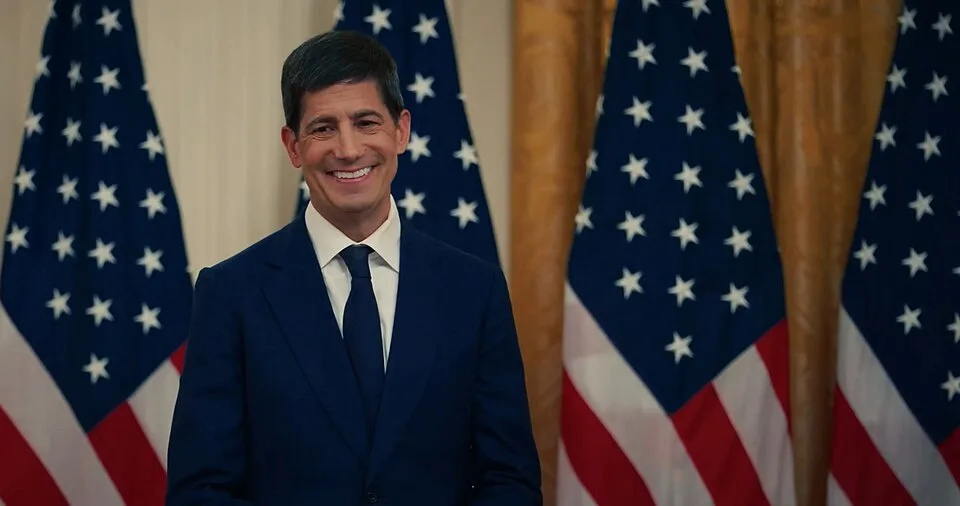
Federal Reserve Chairman Kevin Warsh spent more than five hours testifying before Congress last week and somehow managed to tell financial markets almost nothing about what the central bank is going to do next. That's not an accident. It's the strategy. And it is creating one of the stranger communication dynamics in modern central banking history.
Five Hours of Testimony, Zero Useful Signals
Here's the thing about congressional testimony: it's supposed to produce information. A senior government official sits before elected representatives, gets grilled for hours, and the public learns something about how power is being exercised. That is the basic civic transaction.
Warsh testified across two days last week, racking up more than five hours in front of Congress, according to Axios. And yet, per Axios's reporting, it was comments from several of his colleagues that gave markets and observers the clearest picture of what the Fed is actually likely to do at next week's policy meeting. The chairman of the Federal Reserve showed up, talked for five hours, and the most informative thing that came out of those sessions was... stuff other people said afterward.
The Silence Is Deliberate, Not Incompetent
To be fair to Warsh, this isn't a case of a man who doesn't know what he thinks. Axios reports that he is actively and deliberately trying to get the Fed out of the business of providing forward guidance to markets. That is a real philosophical position with real intellectual backing behind it. The argument goes roughly like this: when central banks pre-commit to future actions through their communications, they box themselves in, reduce their flexibility to respond to new information, and end up distorting markets in ways that create their own problems.
It is, as Axios notes, a strategy that preserves flexibility. There is a version of this that makes sense. Markets that have been trained for years to parse every syllable from Fed officials for trading signals have arguably become too dependent on that guidance. Jerome Powell spent years practically writing interest rate decisions on a whiteboard for Wall Street in advance. Warsh seems to think that was a problem worth fixing.
The question is whether the cure is worse than the disease.
Nature Abhors a Vacuum, and So Does Wall Street
When the Fed chair won't give guidance, the market doesn't shrug and wait patiently. It finds guidance somewhere else. Axios describes this as a central paradox of Warsh's communications strategy: because he has stepped back from signaling, markets are now filling the gap by obsessively tracking comments from other Fed officials, any Fed officials, to piece together what the institution is likely to do.
This is not a hypothetical problem. It is exactly what happened last week. Warsh sat in front of Congress for five-plus hours and said essentially nothing that moved market expectations. Then his colleagues talked, and that moved the needle. The chairman of the most powerful central bank in the world has effectively outsourced his communications function to a rotating cast of regional Fed presidents and board members, whether he intended to or not.
There is something genuinely absurd about a communications strategy that results in every Fed governor except the chairman becoming the relevant voice for what the Fed will do. It's like being the head of a band but refusing to play your instrument, so audiences just watch whoever is standing nearest to a microphone.
What Happens at Next Week's Meeting
The immediate practical stakes here involve next week's Fed policy meeting, which Axios reports is the context in which all this communication chaos is playing out. Markets are trying to figure out whether the Fed will move on interest rates, and they're doing it by scrutinizing everyone other than the one person you'd expect to be the authoritative source.
That is not a small thing. Interest rate decisions ripple through mortgage rates, business lending, employment, the cost of carrying government debt. The Fed's communications about what it intends to do are themselves a policy instrument. When those communications become a guessing game based on whoever happened to give a speech in Cleveland last Thursday, that introduces a kind of noise into the system that has real economic consequences for real people.
The Dingo Take
Look, there is a reasonable argument buried somewhere in Warsh's approach. Forward guidance got out of control. Powell's Fed spent years essentially pre-announcing its decisions, and markets became so addicted to that pipeline of information that any deviation from it sent things haywire. Breaking that dependency has some logic to it. Fine.
But here is where it falls apart: the information vacuum doesn't disappear just because the chairman stops filling it. Markets are going to get their signal from somewhere. What Warsh has actually created is a system where a bunch of different Fed officials are now the de facto forward guidance, except without any coordination or control from the top. That is not less forward guidance. That is noisier, more chaotic forward guidance, delivered by committee, with no one at the helm deciding what the message actually is.
Five hours in front of Congress. Not one clear signal. Meanwhile, the markets are out there listening to whoever will talk. This is what passing the buck looks like when the person doing it has a PhD in economics and a fancy title. The opacity is dressed up as strategy, but what it really is, is a chairman who has decided that saying nothing is a feature and not a bug. Whether the economy agrees with that assessment is going to become clear pretty soon.



Comments