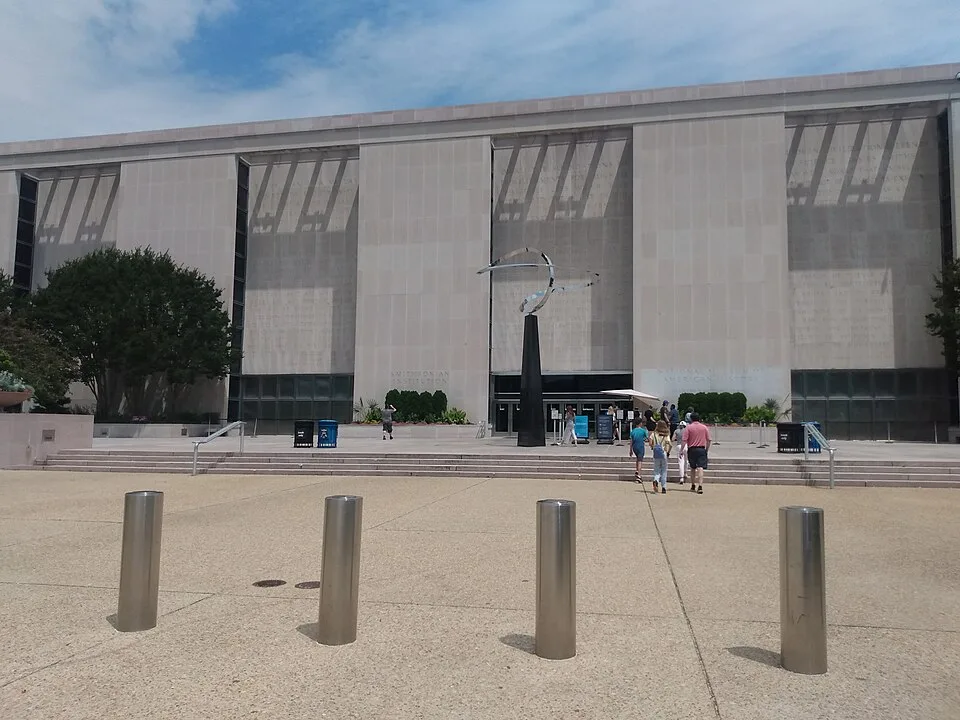
Donald Trump, the president of the United States, has signed an executive order demanding that warning signs be erected outside the Smithsonian's National Museum of American History because he doesn't like what's inside it. Not a parody. Not a fever dream. An actual executive order, signed on July 25, 2026, directing the federal government to plant signs on public sidewalks telling tourists that the museum they're about to enter cannot be trusted.
What the Order Actually Says
According to NBC News, Trump directed Interior Secretary Doug Burgum to work with the National Park Service to install "temporary signage along the NPS-maintained sidewalks and walkways used by the public to access the Museum." The signs will, in Trump's words, "correct inaccurate information presented in the Museum" and point visitors toward "locations and resources for accurate information regarding America's history."
That last part is doing a lot of heavy lifting. What locations? What resources? The White House has not said. But Trump has made clear who's providing the inaccurate version: the historians, archivists, and curators who have spent their careers building one of the most visited museums on earth.
Trump also directed OMB Director Russell Vought, the General Services Administration, and his domestic policy office to "use all available authorities" to enforce the order's policies. Which is the kind of phrase that sounds expansive because it is designed to be expansive.
This Has Been Building for Over a Year
This didn't come out of nowhere. NBC News reports that Trump signed an executive order back in March 2025 targeting federal funding for programs that present what the White House called "divisive narratives" and "improper ideology" at the Smithsonian. That order was the opening move.
Then came the July 4 White House report, which NBC News also covered, claiming the National Museum of American History "cannot be trusted to tell America's story honestly and in a way that is inspiring, unifying, and worthy of our great republic." Happy Independence Day, historians.
Friday's executive order ties these pieces together. Trump wrote that the Smithsonian's leadership "does not present American history as a shared national inheritance to be taught and celebrated, but instead views American history as a 'prime tool' to advance ideas of social justice and the radical transformation of our society." That framing is intentional. It's not an argument about facts. It's an argument about which feelings history is allowed to produce.
The Smithsonian's Response
The Smithsonian itself declined to comment Friday, per NBC News. But Smithsonian Secretary Lonnie Bunch had already addressed the White House's July 4 report in an email to NBC News earlier this month, and his response was measured, dignified, and clearly that of someone who has had just about enough.
"At the Smithsonian, our work is driven by scholarship, accuracy and an uncompromising commitment to tell the fullness of America's story," Bunch wrote. He added that the institution is "focused on what grounds us: a steadfast commitment to scholarship, nonpartisanship, independence, accuracy, and integrity."
Bunch also said the White House report "is not a fair characterization of the work and totality of the National Museum of American History." Which is the kind of thing you say when you are trying very hard to stay professional while a sitting president tells millions of tourists that your life's work is propaganda.
A Quick Note on Who Gets to Define Accurate History
The National Museum of American History houses the original Star-Spangled Banner. It has Julia Child's kitchen. It has the Greensboro lunch counter from the 1960 civil rights sit-ins. It has Thomas Edison's lightbulbs and Kermit the Frog. It is, to put it plainly, a serious institution with serious scholars doing serious work.
Trump has not specified which exhibits are inaccurate. He has not named a single fact the museum got wrong. The executive order does not point to a specific display, artifact, or interpretive label and say: this is false. What it says, essentially, is that the museum's overall framing makes him uncomfortable and makes America look bad.
That's not a factual dispute. That's an aesthetic one. And now the federal government is putting signs on the sidewalk to warn you about it.
The Mechanics of Government Propaganda Placement
Here is the part worth sitting with for a moment. The National Park Service maintains the sidewalks and walkways leading to the museum. Trump is using that jurisdictional technicality to install signage on public property outside an institution he doesn't technically control, in order to tell the public that institution is lying to them.
It's clever, in the way that bad things are often clever. He can't yet dictate the exhibits inside. So he's putting his message outside, on the path every visitor has to walk to get in. You will receive the White House's editorial opinion whether you want it or not, before you've seen a single artifact.
Doug Burgum, Russell Vought, and the GSA administrator are all now tasked with making this happen. That's the Interior Secretary, the OMB Director, and the federal government's property management agency, all deployed to put up signs telling tourists to distrust a museum.
The Dingo Take
Let's be honest about what this is. This is not a policy disagreement about curriculum standards. This is not a funding dispute. This is a president ordering warning labels placed on a museum the way you'd put a sticker on a cigarette pack, except the cigarettes in this case are the Greensboro lunch counter and the original American flag. The message is simple: history that includes uncomfortable truths is dangerous, and the government will now stand outside the door of one of its own institutions to tell you so.
What makes it especially grim is the playbook underneath it. When you can't control what's inside, you poison the well outside. You don't ban the exhibit, you discredit it before anyone walks in. You make every visitor a little more suspicious, a little more primed to dismiss what they're about to see. It's not censorship in the blunt old-fashioned sense. It's softer than that. It's just the federal government whispering doubt into the ear of every tourist family that walks past.
Lonnie Bunch responded with the kind of institutional grace that these moments demand and that these moments also make feel hopelessly inadequate. Scholarship, accuracy, integrity. Yes. All of that. And also: the president of the United States just signed an executive order calling your museum a liar. We should all be clear-eyed about how far down this road we are, and how much further it could go.




Comments