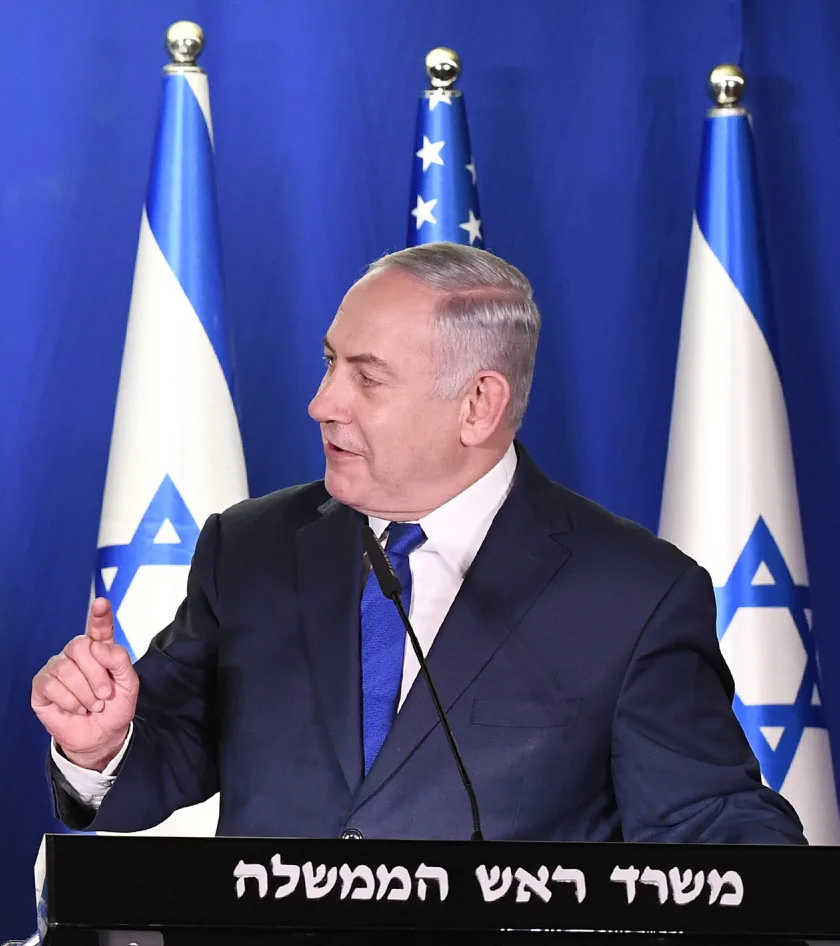
Benjamin Netanyahu didn't exactly stroll through Ben Gurion Airport with his carry-on like a normal person. The Israeli Prime Minister flew out of a military installation near Beersheba on Monday, quietly slipping toward Washington for a Trump meeting, because Iran might try to kill him if he used the regular terminal. That sentence is a completely accurate description of the world in July 2026.
The Man Who Can't Use a Normal Airport
The Times of Israel reported that Netanyahu departed from an Israeli Air Force base near Beersheba rather than Tel Aviv's Ben Gurion Airport specifically because of potential threats from Iran. To be clear: the Iranian threat posture is now severe enough that the sitting Prime Minister of Israel cannot use a civilian airport for a trip to visit the American president. That is the baseline we are working from.
This is not a normal diplomatic visit. This is a leader of a country that has been conducting joint military operations with the United States against a regional adversary, flying in a military aircraft to meet with his counterpart, while avoiding airports because of assassination risk. The fact that this reads as Tuesday is itself a story worth sitting with for a moment.
13 Nights of Airstrikes, Then a Pause
The backdrop to all of this is that the United States carried out 13 consecutive nights of airstrikes against Iran before pausing operations. Thirteen nights. That is not a surgical strike. That is not a warning shot. That is a sustained military campaign against a sovereign nation, and the American public has largely processed this the way it processes most things now, which is to say by scrolling past it.
The pause in US attacks brought Netanyahu to Washington, where he and Trump will reportedly discuss everything on the table, with Iran front and center. Netanyahu said as much in a Hebrew-language social media post before departing, framing the visit as an effort to "safeguard Israel's security, strengthen its power, and expand the circle of peace." Expanding the circle of peace is an interesting way to describe the aftermath of nearly two weeks of bombing.
The 'Constant, Constant Watch' Line
Before boarding, Netanyahu sat down with Fox News Channel's Sunday Morning Futures and gave the interview's most telling moment. He said the US and Israel had set back Iran's nuclear program by "a good few years," which sounds reassuring until you hear the next part. "But it doesn't mean that you can't have the attempt to restore it," he said, "and we have to be on the constant, constant watch so it doesn't happen."
The repetition of "constant" there is not an accident. Netanyahu has been in Israeli politics long enough to know how to use a television interview, and doubling that word was a deliberate signal. He is telling the Trump administration, on American television, that the work is not done and the pressure cannot let up. He is also, if you read between the lines, making the case for why the pause in airstrikes should not become a permanent ceasefire with Iran walking away intact.
The Graham Farewell, and What That Room Will Look Like
Netanyahu will also pay his respects to the late Senator Lindsey Graham, who died recently. Graham was one of the most reliably hawkish voices in the Senate on Israel and Iran for the better part of two decades, and his absence from the conversation about what comes next is genuinely significant. Whatever anyone thought of Graham's politics, he was a consistent and loud advocate for Israeli security interests in Congress, and that lane does not have an obvious successor.
The optics of Netanyahu arriving in Washington to both meet Trump and attend Graham's memorial are worth noting on their own terms. The people in that room will represent a very specific vision of American foreign policy, one that has just spent 13 nights demonstrating its commitment to that vision with air power over Iranian targets.
Where Things Stand With Iran
The New York Post reports that the US paused its strikes after those 13 consecutive nights, which raises the central question nobody seems to be answering clearly: what exactly are the terms of the pause? Is this a tactical halt while the two sides assess damage and regroup? Is there a diplomatic channel open? Is Iran negotiating, or is Iran quietly working to reconstitute the nuclear capabilities Netanyahu says were set back by "a good few years"?
That last framing from Netanyahu is doing a lot of work. "A good few years" is not "permanently dismantled." It is not "resolved." It is a window, and what happens inside that window, which is presumably what he and Trump will be discussing Monday, determines whether the 13 nights were the opening act or the whole show.
The Dingo Take
Here is the thing about watching Netanyahu fly out of a military base in secret to avoid Iranian assassination while heading to Washington to reassure the American president that the bombing campaign was worth it: at no point in this sequence of events did anyone in a position of actual authority stop to explain this to the American public in plain language. The United States conducted 13 consecutive nights of airstrikes against Iran. That happened. It is still happening in the sense that the pause is not a conclusion. And the political conversation around it has been conducted largely in TV interviews and social media posts in Hebrew.
There is no universe in which 13 nights of US military strikes against a country with regional proxies, a nuclear program, and a demonstrated willingness to retaliate does not qualify as a major, consequential, democracy-requires-debate kind of situation. And yet here we are, getting the strategic update from a Fox News Sunday morning show and a translated tweet. The institution of the American Congress, the one that is constitutionally supposed to have opinions about wars, has been conspicuously quiet. Lindsey Graham would have at least been loud about it. Whatever you thought of his conclusions, he showed up.
Netanyahu's "constant, constant watch" line is the honest summary of where this ends up regardless of how Monday's meeting goes. There is no clean finish line here. Iran's program got set back, not ended. The pause in strikes is a pause, not a peace. And the next few years of that "constant watch" will be conducted by two governments, one of which is led by a man currently under active indictment and the other of which changes its foreign policy priorities roughly every news cycle. Sleep well.





Comments