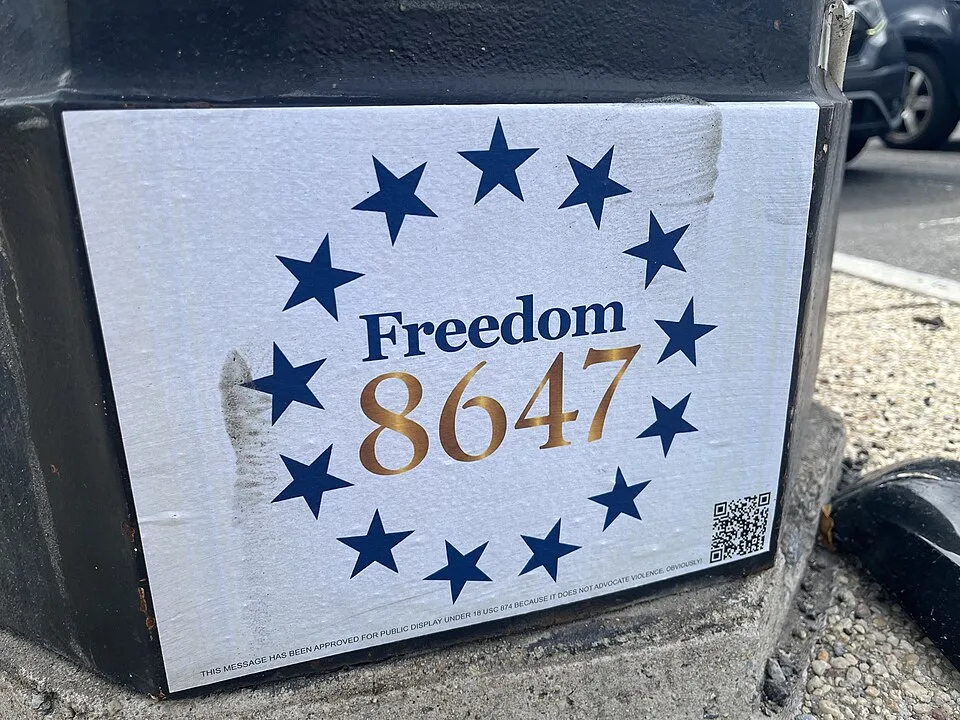
The United States Department of Justice, unable to confirm that the number 86 implies violence, consulted ChatGPT, Google AI, and a confessed murderer of nearly 20 people to build a criminal case against James Comey for posting a beach photo. This is real. This is the federal government. This is 2026.
The Seashell That Launched a Federal Investigation
Here is the full insanity in one paragraph. James Comey was on vacation in North Carolina with his wife in May 2025. He found some seashells arranged in a shape that could be read as '8647.' He photographed them, posted the picture to Instagram, and later deleted it. The DOJ charged him with threatening the president's life.
For those catching up: '86' is a common slang term meaning to get rid of something, and Trump is the 47th president. Comey said it never occurred to him the image could be read as a violent threat. The DOJ disagrees. The indictment came in April 2026, and the charges are still technically alive.
Comey's lawyers filed a motion to dismiss on Tuesday in federal court in North Carolina, arguing the case is vindictive and selective prosecution. The motion includes internal Secret Service documents and sworn affidavits. What those documents describe is, without exaggeration, one of the most embarrassing prosecutorial paper trails in modern American legal history.
They Asked Sammy the Bull. Sammy the Bull Did Not Help.
Unable to establish through any conventional legal means that '86' constitutes a violent threat, according to the Guardian's reporting on the motion, investigators did what any reasonable law enforcement team would do: they called Sammy Gravano. That's Sammy 'The Bull' Gravano, former underboss of the Gambino crime family, man who confessed to participating in 19 murders, current podcaster, and avowed Trump supporter.
Gravano was a cooperating witness in a federal mafia case that Comey himself prosecuted years ago, which is presumably why someone thought his endorsement of the '86 means kill' theory would carry legal weight. It did not go as planned. According to Comey's lawyers, Gravano told investigators he interpreted the photo to mean 'let's kill Trump,' but also said he did not believe Comey personally intended to kill Trump. So the DOJ's star witness said Comey posted a death threat that Comey did not mean as a death threat. Outstanding.
Before Gravano, agents had also interviewed two former FBI officials who worked organized crime cases. Both said they were familiar with the term '86' but could not say definitively it was ever used by the mafia to mean 'kill.' The FBI also searched records from the actual Gambino prosecution Comey ran. No references to '86.' Then they searched all FBI records going back decades. Results were inconclusive.
When the Mob Doesn't Work, Try the Chatbot
After exhausting the mob angle, the Guardian reports, investigators turned to ChatGPT and Google AI to resolve the question of what '86' means. Neither returned a definitive answer. Which is remarkable, because any bartender, line cook, or person who has watched a single episode of a restaurant drama could tell you in about four seconds that '86' most commonly means you're out of something, or you need someone removed from the premises. Not killed. Removed.
The motion also describes an unnamed person who knew the Comeys, hadn't spoken with them in years, and opened the interview by telling agents they hoped Comey went to jail. This person initially told agents '86' sounded like a menu term. Then, after hearing Rudy Giuliani claim it meant 'kill' in a mafia context, changed their mind. Rudy Giuliani, who has spent recent years losing defamation suits and giving press conferences in parking lots, was apparently a persuasive enough source that investigators updated their working theory accordingly.
Trump Was Getting Updates. The Phone Got Pinged Anyway.
The motion also alleges that while Comey and his wife voluntarily cooperated with investigators and agreed to speak with Secret Service in Washington, a supervisor was asked about illegally tracking Comey's phone on his drive back to North Carolina. The supervisor, according to his own notes attached to the filing, called it a bad idea. He wrote that an exigency exemption requires belief that someone's life is in imminent danger, and that no one believed that. He wrote that another agent agreed.
According to Comey's attorney Patrick Fitzgerald, in a sworn affidavit, the phone was tracked anyway. The couple was also followed as they drove home. The supervisor's notes say the push came from the 'number three guy at DOJ,' though the name is not given in the filing.
The Guardian reports that internal Secret Service documents show Trump himself was requesting regular updates on the investigation as it unfolded. The man who is the subject of the alleged threat was personally monitoring the investigation into the threat. Make of that what you will, though Comey's lawyers have made quite a lot of it, describing the prosecution as 'a yearslong campaign by the President to use the criminal process to punish Mr. Comey for his protected speech.'
The Pattern Here Is Hard to Ignore
This is not the first time the DOJ has come for Comey under this administration. The Guardian notes that the department also indicted Comey last year on separate charges claiming he lied to Congress. A judge threw those out after ruling the prosecutor handling them had been unlawfully appointed.
Comey, for those who need the history, was fired by Trump during the first term while serving as FBI director. He has been a vocal public critic ever since. Trump has, by all available evidence, never stopped being angry about it. And now the apparatus of the federal government has been pointed at a beach photograph.
The Dingo Take
You are supposed to believe this is a good-faith criminal prosecution. You are supposed to look at a case built on ChatGPT searches, a murderer-turned-podcaster who undercut the government's own theory, an FBI records search that found nothing, and what appears to be warrantless phone tracking that a Secret Service supervisor called a 'bad idea' in writing, and conclude that the Department of Justice is doing its job. With a straight face.
What the filing describes is the legal equivalent of building a case out of napkins and vibes. Every actual investigative tool failed. Every expert hedge. The mob guy said it wasn't really a threat. The AI gave no answer. The records search came up empty. And still, the indictment happened. Because the president wanted updates, and someone at DOJ decided to give him what he wanted.
Comey may not be a sympathetic figure to everyone. His handling of the Clinton email investigation in 2016 has earned him permanent enemies across the political spectrum. None of that matters here. What matters is whether the federal government can charge a private citizen with threatening the president based on a vacation photo, no credible evidence of violent intent, and the eyewitness testimony of a confessed killer who said the guy probably wasn't going to kill anyone. If the answer to that question is yes, the next beach trip anyone in opposition takes better not involve scrabble tiles, driftwood, or anything that could conceivably be rearranged into a number.



Comments