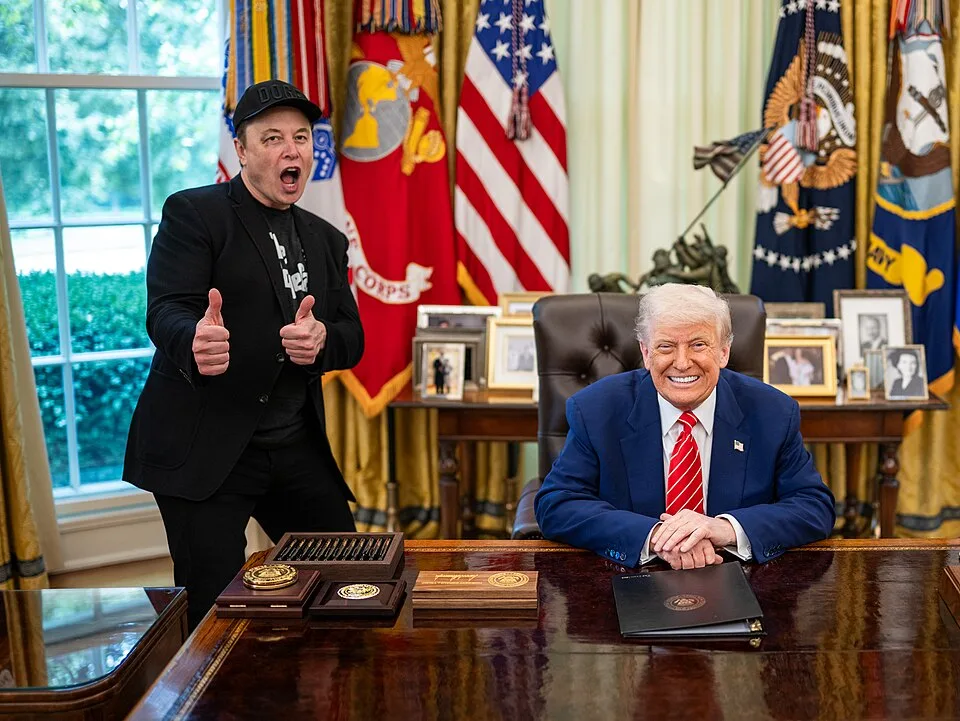
Elon Musk has apparently looked at the last two years of American political life and thought, yes, more of this please. According to Axios, Musk is reviving America PAC, the super PAC that burned through more than $260 million to put Donald Trump back in the White House, and pointing it directly at the 2026 midterm elections. The man is not done.
What America PAC Is Actually Planning
Axios broke the news that America PAC, which had gone largely quiet after the 2024 election cycle, is coming back to life with a focused midterm strategy. The plan, according to sources with knowledge of the operation, centers on door-knocking, digital advertising, and direct mail. The target: conservative voters who historically don't bother showing up in non-presidential election years.
This is not a small thing. Off-year turnout operations are unglamorous and expensive, but they work. The party that does it better almost always wins more seats. Musk is apparently aware of this, and he has the money to make it happen at a scale most political organizations can only dream about.
Musk's representatives declined to comment to Axios, which is the kind of non-denial that tells you everything you need to know. This is happening. The only question is how much it's going to cost, and given that $260 million was the price tag for one presidential race, the midterm number could still be eye-watering.
A Quarter-Billion Dollars Later, He Wants to Do It Again
Let's just sit with the $260 million figure for a moment. That is the amount America PAC spent in a single election cycle, according to Axios. One election. One man. One super PAC. For context, that is more money than most countries spend on their entire democratic process, and Musk deployed it like a guy covering a bar tab.
The result was Trump's return to the presidency. Since then, Musk spent several months at the center of the federal government as the head of the so-called Department of Government Efficiency, presiding over what critics described as a chaotic gutting of the civil service. He has since stepped back from that role. The step back, it now appears, was not a step away from politics.
Reviving the PAC signals that Musk views his 2024 investment as having paid off, and that he intends to protect that investment by keeping Congress aligned with the agenda he helped install. This is how oligarchic influence compounds. You don't just buy one election. You buy the infrastructure to keep buying them.
Why Midterms and Why Now
Midterm elections are where political momentum either gets locked in or reversed. Democrats flipped the House in 2018, two years into Trump's first term, and it made the rest of that presidency considerably more complicated for him. Republicans will be acutely aware that the same could happen in 2026, and Musk, who spent the last two years closer to the levers of federal power than almost any private citizen in American history, is clearly aware of it too.
The specific focus on low-propensity conservative voters is smart, if you're on that side. These are people who came out for Trump in 2024 because the energy was there and the stakes felt presidential-level urgent. Convincing them to vote in a midterm, for a House seat or a Senate race they may barely know exists, requires exactly the kind of ground game and digital pressure that America PAC is reportedly planning to build.
For Democrats, this is a real threat. Turnout operations funded at this scale can move races. The question is whether anyone on the left is prepared to match it, or whether they will once again show up to a financial knife fight with a strongly-worded fundraising email.
The Broader Picture Nobody Should Miss
Elon Musk is the wealthiest person on Earth. He runs Tesla, SpaceX, X (formerly Twitter), and several other companies, many of which have significant business before the federal government in the form of contracts, regulatory approvals, and litigation. He spent $260 million helping elect a president. He then worked inside that president's administration. He is now spending more money to help that president's party hold Congress.
At no point in this sequence is there anything that would be considered illegal under current American campaign finance law. That is not a defense of it. That is an indictment of the law.
The Supreme Court's Citizens United decision in 2010 opened the door to this kind of unlimited political spending by wealthy individuals through super PACs. What we are watching in 2026 is that logic taken to its natural endpoint: a single billionaire with enormous federal business interests running what amounts to a private political party infrastructure, operating in plain sight, during an election cycle that will determine the balance of power in Washington.
The Dingo Take
You are supposed to look at this and think it's just a rich guy who cares about politics. That is the frame Musk and his allies would prefer you use. It is the wrong frame.
When the richest person on the planet spends $260 million to elect a president, works inside that president's administration helping determine which federal agencies live and which get dismembered, and then bankrolls a turnout machine to keep that president's party in power, that is not civic participation. That is a hostile acquisition. The asset being acquired is the United States government. The payment method is super PAC money that faces no meaningful legal limit, because the Supreme Court decided in 2010 that spending money is speech and therefore basically anything goes.
What makes it truly bleak is that there is no obvious off switch. Musk can do this in 2026, and 2028, and every cycle after that for as long as he wants, at whatever scale he wants. The reporting from Axios describes him reviving a dormant political operation. It was never really dormant. It was waiting. That distinction matters more than any single dollar figure.

Comments