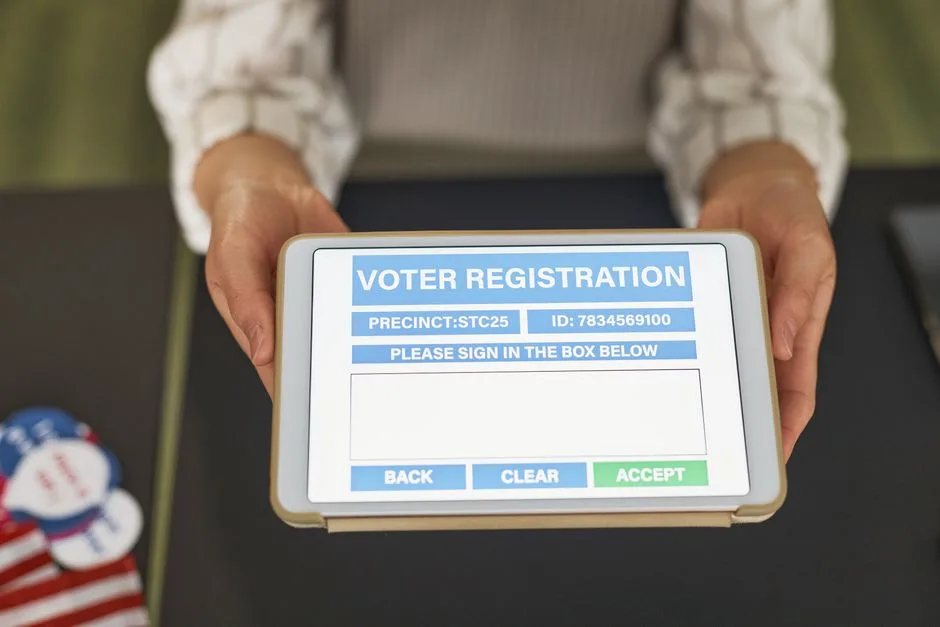
The FBI has started pulling the IP addresses of people who registered to vote online, and state officials are just handing them over. According to documents first shared with Axios, federal agents obtained the IP address of a voter who registered online in South Carolina, part of a broader push by the Trump administration to dig into voter rolls across the country. This is the kind of sentence you read twice because you want to make sure you understood it correctly. You did.
What Actually Happened Here
The FBI sent a request for the IP address of a specific individual who registered to vote online in South Carolina. State and local officials complied. That's it. That's the whole transaction. A federal law enforcement agency asked for identifying digital information about a voter, and the people holding that information said sure, no problem, here you go.
Axios obtained the documents showing this request, and the implications are worth sitting with for a moment. An IP address isn't just a technical data point. It can reveal where you live, where you work, what device you used, and in many cases, who you are with far more precision than a name on a form. Handing one over to the FBI because someone registered to vote is not a routine records request. It is surveillance.
Trump's Voter Fraud Obsession Has Found Its New Weapon
This didn't come out of nowhere. Donald Trump has spent the better part of a decade insisting, without credible evidence, that American elections are riddled with fraud. He said it in 2016 when he won. He said it in 2020 when he lost. He has said it so many times and with such relentless intensity that the entire machinery of his administration has bent toward proving him right.
The problem, repeatedly documented by courts, election officials from both parties, and independent researchers, is that mass voter fraud in American elections does not exist at any meaningful scale. The Heritage Foundation, not exactly a hotbed of liberal bias, has tracked voter fraud cases for decades and found a few thousand instances across billions of cast ballots. But when you're the president and you keep insisting the system is broken, eventually the FBI starts pulling IP addresses from South Carolina.
Axios reports that the bureau's request offers a glimpse into how federal authorities are escalating their probe of voter rolls and registration practices under direct pressure from Trump. That word, pressure, is doing a lot of work in that sentence.
State Officials Just... Went Along With It
The part of this story that deserves more attention than it's getting is that South Carolina officials complied. Without any apparent resistance. Without any public statement. Without a legal challenge or even a request for clarification about what, exactly, the FBI was looking for and why.
This is how democratic norms erode. Not always with a dramatic confrontation that lands on the front page. Sometimes it's a quiet email chain, a form submitted, a data point transferred. By the time anyone notices, the precedent is already set. The next request comes easier. The one after that easier still.
There is no publicly available evidence that the person whose IP address was handed over did anything wrong. There is no reported outcome from this particular investigation. What there is, is a federal government that now knows it can ask for a voter's digital fingerprint and get it.
What This Could Look Like at Scale
Online voter registration is not a niche activity. Millions of Americans register or update their registrations online every election cycle. It is convenient, it is encouraged by election authorities, and it leaves a digital trail. That trail now apparently leads to the FBI if someone in Washington decides your registration looks suspicious.
The criteria for what makes a registration suspicious enough to trigger an IP address request are not publicly known. Which is itself a problem. Secret criteria applied to a constitutional right, by a law enforcement agency, at the direction of a president who has publicly and repeatedly questioned the legitimacy of elections he didn't win. You don't need to be a civil liberties lawyer to see where this road goes.
The American Civil Liberties Union has spent years warning that aggressive voter roll purges and fraud investigations have a chilling effect on participation, particularly among minority voters, low-income voters, and young voters. Adding federal IP surveillance to that toolkit does not make the picture better.
The Legal Questions Nobody Seems to Be Asking Loudly Enough
Federal law, including the Stored Communications Act and various privacy statutes, governs when and how law enforcement can obtain digital records from third parties. Whether those frameworks were properly applied here, whether a warrant was obtained, whether there was any judicial oversight at all, is not yet clear from the Axios reporting.
What is clear is that voter registration data in most states carries specific legal protections designed to prevent misuse, and that the Fourth Amendment question of whether your digital footprint from a government-encouraged activity like online voter registration is fair game for a federal investigation is not a settled one. It arguably should have been litigated before any of this started.
Instead, the FBI asked, South Carolina answered, and we're finding out about it from documents obtained by a news outlet rather than from any official announcement or oversight process. That's the part that should keep people up at night.
The Dingo Take
You are supposed to believe this is about election integrity. You are supposed to accept that a president who has filed dozens of losing lawsuits contesting his own election loss, who pressured state officials to find him votes, who inspired a mob to storm the Capitol, is now deploying the FBI to protect the sacred sanctity of the ballot. Pull the other one.
This is what the weaponization of federal law enforcement against political enemies actually looks like in practice. It doesn't always come with jackboots and dramatic music. Sometimes it's a quiet records request, a cooperative state official, and an IP address transferred without fanfare. The target isn't fraud. The target is the voter registration system itself, and the chilling effect this kind of scrutiny creates on people who might think twice before clicking 'submit' on a government form.
If the FBI wants to investigate actual voter fraud, nobody serious is stopping them. But fishing for IP addresses from online registration databases, under pressure from a president who has made abundantly clear he believes any election result he dislikes is fraudulent, is not an investigation. It's a message. And the message is: we are watching.





Comments