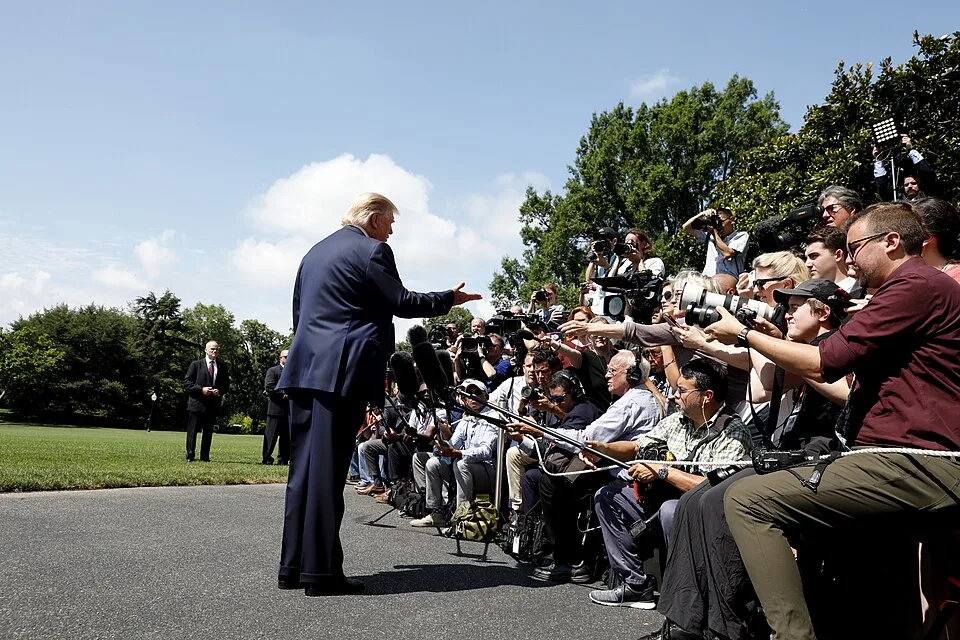
In a single breath on Friday, President Donald Trump told reporters the $1.8 billion 'anti-weaponization fund' for January 6 defendants is dead — and then said he wishes it weren't. That's not a nuanced policy position. That's a man describing a corpse while actively performing CPR on it.
The Quote That Torched a Cabinet Nominee
At a Camp David Cabinet meeting Friday, Trump was asked point blank whether the fund was dead. "It is dead, but you know, I wish it weren't," he replied, according to NBC News. "To be honest with you, I think people were horribly treated, horribly abused. This has nothing to do with Todd."
It has everything to do with Todd. Todd Blanche, Trump's acting Attorney General and nominee to make that title permanent, testified at his Senate confirmation hearing this month that the administration was abandoning the fund. It was dead, Blanche said under oath. Done. Gone. A closed chapter. Then his boss went on camera and said he wishes the chapter were still open.
Blanche is now almost certainly not getting confirmed before the Senate leaves for its five-week summer recess next week. The chamber doesn't return until after Labor Day. So the nation's chief law enforcement job stays in limbo, held by a man whose nomination his own president just casually undermined on live television.
What Exactly Is the Anti-Weaponization Fund, and Why Is It So Radioactive
The fund was created through a settlement between Trump and the IRS — the same IRS his administration nominally controls — and would funnel $1.8 billion in taxpayer money to January 6 defendants and others Trump claims were unfairly targeted by the federal government. The settlement also, conveniently, includes an agreement that the IRS will not prosecute Trump, his family members, or his businesses over any tax claims through May of this year, NBC News reports.
A federal judge has already torched the whole arrangement. U.S. District Judge Kathleen Williams found earlier this month that the IRS lawsuit that produced this settlement was brought in "bad faith" and for an "improper purpose," and described it as "an attempt to use the Court to provide some legitimacy to an agreement to confer immunity to people and entities affiliated with the President" while spending billions of taxpayer dollars. On Friday, Trump, Don Jr., Eric, and the Trump Organization filed notice they were appealing that ruling.
So to recap: a judge called this a scheme to launder immunity through a fake lawsuit. The administration said it was dead. The president said he wishes it were alive. The family is now appealing the ruling that killed it. Sure. Totally normal governance.
Two Republicans Are Holding the Line, and Trump Is Furious About It
Senators John Cornyn of Texas and Thom Tillis of North Carolina, both members of the Senate Judiciary Committee, are blocking Blanche's confirmation over the fund. A single Republican defection on the committee means Blanche's nomination cannot advance to the full Senate. Both men have also called for the IRS immunity deal to be narrowed.
Trump, being Trump, went to Truth Social on Friday morning to attack Cornyn specifically. The framing was that Cornyn only has a problem with the fund now because Trump endorsed Ken Paxton in the Texas Republican primary, and Paxton beat Cornyn in May. "John Cornyn never had a problem with the so called 'Fund'... until after I decided to Endorse and Support his Republican Primary opponent in Texas, who easily won the Nomination," Trump wrote, according to NBC News. He also described January 6 defendants as "great American Patriots who were hunted down like dogs."
Cornyn didn't respond directly, but retweeted GOP strategist Steven Duffield, who wrote: "This does not sound like citizen Trump has agreed to end the Fund." Tillis was more direct. He posted Friday that "the President made it clear today that the so-called Anti Weaponization Fund is still alive, which is exactly why we are attempting to formally end it." He also called out "an incompetent personal advisor to the President" for refusing to amend the settlement, and added: "Anyone who attacked law enforcement should still be in prison, not getting a check from the federal government."
Grassley Punted, and the Clock Is Running Out
Senate Judiciary Chairman Chuck Grassley had scheduled a Thursday vote to advance Blanche's nomination and was forced to pull it when no resolution materialized. NBC News reports Grassley said he remained committed to finding a path forward and was "not going to consider any other options."
Cornyn, Tillis, and Blanche met Thursday afternoon for 45 minutes, and a source familiar with the meeting told NBC News the atmosphere was positive and collaborative. That meeting seems to have accomplished very little, given that Trump walked into a camera Friday morning and said the quiet part loud.
The administration has not put anything in writing committing to abandon the fund permanently — no formal document, no amended settlement, nothing. That gap between Blanche's sworn testimony and the absence of any paperwork backing it up is exactly what has Cornyn spooked. "What it suggests to me is they are looking for an out to do something different than what Todd Blanche testified to at his hearing," Cornyn told reporters Thursday. "And that's a problem."
This Could Get Worse Before It Gets Better
Cornyn noted that he and Tillis aren't the only Republicans with concerns — they're just the ones on Judiciary. "We're just on the front line because we're in the Judiciary," he said, per NBC News. Senator Bill Cassidy of Louisiana, another Republican whom Trump successfully worked to defeat in a primary, is also reportedly watching the situation closely.
With the Senate heading out the door for five weeks, there is no realistic path to confirming Blanche before September at the earliest. That assumes the fund issue gets resolved, the IRS immunity question gets addressed, and Trump stops publicly eulogizing a policy he claims is already dead. None of those are safe assumptions.
The Dingo Take
You are supposed to believe this is a communication breakdown. A simple misunderstanding between a president and his acting AG. A clumsy off-the-cuff remark that doesn't reflect actual policy. That is not what this is. Trump knows exactly what he's doing. He gets to keep the fantasy of the payout fund alive for his base, watch his nominee twist in the wind, and then blame Republican senators — two of whom he just helped kneecap in primaries — for the whole mess. It's petty, it's destructive, and it costs him nothing he cares about.
The underlying story here is genuinely alarming if you slow down long enough to look at it. A federal judge found that the president's family used a court filing as a vehicle to manufacture their own tax immunity while lining up $1.8 billion in public money for people convicted of attacking the Capitol. That judge used the phrase "bad faith" and "improper purpose." The response from the White House was to appeal the ruling and have Trump say on camera that he wishes the whole thing were still happening.
Todd Blanche, for what it's worth, appears to be a genuine victim of his client's inability to stay quiet. He testified truthfully, met with skeptical senators in good faith, and is now watching his confirmation collapse because the man who nominated him cannot stop publicly resurrecting the exact policy Blanche swore was buried. There's a lesson in here somewhere about the particular hazards of working for Donald Trump. Blanche, of all people, should have already learned it.



Comments