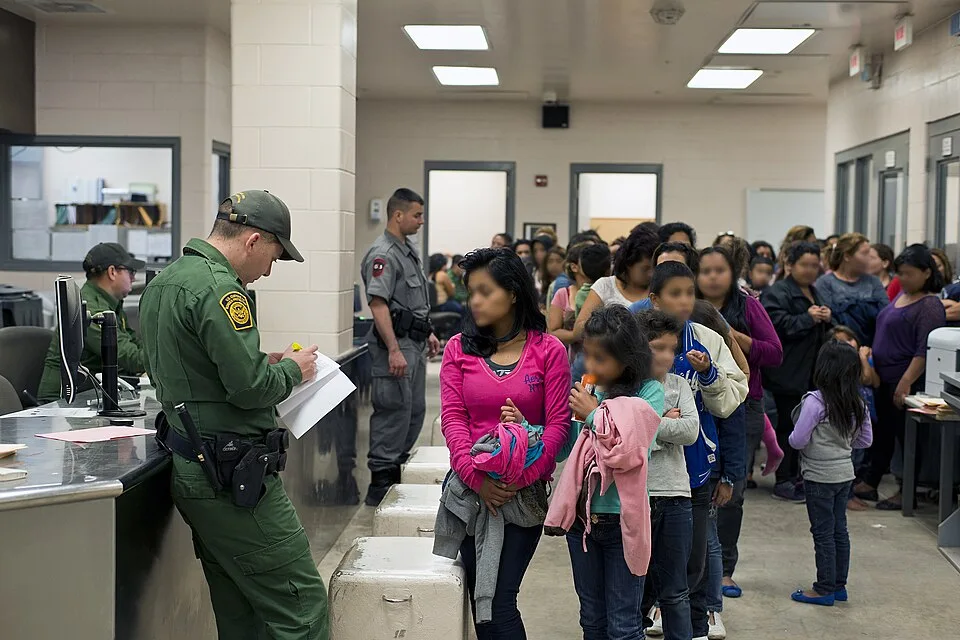
The Trump administration has effectively stripped legal representation from an estimated 26,000 migrant children — kids who crossed the border alone — by letting a federal contract expire on Friday after demanding attorneys hand over confidential client information those attorneys are legally prohibited from sharing. Without lawyers, unaccompanied children win the right to stay in the United States less than 1% of the time. The administration knows this.
How You Defund Kids' Lawyers Without Technically Defunding Kids' Lawyers
Here is the mechanism, because the details matter. For over two decades, federal law has required the U.S. to protect children who cross the border alone, on the theory — a fairly uncontroversial one, until recently — that children traveling without parents are uniquely vulnerable to exploitation, trafficking, and abuse. A network of nearly 100 legal nonprofits, funded by Congress and managed through the Office of Refugee Resettlement, has provided those kids with legal services.
In November, ORR stopped paying those nonprofits. Not because the work wasn't being done. Not because Congress pulled the funding. According to NPR, ORR halted payment after the legal groups refused to turn over confidential information about their child clients — information covered by attorney-client privilege. The lawyers said no. The government said fine, no money.
The Acacia Center for Justice, the nonprofit that manages the legal services contract, put it plainly in a statement last week: 'The government is withholding payment for work that has already been performed in order to extract confidential information about kids, information the government has no right to.' The contract expired Friday. ORR did not renew it.
One Percent. Read That Again.
Alexa Sendukas, an attorney at the Galveston-Houston Immigrant Representation Project, told NPR what happens to unaccompanied children who go into immigration court without a lawyer: they win the right to stay in the United States less than 1% of the time. Less than one percent. That is not a statistic that leaves a lot of room for debate about what this policy is designed to do.
'What this administration is asking us to do now is to turn our backs on them completely,' Sendukas said. 'And they will undoubtedly be sent to harmful, dangerous situations. And I worry some will be killed if they lose their lawyers.' That is an attorney, with direct knowledge of these cases, saying on the record that some of these children may die as a result of this decision. Neither ORR nor the White House responded to NPR's requests for comment.
The Damage Already Done
The contract expiring Friday is the finish line of a crisis that has been building for eight months. Legal nonprofits have been operating without federal pay since November, and the strain is showing. ProBAR, a project of the American Bar Association that provides legal services to children in ORR care, laid off more than 20% of its staff this week. Lauren Fisher Flores, ProBAR's legal director, confirmed the cuts in a statement on July 31.
A coalition of legal nonprofits filed a lawsuit last year demanding the government pay what it owes — approximately $65 million for work already completed — and keep paying for future services. That case is still working through the courts. In the meantime, the staff is gone, the contract is dead, and roughly 1,800 children were sitting in ORR custody in June, held for an average of 194 days before being released to sponsors, according to agency data NPR obtained.
On July 29, Acacia received a notice from the federal government hinting that ORR might pursue a new contract with different legal providers. Who those providers might be, what they'd be required to do, whether they'd be willing to violate attorney-client privilege to get paid — none of that has been answered. 'It is not clear who the new contractor will be,' Bettina Rodriguez Schlegel of Acacia told NPR. 'And so there remains a lot of uncertainty and a great deal of concern.'
The Lawyers Showing Up Anyway
Here is the part of the story that doesn't fit the administration's apparent expectation of how this would play out. Some of the attorneys say they are going to keep showing up, contract or no contract, paycheck or no paycheck.
'We have an ethical responsibility. We can't just drop a case. If you have a hearing tomorrow, we can't just not show up because the government decided to stop paying us,' Mickey Donovan, director of legal services at Immigrant Defenders Law Center, told NPR. 'So we'll be there in court on Monday, to introduce ourselves to kids and try to do what we can to prevent their deportation.' That is a lawyer explaining that their professional ethics are stronger than the federal government's leverage. The administration's strategy of starving the nonprofits to force compliance has not, at least in some cases, worked the way they hoped.
But goodwill and professional ethics do not pay rent or staff salaries. You cannot run a legal services organization on moral obligation alone, and the administration is counting on that math eventually winning out.
The Law That's Supposed to Prevent This
It is worth being specific about the legal framework here, because the administration's position requires pretending it doesn't exist. A 2008 law — passed with bipartisan support, signed by a Republican president — requires ORR to promptly place unaccompanied children with sponsors and to ensure those children receive legal protections. Children who are victims of trafficking or abuse are entitled to special protections under that law.
For years, attorneys from the network provided presentations to children arriving in ORR custody, explaining their rights and screening them to identify which protections they qualify for. Some of that screening will now stop. Which means some children who are legally entitled to trafficking protections will not be identified as trafficking victims, will not receive the protections the law guarantees them, and will be deported into whatever circumstances they were fleeing. That is not an accident. That is the outcome this policy produces.
The Dingo Take
Twenty-six thousand children. Let that number sit for a second. Not 'migrants.' Not 'border crossers.' Children, unaccompanied, who showed up at the border alone and were placed into a legal system that, until last Friday, at least made a gesture toward protecting them. The Trump administration's method here wasn't a frontal assault — they didn't pass a law stripping these kids of representation. They demanded attorneys violate their professional ethics and their clients' legal rights, waited for the attorneys to say no, then used that refusal as a pretext to stop paying and eventually kill the contract. Clean hands. Plausible deniability. Twenty-six thousand children without lawyers.
The cruelty is not incidental to the policy. It is the policy. An administration that wanted to reduce illegal immigration while treating vulnerable children humanely would not choose a strategy that, by the lawyers' own numbers, results in deportation more than 99% of the time for kids without representation. It would not sit on $65 million in payments for work already done in order to leverage attorneys into surrendering privileged client information. It would not respond to questions from NPR with silence. These are not the actions of a government that made a hard budgetary call. These are the actions of a government that wants the children gone and found a way to make lawyers the obstacle.
The attorneys showing up on Monday anyway, unpaid, are doing something that deserves to be named plainly: they are filling a gap that the federal government deliberately created, at personal financial cost, because the alternative is children going in front of immigration judges alone. The administration is betting the organizations eventually collapse under the financial pressure. Some of them already are. The question is what the courts do with the pending lawsuit, and how fast they do it, because the clock on these kids runs in days, not months.




Comments