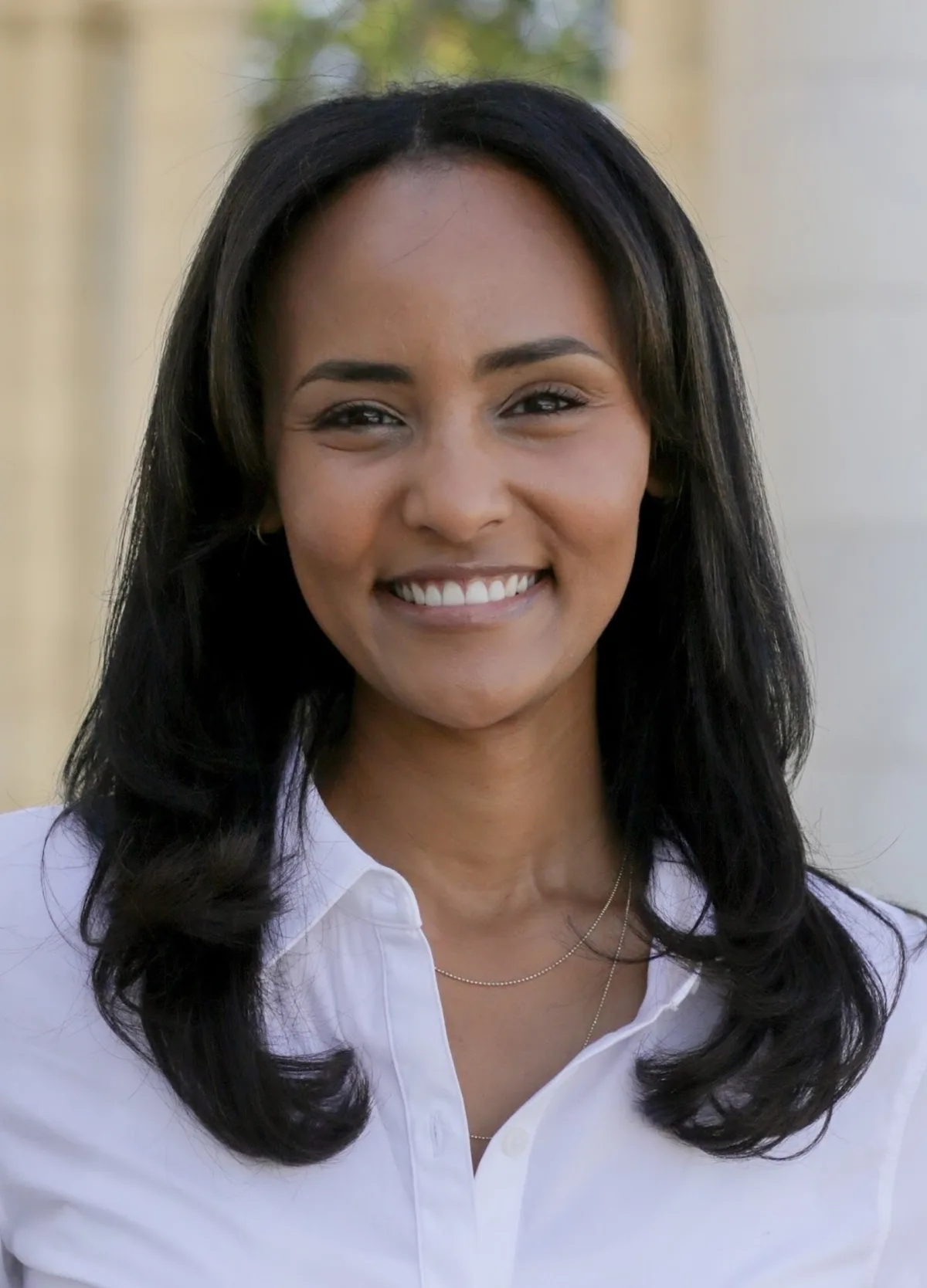
A 29-year-old Democratic Socialist just ended the congressional career of a woman who had held her seat since 1997. Melat Kiros defeated 15-term Rep. Diana DeGette in the Democratic primary for Colorado's 1st Congressional District, and now she's on television explaining why some of her organization's leadership identifying as communists is, actually, fine. Welcome to 2026.
The Win That Has Everyone Paying Attention
Let's start with the sheer scale of what happened here. Diana DeGette was first elected to Congress in 1996. Bill Clinton was president. The Macarena was charting. She won fifteen consecutive terms in a heavily Democratic Denver district, becoming one of the most senior members of Colorado's congressional delegation. Then Melat Kiros, a 29-year-old DSA-endorsed candidate, walked up and knocked her out of office in a primary.
According to the New York Post, Kiros has become the 28th DSA-endorsed candidate to win a Democratic primary this election cycle. If those nominees reach Washington alongside the 18 progressive incumbents already there, you're looking at a 43-member House bloc that didn't exist in anything like this form five years ago. Whether you think that's terrifying or long overdue probably says everything about where you fall on the political spectrum right now.
The Communist Question, Answered Carefully
On PBS's Firing Line, host Margaret Hoover asked Kiros the obvious question: how does she respond to the fact that roughly half of the DSA's national leadership identifies as communists? Kiros's answer was, charitably, creative. "Some members of the Democratic Party are proudly proclaiming themselves as capitalists, and it's a big tent, right?" she said, per the New York Post. "Until a self-proclaimed communist actually wins an election, then it's just noise from the Republican Party."
Hoover then asked whether Kiros herself was a communist, citing Donald Trump's characterization of the DSA movement as "hardcore, godless communists." Kiros said no. Directly and clearly. So that's settled. She also argued, reasonably enough, that Republican focus on the communist label is largely driven by fear that the DSA's economic message is actually landing with voters. "The oligarchy that largely stands behind the Republican Party can see that our message of, in its most basic form, economic populism, is actually resonating," she said.
She's not entirely wrong about that. The DSA's core pitch, Medicare for All, universal childcare, a 32-hour workweek, does poll better than the organization itself does. That gap between policy popularity and brand toxicity is the central tension of the entire progressive project right now.
The Platform She Supports, and the Parts She Doesn't
The DSA's 25-member National Political Committee has a wish list that reads like it was written by someone who stayed up too late reading theory. Per the New York Post, their newly launched "Workers Deserve More" program calls for abolishing the Senate, replacing the president and the Supreme Court with institutions selected by Congress, granting amnesty to all undocumented immigrants, and defunding what they call the Department of War, which is what most people call the Defense Department.
To her credit, Kiros isn't signing onto all of that. Hoover confirmed on air that Kiros opposes abolishing the Senate, withdrawing from NATO, and defunding police. She does support Medicare for All, universal childcare, and the 32-hour workweek. She also said, in a line that will follow her for the next several months, that "socialism has proven to deliver on the values of the Declaration of Independence more than capitalism has." Whether you find that bracingly honest or politically suicidal probably depends on which congressional district you live in.
Kiros also defended the DSA's democratic platform process, noting that not every member agrees with every plank, which is either a reasonable defense of a big-tent organization or a convenient escape hatch from its more combustible positions, depending on your generosity.
The Israel Problem Isn't Going Away
Kiros's path to November isn't without its complications. The New York Post reports that Denver Jewish community leaders, speaking to Fox News Digital, raised concerns about her rhetoric, specifically her initial refusal to characterize the 2025 Boulder firebombing as antisemitic, and her characterization of Israeli policy as genocide and apartheid.
These are not fringe concerns from political opponents. These are local Jewish leaders describing heightened safety fears tied directly to the rhetoric of someone who is now the Democratic nominee for Congress. In a district as heavily Democratic as Colorado's 1st, Kiros will almost certainly win in November regardless. That doesn't make these concerns disappear. It just means the conversation will continue inside a congressional office rather than a campaign.
The Broader Wave Behind Her
Kiros isn't alone, and that's the part that's genuinely new. New York City now has a DSA-backed mayor in Zohran Mamdani. Darializa Avila Chevalier just won the Democratic primary in New York's 13th Congressional District under the same banner. A movement that was largely theoretical and Twitter-adjacent after Bernie Sanders's 2016 run is now winning actual elections for actual offices that carry actual power.
The polling tells a complicated story. A July Fox News poll found that 56% of registered voters view the DSA unfavorably, while 31% view it favorably. Among Democrats specifically, 59% had a favorable opinion. That intra-party support is the fuel driving these primary wins. The general election math, depending on the district, is a different calculation entirely. Kiros, running in one of the safest Democratic seats in Colorado, doesn't have to solve that problem this cycle. Future candidates running in purple districts will.
The Dingo Take
Thirty years. Fifteen terms. And Diana DeGette lost to someone who wasn't alive when DeGette first got to Congress. If that isn't a signal that the Democratic Party's center of gravity is shifting in ways that party leadership can no longer manage with sternly worded op-eds and polite primary interventions, nothing is.
The Republican playbook here is obvious: scream "communist" until November, let the DSA's more maximalist platform positions do the rest of the work, and hope that swing voters in competitive districts punish Democrats by association. It's not a sophisticated strategy, but it doesn't need to be. A 56% unfavorability rating for the DSA among registered voters is a real number. Kiros can win her safe seat without touching it. Other nominees on that 43-person-bloc-in-waiting list might not be so lucky.
What's actually worth watching isn't whether Kiros wins in November. She will. It's whether the DSA's growing House presence translates into legislative leverage, whether the coalition holds together once it hits the grinding reality of governance, and whether the party figures out how to contain a left flank that has clearly decided it is done being contained. The bets are on the table. The midterms are coming.




Comments