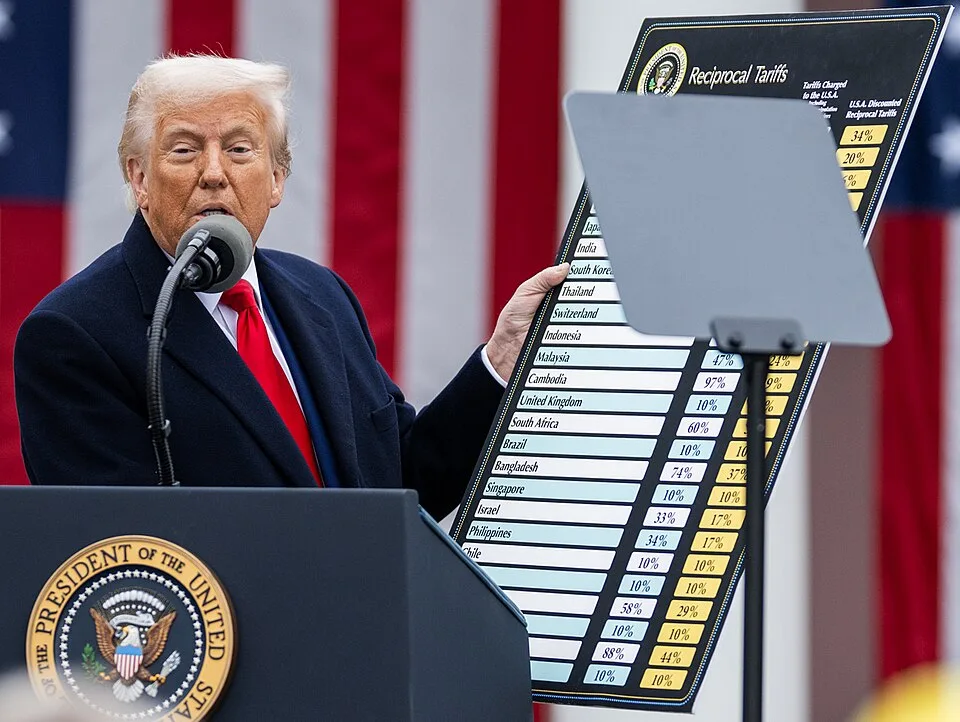
The Trump administration slapped tariffs on 99.4% of all US imports and called it a forced labor crackdown. On Monday, 25 states called it something else: illegal. The lawsuit is the latest chapter in a tariff saga that has already been smacked down by the Supreme Court once, cost companies tens of billions in refunds, and somehow just keeps going.
What Trump Actually Did Here
The new tariffs, which range between 10% and 12.5%, came into effect in July and were imposed under Section 301 of the 1974 US Trade Act, a law designed to punish countries that use forced labor in their supply chains. The targets include trading partners you might recognize, like the UK, the European Union, China, Brazil, and Japan. Essentially: everyone.
According to the Office of the US Trade Representative, the duties cover 99.4% of all US imports. Read that again. Not 40%. Not 70%. Ninety-nine point four percent. The administration looked at the entire global economy, found a legal hook barely wide enough to hang a coat on, and used it to tariff nearly everything that enters this country.
The White House, through spokesman Kush Desai, says the US is using its "lawful authority" to address practices that burden American businesses. Brazil and Japan have called the measures "unjustified." China's foreign ministry called them an "excuse for political manipulation." When Brazil and China are making the same argument as New York's governor, it might be worth pausing to consider who has the point.
The Lawsuit, and Why It Has Teeth
A coalition of 25 Democratic states filed suit Monday, with the legal document seen by the BBC describing the tariffs as "arbitrary, capricious, and contrary to law." The lawsuit argues that the Trump administration "cannot use forced labour as a pretext to continue its illegal tariff scheme" and that the tariffs are "so broad that they defy the USTR's own stated aims."
New York Governor Kathy Hochul framed it plainly: "President Trump's illegal tariffs are nothing more than a tax on hardworking families." Oregon Attorney General Dan Rayfield was even more direct. "We're all paying the price for these unlawful tariffs, not foreign governments," he said.
Alex Capri, a business lecturer at the National University of Singapore, told the BBC the lawsuit will pose a "formidable challenge" to the levies. He also noted that there is a lack of credible evidence backing the administration's claims that countries harmed US firms by violating forced labor rules. Which raises the obvious question: if the evidence isn't there, what exactly is this tariff regime actually for?
This Movie Has Already Played Once
This is not the first time Trump has tried to tariff the entire planet into submission. His "Liberation Day" tariffs from April 2025 took a similar swing at global trade. The US Supreme Court struck them down. The fallout from that decision prompted tens of billions of dollars in refunds to companies that had already paid the levies.
After the Supreme Court ruling, a temporary 10% levy on all global imports served as a placeholder. That expired in July, right as these new forced-labor tariffs kicked in. So the administration, having lost the last round in the highest court in the land, simply switched legal theories and went again. Hochul put it plainly: "The Supreme Court has made it clear that this administration cannot ignore the law to impose sweeping tariffs."
Capri told the BBC he expects "carve outs and walk-backs to gradually take the bite out of these tariffs" as legal and political pressure mount. And there may be more pain coming regardless: the BBC reports that the US is currently investigating 16 additional countries over manufacturing overcapacity claims, which could mean another round of tariffs is already being assembled in the wings.
The Credibility Problem Nobody in the White House Is Addressing
Here is the part that should bother people most. Analysts have questioned how any country could actually demonstrate it had properly addressed forced labor claims under this framework. The BBC reports that the criteria are so vague that meeting them may be functionally impossible.
If there's no realistic path for countries to comply, then this was never really about forced labor. It was about tariffs. The forced labor justification is the legal wrapper, not the policy goal. And when your tariffs cover 99.4% of imports from essentially every country on Earth, the "this is targeted enforcement" argument collapses into something that would embarrass a first-year law student.
The White House has not explained how a measure covering nearly all US imports from nearly all US trading partners constitutes a narrowly tailored response to a specific trade practice. That question remains unanswered, presumably because the answer is not flattering.
The Dingo Take
Twenty-five states suing the federal government over tariffs is not normal. The Supreme Court already invalidating one round of sweeping Trump tariffs and triggering tens of billions in corporate refunds is not normal. Immediately replacing those struck-down tariffs with a new set covering 99.4% of imports under a different legal theory is not normal. None of this is normal, and the sheer speed at which we have all accepted it as background noise is its own kind of catastrophe.
The forced labor framing deserves to be called what it is: a legal costume on an economic policy the administration could not otherwise justify. If the Trump administration genuinely cared about forced labor, it would be targeting specific goods, specific supply chains, specific countries with documented violations. It would not be writing rules so broad they cover virtually every product entering the United States from virtually every nation on the planet. That is not enforcement. That is taxation with extra steps and a moral alibi stapled to the front.
What happens next depends almost entirely on the courts, which have already shown they are willing to reject this administration's tariff logic when it gets sloppy enough. The 25-state coalition is betting the same playbook works twice. Given that the underlying evidence is thin, the legal theory is strained, and the scope is almost comically overbroad, that bet looks reasonable. The only people paying in the meantime are American consumers and businesses, which is exactly what the states suing are saying. They are not wrong.




Comments