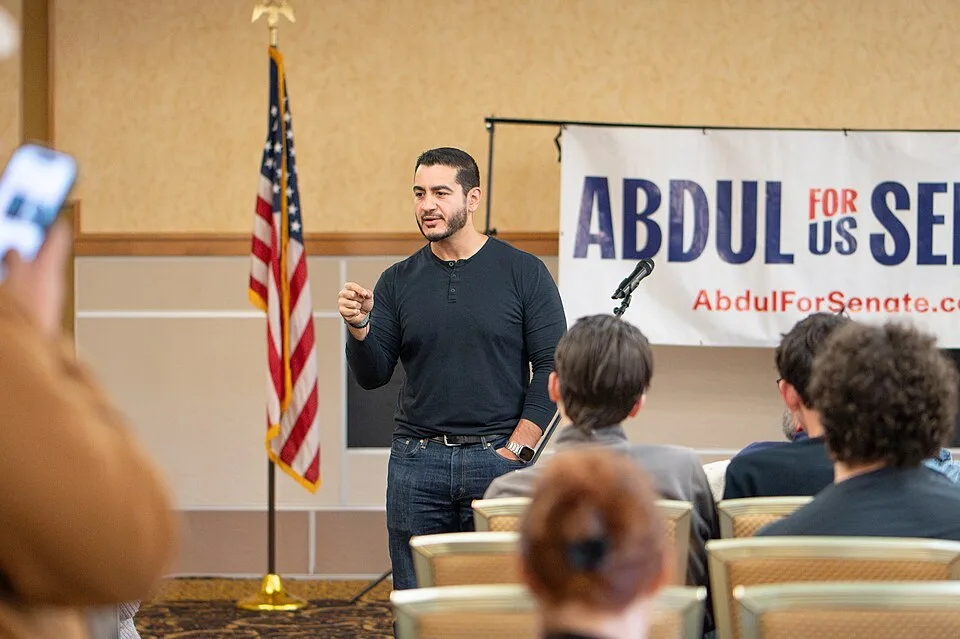
Outside groups dumped $52 million into Michigan's Democratic Senate primary, much of it from AIPAC and its aligned PACs trying to stop a progressive Medicare-for-All candidate from getting the nomination. The progressive got the nomination anyway. Tuesday's primary elections handed something to almost everyone, and the most interesting thing they handed progressives was a genuine, expensive, high-stakes proof of concept.
The $52 Million Didn't Buy What AIPAC Thought It Would
Let's start with the number, because it's genuinely wild. According to OpenSecrets, the nonpartisan nonprofit that tracks congressional money, outside groups spent $52 million in Michigan's Senate Democratic primary alone. That is, per NPR, the most expensive outside spending in any race in the country aside from Texas' already notorious Senate slugfest.
Most of that money was flowing against Abdul El-Sayed, a progressive doctor and former gubernatorial candidate who has been openly critical of AIPAC's influence in American politics. AIPAC and its aligned groups backed his opponent, Rep. Haley Stevens, the establishment-friendly moderate. Fifty-two million dollars. And El-Sayed won.
That is not nothing. Progressives have watched AIPAC spend enormous sums to kneecap left-leaning candidates in primary after primary. Michigan was the biggest test of whether that spending could be overcome in a true swing state, and on Tuesday, the answer was yes. At least once. In one race. We'll see if it holds as a pattern.
What El-Sayed's Win Actually Means for November
Here is the complication the celebration needs to include: El-Sayed won a Democratic primary in Michigan. He still has to face Republican nominee and former Rep. Mike Rogers in a general election in a state that is, by definition, a swing state. The primary proved progressives can win over Democratic voters. The general election will ask whether Medicare-for-All and the rest of the populist agenda can win over the full Michigan electorate.
That is a genuinely different question. And if Democrats want to take the Senate back in November, according to NPR, winning this Michigan seat is close to non-negotiable. El-Sayed's primary win is a massive moment for the left wing of the party. It is not yet a Senate seat.
Also worth watching: progressive William Lawrence won the nomination in Michigan's one competitive toss-up House district and will now face first-term Republican incumbent Rep. Tom Barrett. In Michigan's 13th Congressional District, Donavan McKinney unseated Rep. Shri Thanedar, another win for the insurgent left. Michigan was, by any honest reading, a very good night for progressives.
The Establishment Didn't Go Home Empty-Handed
Before the progressive movement holds its victory lap too long, the establishment wing of the Democratic Party also got what it came for in several key races. In Missouri's 1st Congressional District, Rep. Wesley Bell beat former Rep. Cori Bush in a rematch, as NPR reports. Bell had national party backing. Bush had Bernie Sanders and the Democratic Socialists of America. Bell won.
To be fair, the Missouri 1st is rated solidly Democratic by Cook Political Report, so this is more about the ideological direction of a safe seat than flipping a district. But the establishment specifically recruited Bell to keep Bush out of that seat, poured resources in, and it worked. Again.
In Virginia, Democratic voters in the 1st and 2nd congressional districts picked establishment-backed candidates for two House seats that Democrats are eyeing as potential flips in November. So the picture is genuinely split: progressives dominated in Michigan, the establishment held its own in Missouri and Virginia. The Democratic civil war is not over. It is ongoing. It is producing different results in different places, which is almost more exhausting than one side just winning cleanly.
Trump's Endorsement Machine: Still Running, Still Complicated
On the Republican side, Trump's endorsement record stayed intact through Tuesday. Per NPR, Trump-backed candidates won primaries in Washington state, Kansas, and Michigan. In Washington's 4th Congressional District, Yakima County Commissioner Amanda McKinney beat ten other candidates after receiving Trump's endorsement to replace outgoing Rep. Dan Newhouse, one of the last surviving Republicans who voted to impeach Trump in 2021. Newhouse is finally gone, and Trump finally gets his loyalist in that seat's Republican column.
The catch, as NPR points out, is that a Trump-endorsed candidate has never actually won a general election in that conservative rural district. Newhouse kept winning partly because local voters knew him and partly because his primary opponents were Trump's picks and voters ultimately went with the incumbent. With Newhouse off the ballot, McKinney has a real shot. She will face Democrat John Duresky in November.
In Michigan and Kansas, Trump-backed Republicans won gubernatorial nominations in states where Democrats currently hold the governor's office. Both sitting Democratic governors are term-limited, which means Republicans have a legitimate opening. In Michigan, Republican Rep. John James won the nomination and will face off against Secretary of State Jocelyn Benson. Trump's grip on the Republican primary process remains essentially total. Whether that translates to general election wins is the question that defines the midterms.
The Bigger Picture No One Should Miss
Step back from the individual races for a second and look at what Tuesday actually showed. You had a progressive candidate beat a $52 million outside spending campaign in a swing state Senate primary. You had the establishment hold a safe blue House seat in Missouri against a high-profile progressive challenger. You had Trump's endorsees sweep their primaries on the Republican side. And you had voters in red states push back against Republican priorities on a pair of ballot initiatives, which NPR flagged but the full results were still coming in.
That is an electorate that is genuinely in motion. Nobody fully controls the narrative right now. The progressive movement is real and growing. The establishment still has structural advantages and money. Trump still owns the Republican base in a way no previous president has maintained this far into a term. And somewhere in the middle of all of this, actual American voters are making actual decisions that don't always follow any of the scripts.
The midterms are three months away. The stakes for Senate control are enormous. And Michigan just became the most interesting state to watch.
The Dingo Take
Fifty-two million dollars. Say it slowly. Fifty. Two. Million. Dollars. Spent in a single Democratic Senate primary. Not to elect someone. To stop one guy who wants universal healthcare and thinks a foreign policy lobbying group has too much influence over American elections. And it didn't work. If you are AIPAC, Tuesday night is a very expensive reminder that money buys a lot of things in American politics, but it does not buy everything, and occasionally the voters notice what you're doing and do the opposite.
The split-screen story of these primaries is genuinely revealing. Progressives win in Michigan. The establishment wins in Missouri. Trump wins everywhere on the Republican side without breaking a sweat. Nobody has a commanding unified theory of what the American voter wants right now, because the American voter appears to want different things in different places, which is either democracy working exactly as designed or a complete nightmare for anyone trying to run a national strategy, depending on which side of the consultant class you're on.
Here is the cold water nobody wants to pour: El-Sayed winning a Democratic primary is not El-Sayed winning a Senate seat. He now has to beat Mike Rogers in Michigan in November. That is a real fight, in a real swing state, and the $52 million that didn't stop him in the primary will not be the last money spent trying to end his candidacy. The next three months will tell us whether Tuesday was the start of something or just the most expensive moral victory in recent midterm history.

Comments