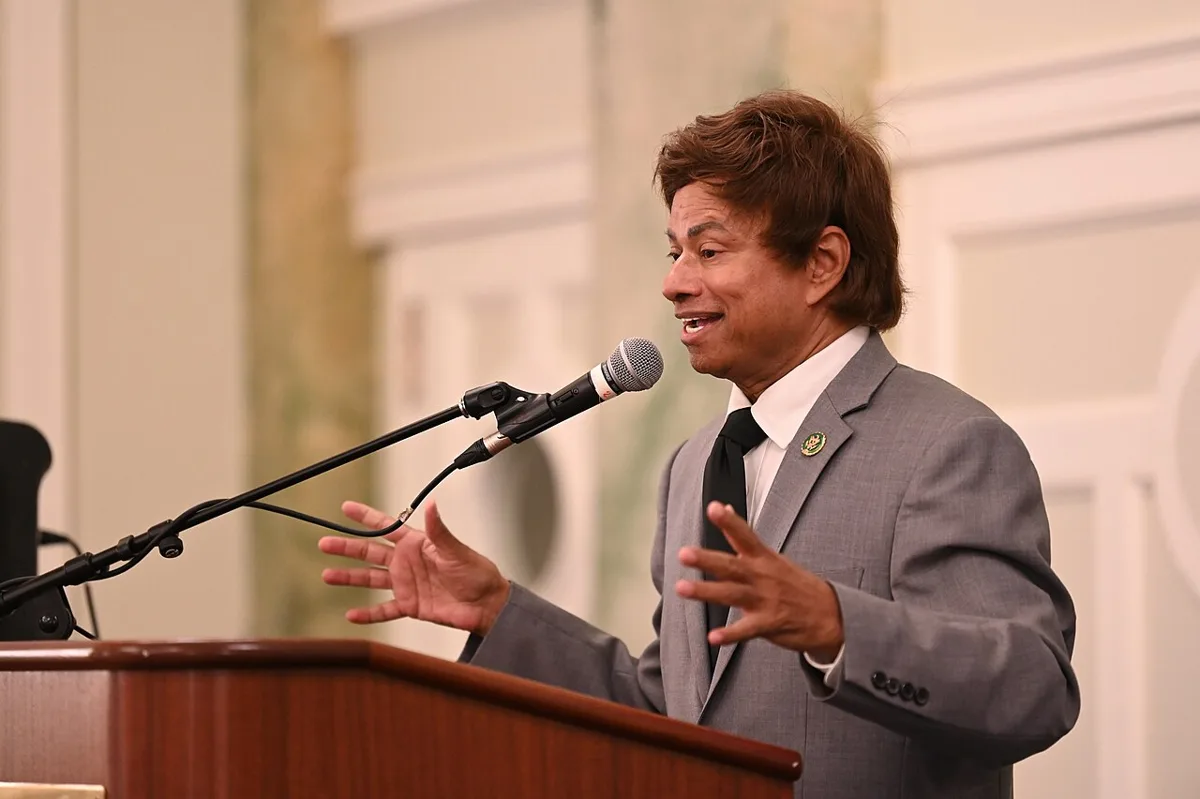
A two-term incumbent congressman who lost more than $2 million in campaign funds through cryptocurrency investments, used taxpayer money to run what looked suspiciously like campaign ads, got expelled from the Democratic Socialists of America, and somehow still got endorsed by Hakeem Jeffries just lost his primary to a 34-year-old democratic socialist from Detroit. The voters, apparently, were paying attention. According to NBC News, state Rep. Donavan McKinney defeated Rep. Shri Thanedar in Michigan's 13th Congressional District primary on Tuesday, with the Associated Press calling the race Wednesday morning.
How You Lose $2 Million in Campaign Money and Still Almost Win
Let's start with the crypto thing, because it deserves to live in infamy. NBC News reports that Thanedar's campaign lost more than $2 million this year tied to cryptocurrency investments. Two million dollars. Of campaign money. Gone. Into the blockchain void. This is, as NBC diplomatically describes it, "a relatively uncommon use of campaign money." That is one way to put it.
And that wasn't even the most creative use of funds under scrutiny. Thanedar also spent hundreds of thousands of dollars in taxpayer money running television ads out of his congressional office that, per NBC News, looked a whole lot like campaign ads. The man turned his official government stipend into a personal media buy. Bold strategy. Detroit clocked it.
For those keeping score at home: lost donor money in crypto, used public funds to advertise himself, and still nearly pulled off a win with 48.1% of the vote. American politics is something else.
The Stranger-Than-Fiction Arc of Shri Thanedar
Thanedar's political life reads like a pilot for a show nobody greenlit. He self-funded his way into the seat in 2022 running as a progressive, then broke with the Democratic Socialists of America in 2023. He says he quit. The local DSA chapter says he was expelled. This is the kind of dispute where both sides are probably right in ways that don't help Thanedar.
He then rebranded himself more explicitly around supporting Israel, which, in a district that includes Rashida Tlaib's backyard and a significant Arab American population, was not a low-stakes pivot. He also tried to push a Trump impeachment effort that House Democratic leadership had explicitly not sanctioned, earning criticism from within his own party.
Then Hakeem Jeffries endorsed him anyway. Jeffries, the House Minority Leader, looked at all of this and said: yes, this is our guy. The endorsement didn't save him, but it does tell you something about where establishment Democrats are setting the bar right now.
Who McKinney Is and Why It Matters
Donavan McKinney is 34 years old, grew up in poverty in Detroit, and became the first in his family to go to college. He's been a state legislator and has been running for this seat for 16 months. His platform includes Medicare for All, new restrictions on military aid to Israel, and major public investment in clean energy and housing. He is, without ambiguity, a democratic socialist running on a democratic socialist platform.
As Axios reports, McKinney's win likely returns Detroit to Black representation in Congress, a distinction that ended when Thanedar won the seat in 2022. That context matters in a district with deep roots in Black political organizing and representation.
His coalition was formidable and deliberate. NBC News notes he had backing from Sen. Bernie Sanders, Rep. Rashida Tlaib, Michigan Senate candidate Abdul El-Sayed, and national progressive groups including Justice Democrats and Leaders We Deserve. This wasn't a fluke protest vote. It was a coordinated operation.
Another Brick in the Progressive Insurgency Wall
McKinney's win is the latest in what NBC News describes as an insurgency progressives are mounting against Democratic establishment incumbents across the country heading into the 2026 cycle. The pattern is becoming hard to dismiss as isolated upsets. Candidate after candidate backed by Justice Democrats and allied groups is either winning primaries outright or coming uncomfortably close.
Axios points out that mainstream House Democrats didn't seem particularly alarmed by the prospect of Thanedar losing, which is notable. The party's leadership didn't go to the mat for him, even after Jeffries offered the endorsement. When the establishment can't muster genuine enthusiasm for its own endorsed incumbents, you have to wonder who exactly the establishment is working to protect.
The final margin was slim: 51.9% to 48.1%, per Axios. Close enough that Thanedar's baggage was probably the decisive factor rather than any grand ideological realignment on its own. Take away the crypto losses, the look-alike ads, and the DSA expulsion drama, and this race might have gone the other way. Voters didn't just choose McKinney. They chose to stop forgiving Thanedar.
What Comes Next
Michigan's 13th is a safely Democratic district, so McKinney winning the primary is functionally the whole ballgame. Barring something genuinely unprecedented, he will be a member of Congress next year. A 34-year-old democratic socialist from Detroit, endorsed by Bernie Sanders, running on Medicare for All and restrictions on military aid to Israel, will be sitting in the House of Representatives.
That is what the voters of this district chose. Loudly and clearly, even if narrowly. The question now is whether House Democratic leadership, which just watched its endorsed candidate lose to the guy their progressive critics backed, will spend the next few months pretending this didn't happen or actually reckoning with why it did.
The Dingo Take
You are supposed to believe that Shri Thanedar lost because of progressive outside spending, or because the race had unique local dynamics, or because of some complicated constellation of factors that don't really tell us anything about the broader Democratic Party. That is what the people who endorsed him would very much like you to conclude.
Here's what actually happened. A sitting congressman lost $2 million of campaign donations in crypto, ran what amounted to campaign ads on the taxpayer's dime, got kicked out of a socialist organization and then rebranded as a pro-Israel moderate, and tried a rogue Trump impeachment push that his own party rejected. He was, by any fair accounting, a mess. And Hakeem Jeffries endorsed him anyway, because the establishment's instinct is always to protect the incumbent, no matter what the incumbent has done to deserve protecting. Detroit looked at all of that and said no.
McKinney may turn out to be a great congressman or a disappointing one. Thirty-four-year-olds with big platforms and fresh energy have gone both ways in this business. But the lesson from Tuesday isn't really about him. It's about what voters do when they feel like the party isn't leveling with them, when the person asking for their vote has spent two years doing things that are genuinely indefensible, and when an actual alternative shows up and puts in 16 months of work. They vote for the alternative. Fancy that.





Comments