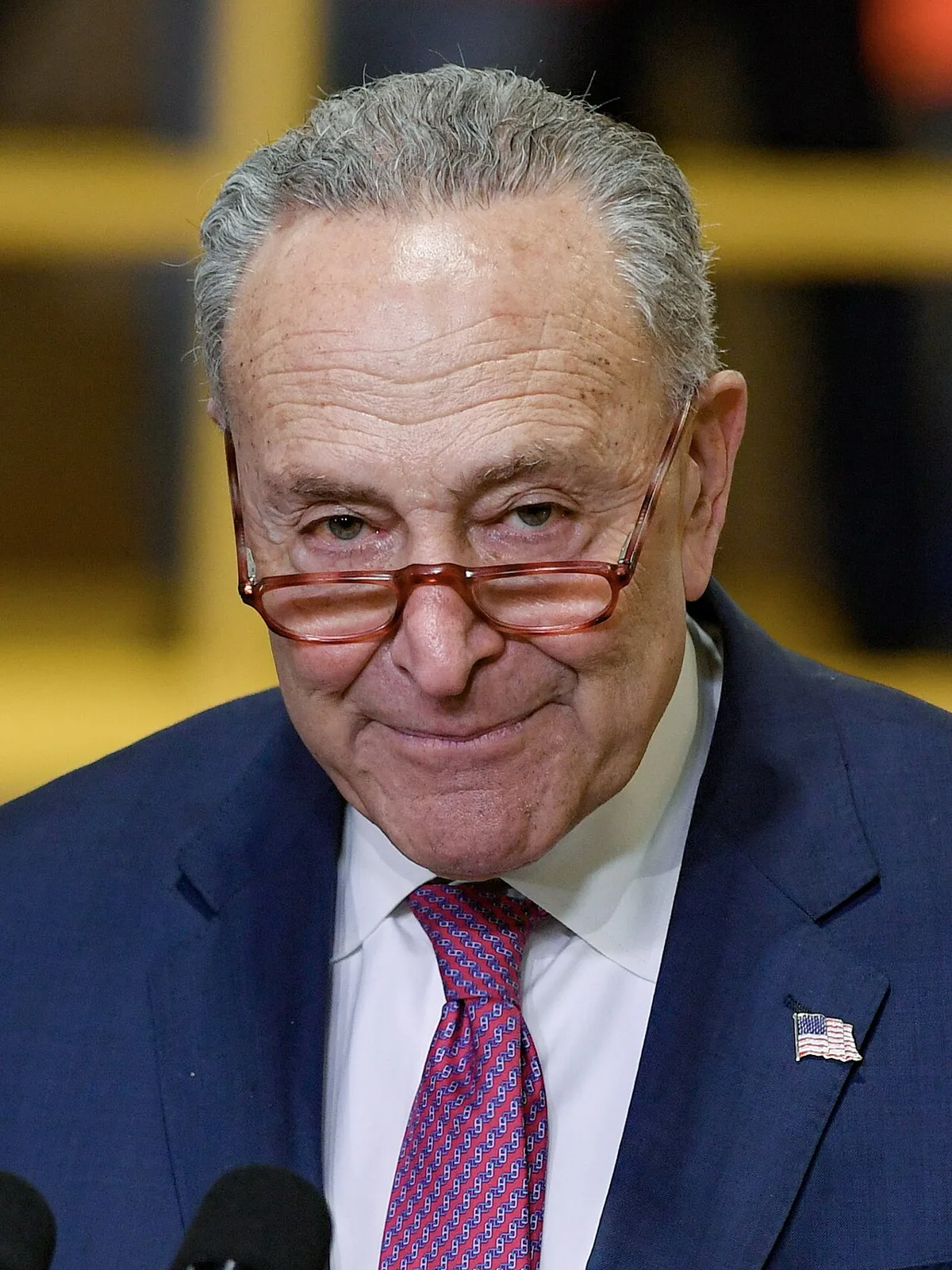
Chuck Schumer and a roomful of senior Senate Democrats recently sat down with legal experts to plan their response to scenarios including AI deepfakes of voter fraud, armed men at polling stations, and the midnight firebombing of an early voting site. This was not a movie pitch. This was last month, in Washington DC, and it was a completely rational thing to do given the current president of the United States.
What Actually Happened in That Conference Room
According to The Guardian, Senate Minority Leader Chuck Schumer was joined by senators Alex Padilla, Adam Schiff, Mark Warner, Elissa Slotkin, and Raphael Warnock for two separate election disruption tabletop exercises this year. Also in the room: election attorney Marc Elias, former attorney general Eric Holder, election law expert Norman Eisen, and representatives from voting rights groups including Protect Democracy and Democracy Forward.
The scenarios they worked through read like a checklist written by someone who has been paying very close attention to the last six years of American political life. Realistic AI-generated deepfake videos showing fake evidence of voter fraud go viral weeks before an election. Rightwing media and the president amplify them. Election workers start getting death threats. Armed men show up at polls. Senator, what do you do?
Justin Vail, who leads the DC office of the non-partisan group Protect Democracy, told The Guardian the exercises are designed to "identify gaps, test our assumptions, and strengthen coordination." That's the polite version. The less polite version is: nobody in that room thinks these scenarios are purely theoretical anymore.
The Scenarios Get Considerably Worse from There
The deepfake situation was just the warmup. According to The Guardian, senators were also asked to plan responses to a threatened federal withholding of OMB funding from any state that refuses to hand over its voter rolls for federal oversight. They gamed out FCC enforcement actions against news outlets covering those deepfakes. They considered online license-plate doxxing of voters.
Then it gets darker. A midnight firebombing of an early voting site. A last-minute unilateral deployment of Department of Homeland Security agents and the National Guard to polling locations on election day.
For anyone tempted to call these scenarios hysterical: armed men in tactical gear actually showed up at ballot drop boxes in Arizona during the 2022 midterms. The Guardian notes this explicitly. These are not hypotheticals conjured from nowhere. They are slightly escalated versions of things that have already happened.
Trump Gave Them Plenty of Material to Work With
The timing of these exercises is not coincidental. Trump delivered a primetime television address last month billed as a presentation of explosive new evidence that the 2020 election was stolen. What he actually delivered, per The Guardian, was a claim that China had illicitly acquired voter information on 220 million Americans and undermined his 2020 campaign in unspecified ways. His own intelligence officials had already concluded that China stayed out of the election specifically to avoid blowback if caught.
The address collapsed under immediate scrutiny. Trump also threatened the broadcast licenses of any network that refused to carry it live. During the speech, he pushed Congress again to pass the Save America Act, which would ban mail-in ballots nationwide and add new voter ID requirements at registration and the polls. Republican senators, at least for now, won't kill the 60-vote filibuster threshold needed to pass it.
Senator Jon Ossoff of Georgia called the address "signaling his unmistakable intent to attack these elections and our voting rights, just as he tried to throw out our votes and seize the presidency in 2020." Ossoff represents a state Trump has made a rhetorical fixation, so he knows exactly what he's watching.
The Legal Reality Check
Skye Perryman, CEO of Democracy Forward, offered The Guardian some genuine reassurance alongside the alarm. The distributed nature of American elections, she said, built across fifty states and thousands of local jurisdictions, makes sweeping federal interference structurally difficult. The constitution, she noted, gives the president no role in election administration.
"The president can try to imagine whatever he may wish to imagine," Perryman said. "He can't imagine a new constitution."
That's not a small point. American elections are run by secretaries of state, county clerks, and local officials who answer to their own state laws, not to the White House. Trump can give primetime speeches and push federal legislation and deploy rhetorical chaos, but he cannot simply decree that votes get thrown out. The question the exercises are trying to answer is whether the machinery of chaos, deployed hard enough and fast enough, could create enough confusion and fear to produce that outcome anyway.
There Is No Silver Bullet. That's the Point.
Perryman told The Guardian the main lesson from the exercises is that "this is an all-hands-on-deck moment" requiring "an all-hands-on-deck response." No single legal strategy, no single senate resolution, no single lawsuit wins this. The defense has to be as distributed as the elections themselves.
Vail flagged AI specifically as a multiplier of whatever chaos is already in the system. "The development of AI will only add to the complexity and could create confusion among voters," he told The Guardian. "Unfortunately, that confusion can be to the benefit of the administration's strategy."
That last sentence is worth sitting with. A sitting administration benefiting strategically from voter confusion about whether their election is real. That's the scenario Democrats are now planning for, seriously, with former attorneys general and election law experts, in conference rooms in Washington DC, in the summer of 2026.
The Dingo Take
You are supposed to look at all of this and think it sounds like an overreaction. Wargaming firebombings. Simulating deepfake psyops. Planning responses to federal agents showing up at polling stations. A normal political observer from, say, 2012 would tell you these people have lost the plot.
They have not lost the plot. The plot found them. A president delivered a primetime address built around fabricated claims about 220 million stolen voter records, threatened television networks with federal license revocation for not airing it, and used the whole spectacle to push legislation that would functionally end mail-in voting in America. His supporters showed up in tactical gear at drop boxes four years ago. These senators are not inventing danger. They are catching up to it.
The genuinely frightening thing buried in this story is the AI dimension. Deepfakes of election fraud spreading two weeks before voting. Forensic experts debunking them immediately. The president amplifying them anyway. That scenario does not require any new technology. It barely requires any imagination. It requires only that you have been paying attention.


Comments