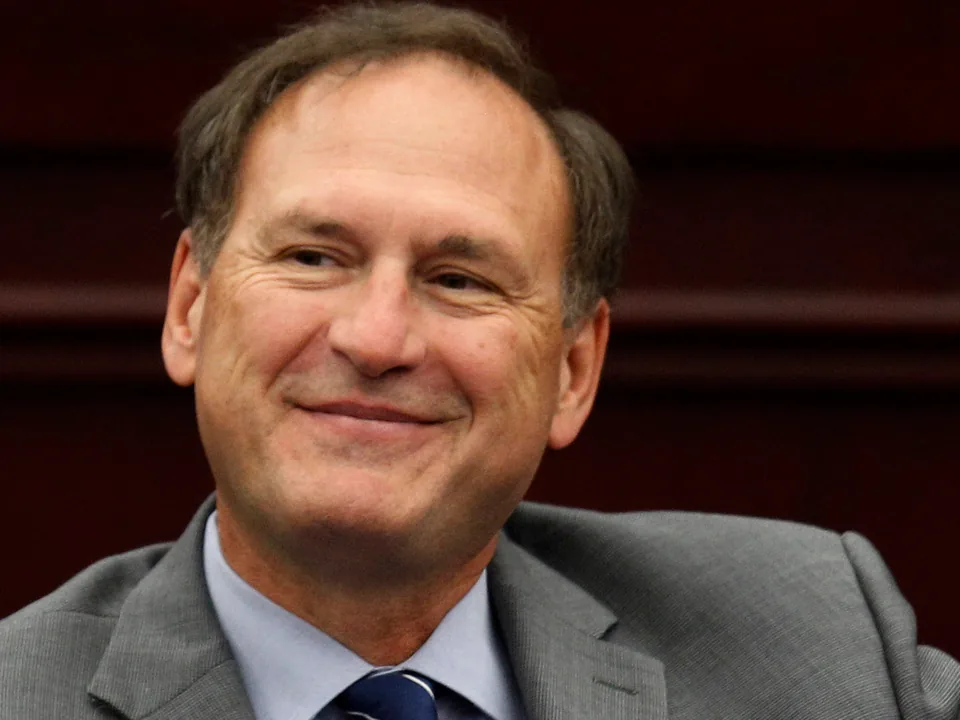
Samuel Alito has made up to $2.9 million from oil and gas assets since joining the Supreme Court. The Supreme Court is about to hear a massive case about whether oil companies can be sued over climate change. Alito has decided none of this is a problem.
The Numbers, Because You Should See Them
According to a new analysis from judicial watchdog Court Accountability, shared exclusively with The Guardian, Alito's reported assets grew from roughly $1.1 million in 2005 to somewhere between $3.4 million and $8.4 million by 2024. His oil and gas holdings account for between $390,000 and $2.9 million of that growth. That is not a rounding error. That is a second home on the water, which is, notably, exactly the kind of thing Court Accountability co-founder Lisa Graves mentioned when asked what this level of fossil fuel wealth might do to a person's worldview.
The bulk of those gains flow from a property in Grady County, Oklahoma, where Alito's wife Martha-Ann holds a mineral interest. The Alitos have been reporting that property's value at between $100,000 and $250,000. Graves told The Guardian that a relative sold an adjacent plot for $800,000 in 2017, which would suggest the Alito property is worth considerably more than they've been claiming. Alito reported rental income windfalls from the property in both 2019 and 2022, each in the range of $100,000 to $1 million. Per federal disclosure rules, we get ranges, not specifics. Convenient.
In 2022, Martha-Ann Alito signed a lease on the property with private oil and gas company Citizen Energy, first reported by The Intercept. Citizen Energy was then acquired in 2024 for more than $2 billion by Validus Energy, which is majority-owned by Elliott Investment Management. Elliott was founded by Paul Singer, the same hedge fund billionaire who, as ProPublica previously reported, paid for a private jet trip Alito took in 2008 and never disclosed. Alito later said the ethics rules didn't require him to report it. Of course he did.
What Case Are We Actually Talking About Here
Oil giants Suncor Energy and ExxonMobil have asked the Supreme Court to rule that federal law blocks state and local governments from suing fossil fuel companies over the climate effects of their products. Cities and states have been filing these climate accountability lawsuits for years, arguing oil companies knew what their products were doing to the planet and buried the evidence. The fossil fuel industry wants the federal judiciary to slam that door shut permanently.
The Supreme Court announced it will hear oral arguments on October 5, the opening day of the new term. The Trump administration, siding with the oil companies because of course it is, has asked for 10 minutes of argument time. This is one of the most consequential environmental cases in years, and the justice with nearly $3 million in fossil fuel gains is planning to sit right there and vote on it.
Court Accountability and other groups have called on a Senate committee to investigate Alito and demanded he recuse himself. He and the Court have rejected those calls. A Supreme Court spokesperson told NBC News in May that Alito is not required to step aside because his holdings don't include shares in Suncor or ExxonMobil specifically. That is technically the rule. Whether it is anywhere near sufficient is a different question.
The Ethics Escape Hatch and Why It's a Joke
Supreme Court ethics rules are built around direct conflicts: do you own stock in a company named in the case before you? If yes, step aside. If no, carry on. It is a framework designed for a simpler time, when the court might see a contract dispute between a company you happen to own shares in, not a sweeping ruling that could determine the legal survival of an entire multi-trillion-dollar industry you've spent two decades profiting from.
Graves put it plainly to The Guardian: "A reasonable person would think if you're invested in the industry that could benefit from the outcome of a lawsuit, then you could personally stand to benefit from the outcome, even if you don't hold the stock in the specific company that happens to be the named plaintiff." That is not a radical position. That is common sense, which is apparently not a recognized legal standard at One First Street.
Alito did previously hold ExxonMobil stock directly. He received it as part of a bequest in 2004, valued between $100,000 and $250,000, the highest-value single liquid investment in his disclosure by a significant margin, according to Graves. He appears to have since sold it. Graves told The Guardian she doesn't think that should get him off the hook: "You shouldn't be able to sell a stock just so you can sit on a case, even though that company's profits have benefited you." He also held positions in ConocoPhillips, Chevron, and energy infrastructure company Kinder Morgan, among others.
His Track Record, In Case You Were Wondering
Alito has voted in favor of fossil fuel interests with the consistency of a man who has a financial stake in the outcome, because he does. In the 2007 case Massachusetts v. EPA, he was one of four dissenting justices who argued that greenhouse gas emissions fell outside the Clean Air Act's regulatory reach. He lost that one.
In 2022, he joined the majority in West Virginia v. EPA, which gutted the agency's authority to mandate a shift away from fossil fuels. He won that one. He has also been part of recent majorities that dismantled the Chevron doctrine, reducing agency regulatory power broadly, a move with enormous implications for environmental enforcement. This is not a justice who has kept his cards close to his chest on fossil fuels.
One more detail worth sitting with: Alito is the only sitting justice who has not yet filed his 2025 financial disclosure. The document was due May 15. Justices can get a 90-day extension, which would have put his deadline at last Thursday. The Guardian has reached out to the court and to Alito for comment. As of publication, neither has responded.
The Dingo Take
You are supposed to believe that a man who has made up to $2.9 million from the oil and gas industry over two decades, whose wife is actively leasing land to an energy company, and who has voted against fossil fuel regulation in every significant case he's ever touched, is capable of ruling impartially on whether oil companies can be shielded from climate lawsuits. You are supposed to accept that the only ethical question worth asking is whether he owns shares in the two specific companies named in this particular suit. That is the whole firewall. That is what passes for accountability on the highest court in the country.
The broader fossil fuel industry wins or loses something enormous on October 5. If the court sides with Suncor and Exxon, every city and state that has spent years building climate accountability cases gets the door closed on them by federal preemption. The oil companies walk away protected. The Alito family's investment in Grady County, Oklahoma gets a little more valuable in a world where the fossil fuel industry faces fewer legal threats. These things are connected. The current rules say they're not connected enough to matter. The current rules are embarrassing.
This is what institutional rot looks like up close. Not a dramatic scandal with a smoking gun, but a grinding accumulation of undisclosed jet rides, undervalued properties, conveniently timed stock sales, and a Supreme Court that has decided its own ethics rules are optional and its own justices are the only judges of whether those rules apply to them. Alito will almost certainly vote in this case. The court will almost certainly let him. And then everyone will act surprised when Americans stop trusting the judiciary.




Comments