The Justice Department quietly dropped a 21-page opinion Monday that could shield everyone in Donald Trump's orbit from congressional investigators, whether they work for the government or not. Private advisers, outside lawyers, informal confidants — all potentially untouchable. This is not a drill.
What the DOJ Actually Did Here
The Office of Legal Counsel, the Justice Department's in-house legal brain trust, published an opinion Monday evening concluding that executive privilege — historically the president's right to keep communications within the executive branch confidential — can now extend to private advisers who don't hold a single government title or collect a single government paycheck.
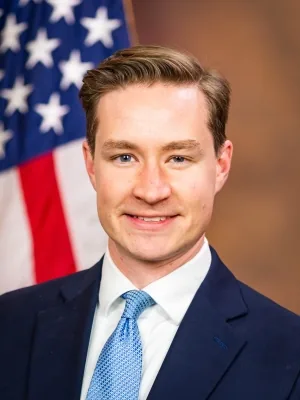
According to CBS News, the 21-page opinion was signed by Assistant Attorney General T. Elliot Gaiser, who runs the OLC. It says the privilege applies to private advisers if communications "relate to official presidential decisionmaking," are confidential, and involve conversations with the president's direct circle. Which is a description broad enough to drive a truck through.
The opinion is not technically binding. Courts don't have to follow it. But that's not really the point. The point is that the White House can now cite this document the moment any investigator comes knocking on the door of someone who whispers in Trump's ear for a living, forcing a legal fight that could take years to resolve.
Boris Epshteyn Says Hi
If you're wondering whether there's a specific, immediate, extremely convenient beneficiary of this opinion, there is. His name is Boris Epshteyn.
CBS News reports that Epshteyn, Trump's outside adviser and lawyer, was recently subpoenaed by the American Bar Association in a lawsuit related to the White House's alleged "intimidation policy" against major law firms. That policy resulted in executive orders targeting four firms and deals made with several others. The ABA wants Epshteyn's communications with the White House. The DOJ has already moved to quash that subpoena, arguing Epshteyn "provided the President with privileged and confidential advice" on the executive orders at issue.
So the same Justice Department that is actively fighting to protect Epshteyn from a subpoena just published a sweeping legal opinion that — by pure coincidence, we're sure — provides the theoretical foundation for doing exactly that. The timeline here is not subtle.
The Midterm Math Behind This Move
This didn't happen in a vacuum. As Axios reports, Democrats have been laying groundwork to bypass expected White House stonewalling by subpoenaing companies, colleges, and private citizens if they win enough seats in November. The plan was to go around the administration and get information directly from outside parties who can't claim government privilege.
This opinion blows up that strategy, or at least makes it considerably more expensive and slow. One expert told Axios the opinion could be "a pretty significant weapon" for the administration "to deflect a lot of that congressional investigation of private parties." That's a remarkably polite way of describing what is, functionally, a pre-emptive legal moat being dug before the midterms even happen.
The timing matters enormously. This opinion didn't arrive during a quiet stretch of governance. It arrived months before an election that could flip one or both chambers and unleash the kind of oversight the Trump administration has spent years designing escape hatches to avoid.
This OLC Has Been Busy Rewriting the Rules
This is not the first time Gaiser's OLC has published something that made constitutional scholars do a spit-take. According to CBS News, back in April, Gaiser authored an opinion declaring that the Presidential Records Act — the law created specifically in response to Watergate to ensure presidents can't walk off with government documents — is unconstitutional, and that Trump doesn't have to comply with it.
A federal judge in Washington subsequently ordered White House staff and Trump's top advisers to comply with the law anyway, after a government oversight group and the American Historical Association sued to invalidate the opinion. So the pattern here is pretty clear: OLC publishes a sweeping opinion that dramatically expands presidential power, gets challenged in court, and meanwhile the administration operates as if the opinion is settled law.
It's a stall tactic dressed up in 21-page legal briefs. Manufacture a legal gray zone, cite it to resist compliance, wait for courts to catch up. By then, the political moment has often passed.
What Executive Privilege Was Actually Designed to Do
Executive privilege exists for a real reason. Presidents need to be able to get candid advice from their staff without every deliberation ending up in a congressional hearing. That's a legitimate governing interest, and courts have recognized it. The Supreme Court affirmed a version of it in United States v. Nixon — while simultaneously telling Nixon he still had to hand over the tapes.
What this OLC opinion does is take that doctrine and stretch it past its original shape. The traditional assertion of executive privilege runs between the president and people who work for the federal government, people who owe the public something by virtue of their position. Extending it to private citizens with no accountability to anyone except their client — the president — is a fundamentally different proposition.
The opinion's own logic gives it away. It argues that "a President might determine that a private adviser has unique insight or experience" that government employees can't provide. Sure. It also means a president can route any conversation he wants to keep secret through a private adviser instead of a government official, and now claim it's all privileged. That is not a small loophole.
The Dingo Take
You are supposed to believe this is a good-faith effort to clarify a genuinely unsettled area of constitutional law. You are supposed to read a 21-page opinion published months before a midterm election, signed by the same lawyer who already tried to bury the Presidential Records Act, that directly benefits a Trump adviser currently fighting a subpoena, and conclude that this is just dispassionate legal scholarship. Come on.
What this actually is: a document manufactured to create legal friction. It doesn't have to win in court permanently. It just has to make litigation slow, expensive, and complicated enough to run out the clock on any investigation that threatens this administration. The genius of the strategy is that even a losing legal argument buys time, and time is the whole game. By the time courts sort out which private conversations are actually privileged, Trump is either out of office or has won another term, and the investigations become moot either way.
The Watergate parallel Gaiser apparently did not learn from is this: the tapes had to come out. The courts found their way through every privilege argument Nixon threw at them. This administration is betting that history won't repeat itself, and that a sufficiently aggressive legal theory, asserted loudly enough and early enough, can freeze accountability in place indefinitely. We've seen this movie. The ending isn't good for anyone who thought they were above the law.


Comments