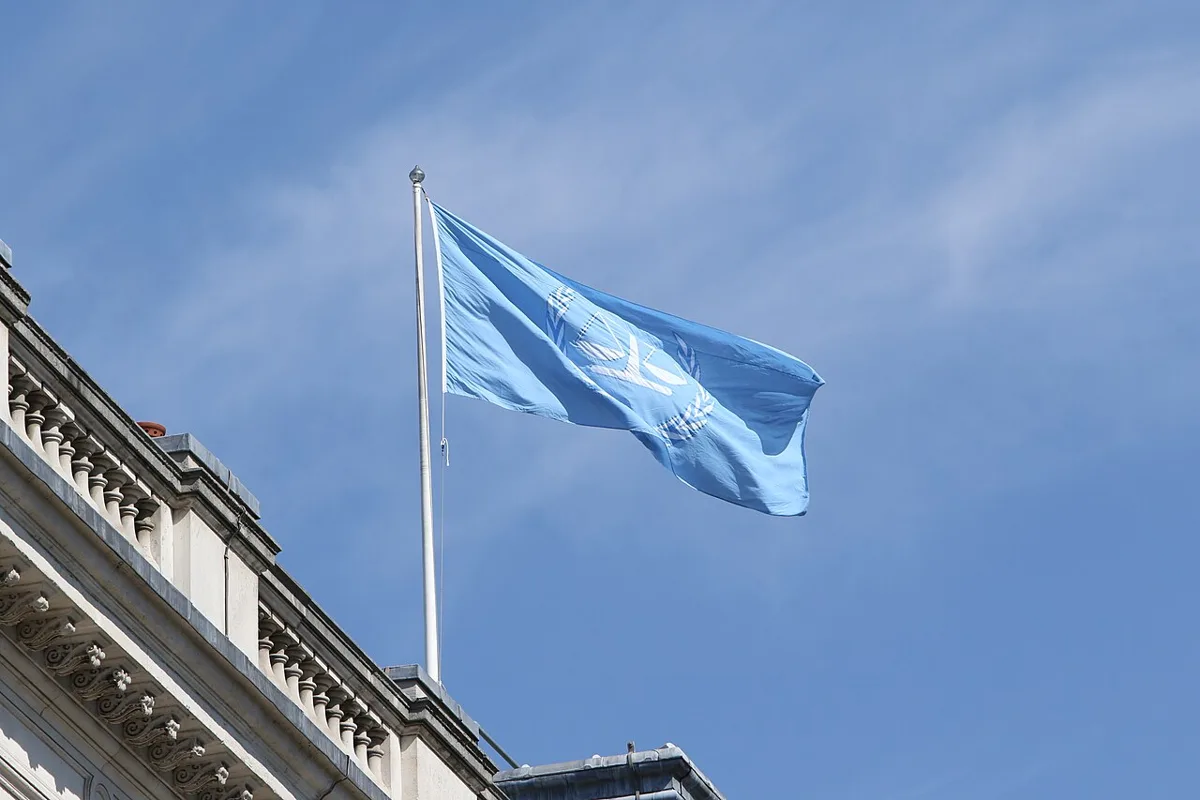
The Trump administration has been sued in federal court for running what four major human rights organizations are calling a 'blatantly illegal attack on international justice.' The groups argue that Trump's executive order targeting the International Criminal Court doesn't just oppose accountability for war crimes — it actively criminalizes the lawyers, advocates, and organizations trying to pursue it. The punishment for getting it wrong: up to 20 years in prison.
What They're Actually Being Sued For
The lawsuit, filed Tuesday by the American Friends Service Committee, the Center for Constitutional Rights, Human Rights Watch, and the Open Society Institute, challenges a February 2025 executive order that authorized sanctions against ICC officials, judges, and anyone else supporting the court's investigation of Israeli crimes in Palestine. That investigation is one of 18 the Netherlands-based court is currently overseeing into war crimes and crimes against humanity worldwide.
The State Department and Justice Department did not respond to requests for comment, which is the institutional equivalent of a shrug and a locked door.
The plaintiffs aren't abstract parties here. They are four organizations that have spent decades doing actual human rights work — representing victims before the ICC, filing legal submissions, collaborating with other groups on litigation and research. The sanctions regime, they argue, has made that work illegal. Not inconvenient. Not complicated. Potentially criminal, with consequences measured in decades of prison time.
How You Strangle a Court Without Leaving the Country
The US is not a member of the ICC. It has never ratified the Rome Statute. And yet, as The Guardian reports, the Trump administration has found extremely creative ways to kneecap a court it technically has no jurisdiction over.
When the ICC prosecutor issued arrest warrants in November 2024 for Israeli Prime Minister Benjamin Netanyahu and former Defense Minister Yoav Gallant over crimes committed in Gaza, the US responded by sanctioning ICC prosecutors, judges, and three leading Palestinian human rights groups. It also sanctioned Francesca Albanese, the UN Special Rapporteur on Palestinian human rights, because apparently no one in this vicinity is allowed to do their job without consequence.
This summer, Secretary of State Marco Rubio went further. According to The Guardian, he announced a campaign aimed at outright 'dismantling' the ICC by pressuring member states to withdraw from the court entirely. Not opposing it. Not lobbying against specific cases. Dismantling it. As a project. With a press release.
The Real-World Damage, Which Is Substantial
Shawan Jabarin, director of Al Haq — one of the Palestinian human rights groups directly targeted by the sanctions — told The Guardian last year that the penalties had left his organization unable to access its bank accounts or process donations, leaving roughly 45 staff members without pay. That's not a diplomatic inconvenience. That's an organization being strangled by financial exclusion.
But the more insidious damage, Jabarin explained, was the climate of fear the sanctions created. Longtime allies who had worked with Al Haq for years quietly stopped calling. Stopped emailing. Stopped collaborating, publicly or privately. The potential punishment of 20 years in prison and massive fines has a remarkable clarifying effect on professional relationships. 'Most of them — if not all — they stopped working with us or engaging with us formally and openly,' Jabarin said.
Because US financial and tech institutions dominate global infrastructure, the sanctions don't stop at the US border. They ripple outward, freezing bank accounts, blocking digital services, and cutting off sanctioned individuals from functioning in countries that have nothing to do with this fight. The reach is planetary. The intent, the lawsuit argues, is to make international justice so costly and so dangerous that no one bothers.
This Lawsuit Isn't the First One
Tuesday's filing follows a similar suit filed last month by Democracy in the Arab World Now (DAWN) and the New York-based Taxpayer Alliance Against Genocide. Beyond that, The Guardian reports that sanctioned individuals themselves have filed legal challenges, including Albanese's family and three sitting ICC judges suing over the sanctions imposed on them for the crime of doing their jobs.
The argument at the core of all these cases is essentially the same: the sanctions violate constitutional protections for free speech and association, and they breach US obligations under international law. Katherine Gallagher, a senior attorney at the Center for Constitutional Rights who represents victims before the ICC, put it plainly. 'The Trump administration took the extraordinary step to not only deny Palestinians and victims of US torture equal access to justice, but to criminalize and punish them, their lawyers and advocates, and their partners.'
James Goldston, executive director of the Open Society Justice Initiative — an organization that the Trump administration has also explicitly threatened — called the sanctions 'an assault on the rule of law, independent judges and prosecutors, and civil society in the United States and around the world.' He added that they 'betray historic US leadership in the cause of international justice,' which is the diplomatic way of saying the US built this system and is now burning it down.
What's Actually at Stake Here
The ICC doesn't just handle the Gaza investigation. It is currently overseeing 18 separate investigations into war crimes and crimes against humanity around the world — Sudan, Ukraine, Afghanistan, and others. The US sanctions regime, by targeting anyone who assists the court, doesn't selectively obstruct the Israel-Palestine case. It throws sand into the gears of the entire machine.
Victims in Sudan waiting for accountability. Families in Ukraine documenting Russian atrocities. Survivors in Afghanistan who cooperated with ICC investigators at considerable personal risk. All of them are downstream of a US policy decision that treats the prosecution of war crimes as a threat to be neutralized rather than a cause worth protecting.
The lawsuit argues that all of this violates both the US Constitution and international law. Which raises a question that the courts will now have to answer: what exactly does it mean when the world's most powerful democracy decides that prosecuting crimes against humanity is the problem?
The Dingo Take
You are supposed to believe this is about protecting Israel. That's the framing, and it's been remarkably effective at keeping the conversation narrow. But the executive order doesn't protect Israel — it protects impunity. There is a meaningful difference, and the Trump administration is counting on you not to notice it.
A sanctions regime that criminalizes lawyers who represent victims, that freezes the bank accounts of human rights organizations, that pressures foreign governments to abandon an international court, and that threatens 20-year prison sentences for collaborating with war crimes investigators is not a foreign policy position. It is a protection racket. The product being sold is the guarantee that certain people will never face accountability for certain things, and the price is paid by everyone who believed the US meant it when it said 'never again.'
The courts may ultimately decide this executive order is unconstitutional. Several judges are going to have to look at what this administration has built and rule on whether it survives contact with the First Amendment. That's the optimistic read. The pessimistic read is that this has already worked — that the chilling effect is the point, that Al Haq's former partners have already gone quiet, that the climate of fear Jabarin described is already the reality on the ground. Lawsuits take years. Fear moves faster.




Comments