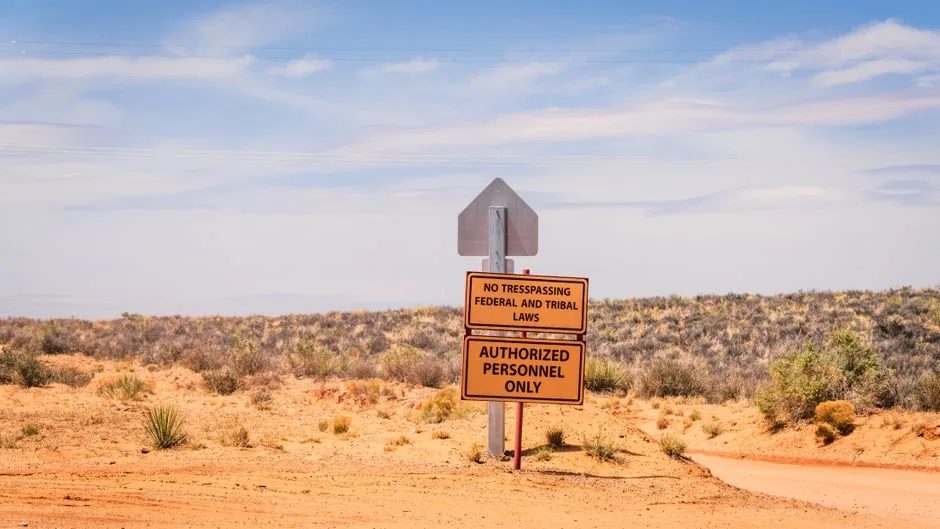
The federal government just got a judge to greenlight building a border wall on Native American land by citing a proclamation Teddy Roosevelt signed when Oklahoma wasn't even a state yet. The Tohono O'odham Nation put up 'No Trespassing' signs. A federal judge looked at those signs, looked at a 119-year-old piece of paper, and told the tribe to kick rocks. This is where we are.
What Actually Happened Here
Federal Judge Richard Leon cleared the way for border wall construction along the Tohono O'odham Nation's roughly 62-mile shared border with Mexico, according to Fox News. The tribe had argued the construction amounted to illegal trespassing on their land and would effectively shrink their reservation. They weren't being vague about it either. On August 8th, the Nation posted directly to Facebook warning that anyone connected to 'the illegal and destructive border wall' would 'be warned, informed of trespass and escorted off the Nation's land by law enforcement.'
That warning lasted about a week before Judge Leon issued his ruling. The tribe erected those no-trespassing signs after federal workers showed up on reservation land to scout construction sites, which, to be clear, they did without asking.
The 1907 Loophole That Built an Empire and Apparently Still Works
Here is the specific mechanism the court used, because it deserves a close look. Judge Leon pointed to a proclamation President Theodore Roosevelt signed in 1907 stating that all public land within 60 feet of an international boundary falls under exclusive federal control. Roosevelt's stated reason was preventing smuggling between the U.S. and Mexico. Fox News reports that Leon noted the Tohono O'odham reservation wasn't even formally declared a reservation until 1917, a full decade after Roosevelt's proclamation, which the judge treated as legally significant.
So the argument, in plain English, is this: the federal government claimed a 60-foot strip of land along the border before the reservation officially existed, therefore the tribe cannot now object to what the federal government does with it. 'Given the national security and foreign policy considerations related to the border wall, deference to the government is warranted,' Leon wrote. Deference to the government. On land the government took from the tribe using a rule the tribe didn't exist to contest at the time. That sentence is doing a lot of work.
The Tohono O'odham Nation has lived in the Sonoran Desert on both sides of what became the U.S.-Mexico border for centuries before that border existed. The reservation itself was established to give them a fraction of their original territory back. Now a wall is going through it, courtesy of Teddy Roosevelt's smuggling policy.
The Administration's Victory Lap
The Trump administration wasted no time framing this as a win. Fox News reports that DHS Secretary Markwayne Mullin's office said daily border apprehensions are down 94% compared to the Biden administration and sit at their lowest level in 30 years. Mullin called it proof that 'President Trump's border security agenda is restoring order and putting the safety of the American people first.'
'Thanks to the strong leadership of President Trump, we have the most secure border in history,' Mullin added. The administration also reported 15 consecutive months of zero border releases at the U.S.-Mexico border. Mullin said separately that the primary border wall from the Pacific to what the administration is calling the Gulf of America is on track for completion next year, with all contracts expected to be awarded by the end of the month. So the machine is moving, and one less tribe standing in the way is the news of the day.
What the Tribe Is Facing
The Tohono O'odham Nation's situation is not abstract. Their reservation shares 62 miles of border with Mexico, which means a border wall doesn't just pass near their community. It runs directly through their ancestral territory, through land that tribal members have crossed for generations to visit family, attend ceremonies, and tend to sacred sites that exist on both sides of an international line drawn without their input.
Tribal leaders have opposed border wall construction for years, consistently arguing that it damages the environment, disturbs cultural sites, and treats their homeland as a security corridor rather than a place where people actually live. The response from the court this week was essentially: that's noted, but a president who died in 1919 already settled this. Move along.
The Dingo Take
You are supposed to believe this is a straightforward legal outcome. A rule exists. The rule was applied. Justice was done. But look at the shape of it. The federal government is building a wall through a Native American reservation using a proclamation that predates the reservation itself, signed by a president who has been dead for over a century, to solve a problem the current administration has already declared largely solved. The tribe said no. They posted signs. They warned people off their land. A judge cited Theodore Roosevelt and told them their objection doesn't hold.
The 94% drop in apprehensions Mullin cites is real and it's significant. The administration's border policies have, by the numbers, dramatically reduced crossings. You can acknowledge that without also pretending the wall's path through tribal sovereignty is some clean, uncomplicated legal matter. These two things can both be true: the border is more secure, and the federal government just used a 119-year-old loophole to override a Native American nation's explicit objection to construction on their land. One of those facts is getting a lot more airtime than the other.
The Tohono O'odham put up no-trespassing signs and got a federal judge's ruling handed back to them like a parking ticket. The administration called it a win for national security. Somewhere, Teddy Roosevelt's proclamation about smuggling is doing more legal work than it has done in the past hundred years, and a tribe that has been in that desert since before the United States existed has no meaningful recourse. If that reads as normal to you, you might want to sit with that for a minute.





Comments