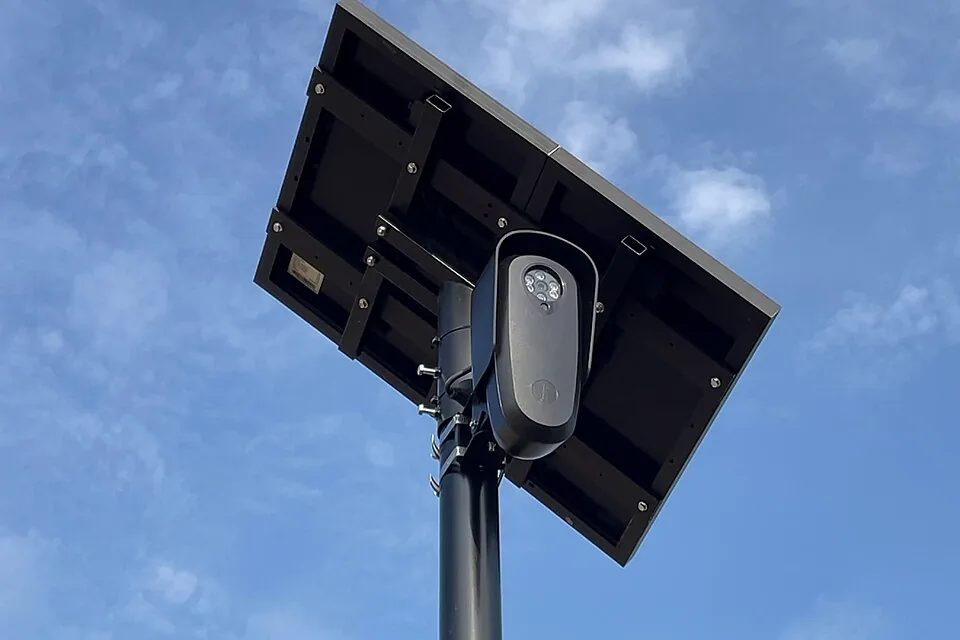
A private company has quietly built one of the largest vehicle surveillance networks in American history, and it turns out people are not thrilled about it. Flock Safety, the maker of AI-powered license plate readers deployed by police departments and homeowner associations across the country, is now drowning in privacy lawsuits and losing contracts fast enough that it felt compelled to announce policy changes this week. Nothing says "we were definitely doing this responsibly all along" like a sudden pivot to responsibility.
Who Is Flock Safety and Why Are They Watching Your Car?
If you have never heard of Flock Safety, that is sort of the point. The Atlanta-based company sells AI-powered license plate readers to law enforcement agencies, homeowner associations, and private businesses, stitching together a sprawling network that can track the movement of virtually any vehicle across thousands of communities. The cameras read plates, log timestamps and locations, and feed that data into a searchable system that police can query to reconstruct where your car has been.
According to The Hill, Flock has been facing a growing backlash from communities and civil liberties advocates worried about exactly what you would expect people to worry about when a private company builds a mass vehicle tracking network: mass vehicle tracking. The concerns are not abstract. This is a system that can tell you, in granular detail, where someone drove, when, and how often, without that person ever being suspected of anything.
The Lawsuits Are Piling Up
Flock is not just facing bad press. It is facing actual legal consequences, which in corporate America is the only language that tends to produce action. The Hill reports that privacy lawsuits have been filed and contracts terminated as communities push back against the scope of the surveillance infrastructure they unknowingly signed up to host.
This is the part of the story where you are supposed to feel reassured that the system works, that concerned citizens raised alarms and the courts stepped in. Sure. Except the cameras are still up. The data already collected does not un-collect itself. And the company's response to all of this was not to scale back the network. It was to announce tweaked privacy and data retention policies, which is the tech industry's version of a formal apology written in disappearing ink.
Terminated contracts are meaningful, but they represent individual communities opting out of a network that spans thousands of jurisdictions. One city pulling its cameras does not stop the cameras in the next city over from logging your plate the moment you cross the line.
The Policy Changes Nobody Asked For (But Flock Really Needs You to Notice)
On Thursday, Flock announced changes to its privacy and data retention policies, per The Hill. The company framed this as a good-faith effort to address concerns about mass surveillance and misuse. That framing deserves a bit of scrutiny.
Companies do not overhaul their privacy policies because they woke up feeling civic-minded. They do it because the lawsuits are expensive, the contract cancellations are hurting revenue, and the press coverage has become impossible to spin. Flock's announcement landed in the middle of a wave of legal and political pressure. Calling that a voluntary pivot is like calling a hostage negotiation a conversation.
The specifics of what exactly changed in the policies matter enormously here, and they will matter even more when civil liberties groups and plaintiff attorneys start picking through the fine print. Announcing a policy change is easy. Changing the underlying architecture of a surveillance network is not, and nothing in Flock's announcement suggested they are doing the latter.
The Bigger Picture Nobody Wants to Talk About
Flock Safety is one company. It is not the only company doing this. The AI-powered license plate reader market is growing, and the business model is seductive for local governments: outsource the surveillance infrastructure to a private vendor, get the law enforcement capability, and let someone else take the heat when the civil liberties questions start coming. Except the heat eventually comes for the governments too, because they signed the contracts.
What makes Flock's network particularly potent, and particularly alarming, is its scale. Individual cameras are not the concern. The concern is interconnection. A single Flock camera in a suburb does not tell you much. Thousands of them, networked together, feeding into a shared database that law enforcement can query in real time, gives you something that would have required a massive government program to build twenty years ago. Now a private company does it, mostly out of public view, funded by HOA fees and police department budgets.
There are no federal laws specifically governing this kind of surveillance network. A handful of states have started moving on the issue. Most have not. The legal framework protecting Americans from having their movements logged and stored indefinitely by a private company is, to put it generously, incomplete.
Civil Liberties Groups Have Been Screaming About This for Years
The ACLU and other civil liberties organizations have been raising alarms about automated license plate reader technology for over a decade. The argument has always been straightforward: the Fourth Amendment protects against unreasonable searches, but courts have generally held that driving on a public road removes your expectation of privacy from observation. What courts did not anticipate was a private company automating that observation at scale and retaining the data indefinitely.
The legal doctrine that driving in public means surrendering privacy was developed in an era when "surveillance" meant a cop watching an intersection. It was not developed for a world where an algorithm can reconstruct every trip you took over the past ninety days from a searchable database. That gap between legal doctrine and technological reality is exactly where Flock Safety has built its business.
The backlash The Hill is reporting on represents communities starting to catch up to what was already deployed. That lag, between the technology going in and the public realizing what the technology does, is not an accident. It is a feature.
The Dingo Take
You are supposed to believe that a private company building a nationwide vehicle tracking network, facing a wave of lawsuits and contract cancellations, announcing policy tweaks under legal pressure, represents the system working correctly. It does not. This is the system failing slowly enough that it looks like progress.
Flock Safety did not build this network in secret. They sold it, openly, to thousands of police departments and private communities who were happy to get the capability without thinking too hard about what they were signing up for. The cameras did not go up overnight. Local governments approved contracts. HOA boards voted yes. The surveillance infrastructure that is now generating lawsuits was welcomed in through the front door, one community at a time, because it came with a pitch about catching car thieves and finding missing persons. Those things are real. The mass surveillance of everyone who drives past a camera is also real, and it is not incidental to the product. It is the product.
Flock changing its data retention policy does not change the fundamental reality of what it built. The question every city and county with a Flock contract should be asking right now is not whether the new privacy policy is better. The question is whether the tradeoff was ever worth it to begin with, and who exactly got to make that decision on behalf of every resident whose plate got logged.




Comments