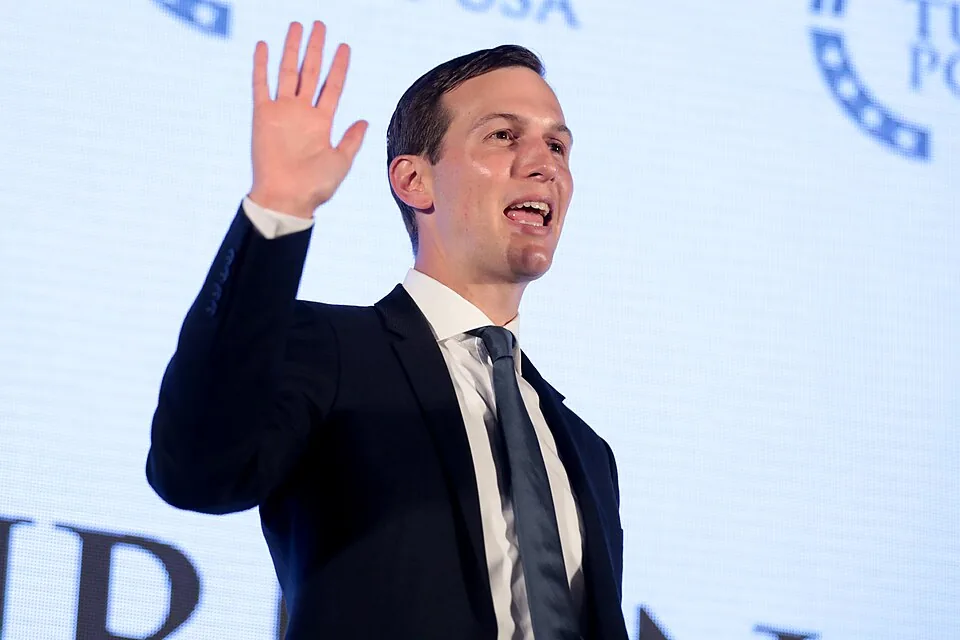
Jared Kushner, the man who once said he could solve Middle East peace in his spare time while running a real estate empire, sat down with Hamas leadership in Egypt on Sunday for a 90-minute meeting about actually disarming Gaza. According to Axios, which cited a source with direct knowledge of the talks, Hamas reiterated its commitment to demilitarize. Whether that means anything at all remains the central question of every conversation anyone has ever had about this conflict.
What Actually Happened in That Room
The meeting took place in Egypt and lasted an hour and a half, according to Axios. Kushner, who serves as a Trump adviser and is part of the administration's so-called Board of Peace, used the face-to-face session to press Hamas on tangible steps toward disarmament. A source described the talks as "very productive" at ensuring Hamas takes practical action on commitments it has already made.
This was not a Zoom call. Not a back-channel message through intermediaries. Kushner sat in a room with Hamas leaders and told them, in whatever diplomatic register he uses, that Israel does not trust them to follow through. Which, to be fair, is a reasonable thing for Israel to believe, and also a remarkable thing for a senior American official to say directly to Hamas in real time.
The White House and the Board of Peace are pushing both Hamas and Israel to advance to the next phase of whatever framework is currently holding this ceasefire together. What that next phase looks like in practice is not yet public. But the fact that this meeting happened at all is significant, regardless of where you sit on the ideological spectrum.
The Part Where We Note How Weird This Is
Let's just take a beat here. Jared Kushner, the former New York real estate developer who married into the Trump family and whose 2020 "Peace to Prosperity" plan was largely dismissed by Palestinian leadership before the ink was dry, is now conducting direct negotiations with Hamas in a third country about the practical mechanics of disarming one of the most entrenched militant organizations on earth. That is the sentence we are in.
Hamas, for its part, is a designated foreign terrorist organization under U.S. law. American officials engaging directly with designated terrorist groups is not standard operating procedure, to put it extremely mildly. The Trump administration has clearly decided that the rules around that designation are either flexible enough or irrelevant enough to proceed anyway. No one in the White House appears to have issued a legal explanation for how this works.
None of that means the meeting was wrong to have. Diplomacy often requires talking to people you'd rather not talk to. But it is worth being clear-eyed about the fact that the same administration that spent years calling anyone who so much as suggested humanitarian consideration for Gazans a terrorist sympathizer is now sending the president's son-in-law to Egypt to shake hands and exchange talking points with Hamas directly.
What Hamas Saying It Will Disarm Actually Means
Hamas has said things before. Many things. Including things about ceasefires, hostage negotiations, and governance arrangements that later turned out to mean something considerably different in practice than they appeared to mean on paper. Israel's skepticism, which Kushner reportedly conveyed directly, is not paranoia. It is a position grounded in roughly two decades of documented evidence.
That said, the context here is different from any previous moment in this conflict. The war has ground Gaza into rubble. Hamas's military capacity has taken catastrophic losses, according to reporting by multiple outlets over the past year. A pledge to disarm in this environment is not the same as a pledge to disarm from a position of strength. Whether the organization's leadership has the ability to actually deliver on that pledge, even if they genuinely intend to, is a completely separate question that nobody seems to have answered publicly yet.
Kushner pressing for "tangible steps" rather than more verbal commitments is the right instinct, at least. Words from Hamas leadership have a very short shelf life. If the Board of Peace is serious about this, they need mechanisms, monitors, and a sequenced process that doesn't rely on anyone simply taking anyone else's word for it.
Where the Broader Deal Stands
The Trump administration has been pushing to move the Gaza situation to what officials are calling the next phase, according to Axios. The contours of that phase are not fully public, but the general framework involves some combination of continued hostage releases, reconstruction agreements, and the thorny question of who governs Gaza after Hamas in any meaningful way.
That last question might be the hardest one in the entire negotiation. Disarmament is a process. Governance is a vacuum. And vacuums in post-conflict territories have a well-documented historical tendency to get filled by whoever is most organized, most armed, or most willing to operate in chaos. The international community has not produced a credible plan for who runs Gaza the day after Hamas formally lays down its weapons, and no such plan appears to be imminent.
The Egypt location for this meeting is not incidental. Cairo has served as a key mediating party throughout the Gaza ceasefire process, alongside Qatar. Holding a Kushner-Hamas meeting on Egyptian soil gives both sides a degree of diplomatic cover and keeps a friendly broker in the room, or at least nearby. It is standard regional diplomacy. It is also a sign that the talks have reached a level of seriousness that requires in-person American pressure, not just messaging through intermediaries.
The Dingo Take
You are supposed to believe this is all going fine. A 90-minute meeting described as "very productive" by a single anonymous source is the sum total of what the public knows about one of the most consequential diplomatic encounters in years. The White House, as of this reporting, has not issued a statement. Kushner has not spoken on the record. Hamas has not released any details. "Very productive" is the kind of phrase people use when they want credit for showing up without being held to anything specific that was said.
That skepticism is not cynicism for its own sake. The track record here demands it. Kushner's previous signature Middle East achievement, the Abraham Accords, was genuinely significant for normalizing relations between Israel and several Gulf states. It also completely bypassed the Palestinians, which many analysts argued at the time simply deferred the core conflict rather than resolving it. The October 7 attacks and the war that followed did not prove those analysts wrong. Now the same architect is back at the table, this time actually talking to Hamas, and we are once again in a position of hoping that a real estate lawyer with a famous last name has figured something out that career diplomats spent decades failing to crack.
Maybe he has. Stranger things have happened in this part of the world. But the bar for celebration here should be a signed, verified, monitored disarmament process with international backing, not a readout from an anonymous source calling a meeting productive. Until there are tangible steps, in public, with accountability attached, this is a talking point, not a breakthrough.



Comments