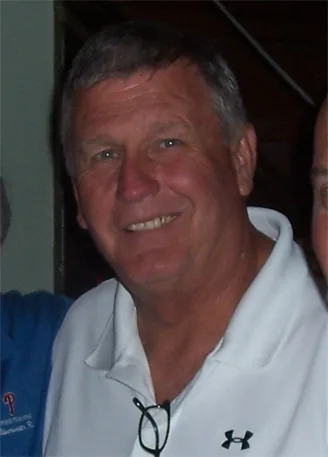
Tommy John died Saturday at his home in Bradenton, Florida, surrounded by family, at 83 years old. He was a four-time All-Star who won 288 games over 26 seasons and never won a Cy Young Award. None of that is why every baseball fan on earth knows his name.
The Surgery That Changed Everything
In July 1974, John was pitching for the Los Angeles Dodgers when he threw a pitch to Montreal Expos batter Hal Breeden and felt, in his own words, like he had "left my arm someplace else." A torn ulnar collateral ligament. Career over, conventional wisdom said.
Conventional wisdom was wrong. Dodgers team physician Dr. Frank Jobe proposed something that had never been done to an elbow before: replace the ligament entirely with a tendon harvested from elsewhere in the patient's body. John, facing the end of the only career he'd ever wanted, said yes. The New York Post reported that Jobe performed the operation that September, pulling a tendon from John's right forearm and threading it through the damaged elbow.
The procedure worked. More than worked. John returned to the Dodgers rotation in 1976, made 31 starts, threw two shutouts, and finished second in the National League Cy Young voting the following year, according to the Post. He then pitched for another 13 years, retiring in 1989 at age 46 as the oldest active player in the sport.
Of the 288 wins John accumulated over his career, CBS News reports that 164 came after the surgery. More than half his career victories happened because a doctor tried something no one had tried before.
Silly Putty, Rehab, and Two Lost Years
The comeback did not happen overnight. John sat out the entire 1975 season rebuilding strength in a surgically reconstructed arm with no roadmap and no precedent. He was making it up as he went.
As he told The New York Times in 1977, he worked with Dodgers trainer Bill Buhler on an unconventional regimen that included soaking his arm and squeezing Silly Putty. "I put together three of those Silly Putty eggs," John said. "Bill Buhler told me that Silly Putty was better than a rubber ball because I could squeeze all the way through it." That image, a major league pitcher rebuilding his elbow with a children's toy, is somehow both absurd and completely moving.
When he finally came back in 1976, nobody called him a cautionary tale. They called him the Bionic Man.
Twenty-Six Years, Six Teams, One Legacy
John's career arc was long and peripatetic even before the surgery made it legendary. Born in Terre Haute, Indiana on May 22, 1943, he turned down college basketball scholarships to sign with Cleveland out of high school, per the New York Post. He made his MLB debut with the Indians in 1963, was traded to the Chicago White Sox before the 1965 season, led the league in shutouts twice with Chicago, and was dealt to the Dodgers in December 1971 in exchange for Hall of Famer Dick Allen.
After the surgery and the comeback, John became a free agent in 1979 and signed with the Yankees, the team that had just beaten his Dodgers in the 1978 World Series. He topped 20 wins in each of his first two Bronx seasons and helped carry them back to the 1981 World Series, where he allowed just one run across 13 innings in three appearances, according to the Post. The Yankees lost to the Dodgers that year, which is either poetic justice or a cruel joke depending on your geography.
He bounced through the California Angels and Oakland A's before returning to New York, where he made his final start in May 1989. His 700 career starts rank eighth all-time. His 4,710 and one-third innings pitched sit nineteenth on the all-time list. The man simply would not stop pitching.
The Name Every Pitcher Knows
Tommy John surgery is now among the most routinely performed procedures in sports medicine. Shohei Ohtani had it. Justin Verlander had it. Jacob deGrom had it. Gerrit Cole, who only just returned to the Yankees mound this season after his own procedure in 2025, spoke about John after a Yankees win on August 8, according to MLB.com.
"The surgery itself is saving us, but the player had to step up to the table and do it," Cole said. "Having gone through the process, I can imagine that he was just as diligent, if not more diligent, to the rehab process, and really writing the book for all of us, to a certain extent."
Writing the book. That is exactly right. John had no book to read, no recovered pitcher to call, no percentage rates to study. He just said yes to an experimental surgery and then squeezed Silly Putty for a year. Every pitcher who has since had that ligament replaced and come back to throw a pitch owes something to that decision.
A Farewell Letter and a Life Beyond Baseball
John had been in hospice care in recent weeks, Reuters reported. He missed the Yankees' annual Old-Timers' Day on August 8, and the team shared a farewell letter he had written. It was gracious and warm and very much the letter of a man who knew what he was writing.
"Thanks to Dr. Jobe, who saved my arm and made it possible for me to continue pitching," John wrote. "That surgery has since gone on to save the careers of countless pitchers, including many of the very best in the game today. Thank you to all the fans who supported me and my teammates for 26 years. I will never forget you."
His life carried grief alongside the glory. The New York Post reports that his son Travis survived a fall from a third-story window as a two-year-old. His son Taylor died by suicide in 2010, and John subsequently worked with the American Foundation for Suicide Prevention. He had also been diagnosed with bladder cancer. After his playing days, he did broadcasting work for the Yankees and Twins and managed in the minor leagues, including a stint with the Staten Island Yankees in 2004. He is survived by his wife Cheryl and three children: Tommy, Travis, and Tamara.
The Hall That Kept Saying No
Here is the one genuinely maddening footnote to all of this. Tommy John never made the Baseball Hall of Fame. Two hundred and eighty-eight wins, 2,245 strikeouts, a 3.34 ERA, 26 seasons, and a medical contribution to the sport that has arguably preserved more careers than any individual player in history. The voters kept passing.
The New York Post put it bluntly: only Roger Clemens, whose Hall candidacy collapsed under performance-enhancing drug allegations, has more career wins in the Modern Era without a Cooperstown plaque. John's exclusion was always a quiet scandal in baseball circles. It may be a louder one now that he is gone.
The Dingo Take
You are supposed to look at 288 wins, 26 seasons, and a surgery that saved the careers of Shohei Ohtani and Gerrit Cole and conclude that this man did not belong in the Hall of Fame. The voters managed it, year after year, with apparent ease. There is no logical explanation that survives scrutiny. John did not have a scandal. He did not have a drug allegation. He had the wrong counting stats for voters who wanted 300 wins and the bad luck of pitching in an era that did not fully understand what it was watching.
What he did have was the guts to let a doctor try something genuinely experimental on his elbow in 1974, sit out a full year with nothing to guide his rehab but determination and children's modeling compound, and then come back and pitch thirteen more years. He wrote the chapter every pitcher who followed him has been reading ever since. That is not nothing. That is not even close to nothing.
Tommy John died at 83 surrounded by his family, having lived long enough to see his name become a permanent part of the sport's vocabulary. Every pitcher who has thrown a pitch this season with a reconstructed UCL is, in some small and literal sense, pitching partly because of what he agreed to in 1974. Cooperstown missed its chance. The rest of baseball did not.




Comments