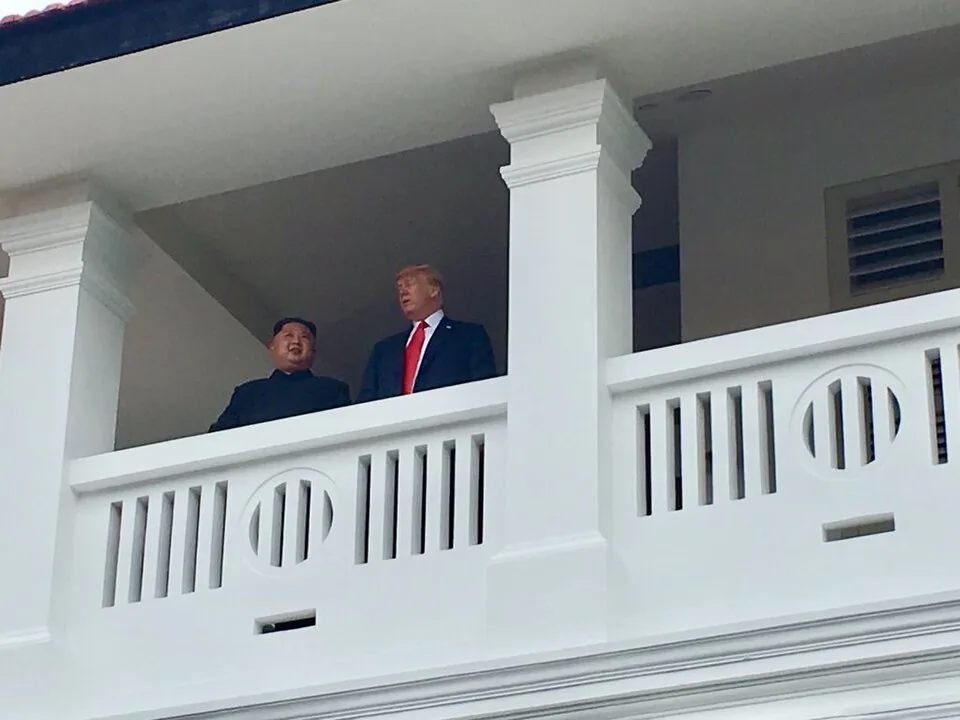
One day before the United States and South Korea were scheduled to begin their regular joint military exercises, Donald Trump announced he was ordering them gutted — and cited his warm feelings toward the leader of a hostile nuclear dictatorship as justification. This is not a drill. Well, actually, it literally is, and Trump is canceling it.
What Trump Actually Did
Trump posted on Truth Social Sunday evening instructing Defense Secretary Pete Hegseth to 'substantially reduce' joint U.S. military exercises with South Korea. According to BBC News, the US and South Korea were due to begin their regular drills on Monday, making this a last-minute gut punch to a decades-old alliance.
Trump's reasoning, in his own words: the exercises are 'costly, with much of these costs paid for by the United States of America (as usual!)' and that they 'send a signal that is totally inappropriate and hostile.' Hostile. To our ally. Not to the nuclear-armed authoritarian regime directly above them. Got it.
Axios reports that Trump also took a swipe at South Korea for declining his request to join the US in pressuring Iran to denuclearize. So Trump apparently asked a country that lives under the shadow of North Korean ICBMs to help him with a Middle East nuclear standoff, got told no, and responded by weakening their military readiness. Classic transactional diplomacy from a guy who treats alliances like Yelp reviews.
The Kim Jong Un Part, Which You Cannot Skip
Here is where it gets truly special. Trump specifically cited his 'very good relationship' with North Korean dictator Kim Jong Un as part of his stated rationale. Not a security assessment. Not a cost-benefit analysis from the Pentagon. His personal friendship with a man who runs concentration camps and fires ballistic missiles over Japan.
BBC News notes that Trump has broken with American foreign policy norms on North Korea going back decades, and that his last in-person visit with Kim was in 2019. That meeting produced exactly zero verified concessions from North Korea on its nuclear program. Kim kept his weapons. Trump kept his feelings. South Korea, apparently, gets to keep less military protection.
Let's just sit with that for a second. The sitting president of the United States weakened a formal treaty ally's joint defense posture because he has a pen pal situation with the guy threatening to destroy that ally. This is the foreign policy equivalent of canceling your friend's home security system because you get along great with the guy who robs houses on their street.
Why These Exercises Exist in the First Place
The US-South Korea joint military exercises are not a flex. They are a maintenance requirement for an alliance that has kept the Korean peninsula from erupting into full-scale war since 1953. These drills exist so that American and South Korean forces can actually coordinate in real time if North Korea moves. They are logistical rehearsals for a catastrophe nobody wants.
North Korea has consistently demanded the US halt these exercises. It is one of Pyongyang's longest-standing conditions for any diplomatic engagement. Every time the US has scaled back drills in the past, under pressure from Trump in his first term or otherwise, North Korea has taken the concession, offered nothing in return, and kept building missiles. The playbook is not complicated. Trump just keeps running it anyway.
South Korea has approximately 51 million people living within artillery range of the North Korean border. Whatever frustration Trump has about burden-sharing costs or Iran diplomacy, the people absorbing the consequences of reduced readiness are not the ones who declined his request on a phone call.
Hegseth Gets His Orders
Defense Secretary Pete Hegseth is the man now tasked with executing this. Axios reports Trump said he instructed Hegseth directly to carry out the reduction. Hegseth, who came into the Pentagon with no senior military or defense policy experience, has spent his tenure obligingly following Trump's most destabilizing instincts on military matters.
The Pentagon has not, as of this writing, issued any detailed operational guidance on what 'substantially reduce' actually means in practice. How many exercises? Which components? What timeline? Those details apparently did not make it into the Truth Social post, which is where American defense policy now originates.
The Allies Are Watching
South Korea is not the only country paying attention to this. Japan, Taiwan, the Philippines, and every other US treaty partner in the Indo-Pacific is watching what happens when you decline a Trump request and what happens when you stay on his good side. The lesson being taught right now is that formal alliance commitments are conditional on personal loyalty to Trump's agenda of the week.
This comes at a moment when China is watching very carefully. Beijing has long wanted American military presence in the Pacific degraded. Trump is handling that project for them, for free, because South Korea did not want to get involved in Iran. You genuinely could not write this as fiction. An editor would send it back.
The Dingo Take
Trump is not confused about what he is doing here. He knows what these exercises are for. He canceled versions of them in his first term too, came back and restarted them, and called them 'war games' like that was a pejorative. The consistent throughline is not strategic thinking about cost or readiness. It is that he likes Kim Jong Un. He has always liked Kim Jong Un. The flattery worked. A dictator who figured out that a little personal warmth gets you American defense concessions has played this better than any foreign policy professional in Washington has wanted to admit.
South Korea is a democracy of 51 million people with a mutual defense treaty with the United States. North Korea is a hereditary dictatorship with nuclear weapons and a gulag system. Trump's affection runs toward the latter. That is the fact you are supposed to not notice because it is uncomfortable and because we have all gotten numb to the daily erosion of things that used to be bedrock American foreign policy.
The cost accounting in Trump's post, the 'as usual!' about who pays, is a distraction. Yes, burden-sharing is a legitimate policy debate. It is not the reason this happened the night before exercises were set to begin, and everyone knows it. Kim gets another win. South Korea gets a gut-punch. And Pete Hegseth gets his orders via social media. This is the United States of America in August 2026.


Comments