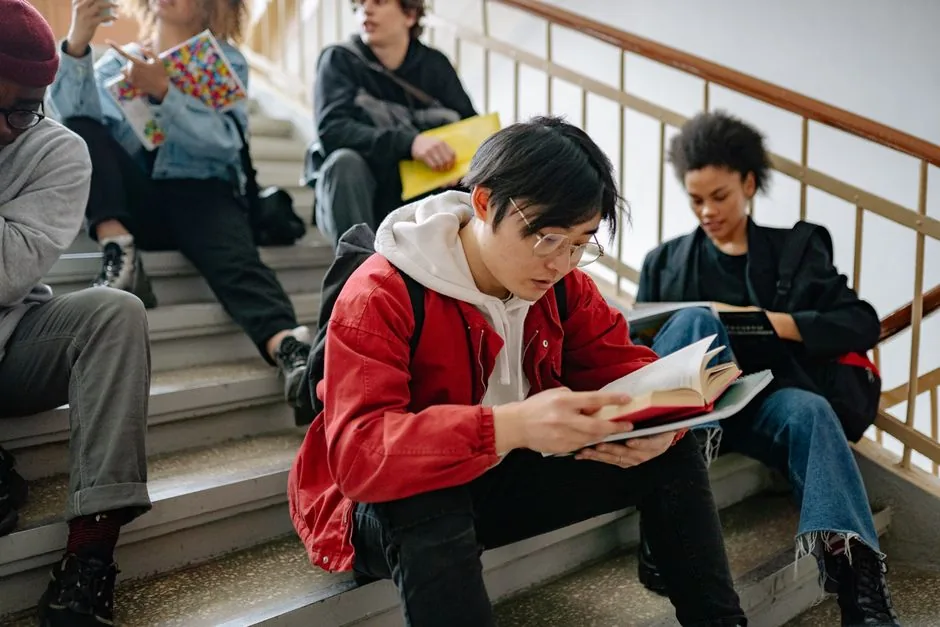
A generation raised on Tinder swipes and Instagram DMs has apparently reached its breaking point, and the solution they've landed on is going outside to watch birds with strangers. According to Axios, millennials and Gen Zers are now showing up en masse for in-person meetups built around activities so quiet and solitary that previous generations did them specifically to get away from other people. Chess clubs. Silent reading groups. Birdwatching. Your grandmother's entire social calendar, basically.
The Apps Lost. Birds Won.
Let's set the scene. You are twenty-three years old. You have a phone with seventeen apps designed to connect you to other humans. You have used them. You have swiped until your thumb developed opinions. You have sent the opening message. You have been left on read. You have watched four seasons of something on Netflix in a single weekend and referred to it, without irony, as 'self-care.'
And then one day you put the phone down, walked into a park, and looked at a bird with a group of people you'd never met before. And something in your chest unclenched.
That is, broadly, what Axios is reporting is happening across the country right now. Young people are abandoning the parasocial scroll and showing up, in actual physical space, to do things together that don't require talking very much. The loneliness epidemic everyone has been loudly warning about for a decade has apparently hit a wall, and the wall has a birdfeeder on it.
The Kids Are Not Okay, But They're Outside
Cole Robinson, president of the Audubon on Campus chapter at Trinity University in San Antonio, put it with the kind of blunt clarity that makes you want to shake someone's hand. "It's very easy to sit inside and rot just by yourself," Robinson told Axios. That is a direct quote from a college student in 2026. 'Rot.' The verb of a generation.
He went on to say that activities like birding can help you feel a little less alone. Which is, when you think about it, the entire point of civilization. The wheel. Written language. Bird clubs. All of it, just humans trying not to feel alone in a universe that does not care about them.
What's striking here is what these meetups are built around. Not bars. Not networking events with lanyards and name tags and a table of lukewarm bruschetta. Chess. Silent reading. Birdwatching. Activities that, until very recently, were coded as things you did when you had given up on people. The taxonomy has flipped entirely.
How Did We Get Here
The short answer is: the apps failed. Not failed in the sense that nobody used them. Failed in the sense that hundreds of millions of people used them constantly and still ended up profoundly, structurally alone. Bumble and Hinge and their fourteen thousand competitors promised connection and delivered a dopamine slot machine that occasionally produced a bad date in a loud restaurant.
The loneliness epidemic is not a vibe or a trend piece subject. Surgeon General Vivek Murthy called it a public health crisis. Research has consistently shown that chronic loneliness carries health risks comparable to smoking fifteen cigarettes a day. The infrastructure of casual, low-stakes social contact that used to happen naturally through neighborhoods and civic organizations and, yes, hobby groups has been quietly dissolving for fifty years. Robert Putnam wrote the book on it, literally, in 2000. It's called Bowling Alone. We have been bowling alone ever since, and then wondering why we feel terrible.
Gen Z didn't create this problem. They inherited it, marinated in it during a pandemic that shut down every physical space where humans naturally congregate, and are now apparently trying to solve it the old-fashioned way: by leaving the house.
Grandma Hobbies as Radical Act
There is something genuinely funny about the fact that the cutting edge of youth social culture right now is birdwatching. Your aunt who retired to Florida and sends you binoculars for Christmas is, it turns out, ahead of the curve. She has been thriving for years.
But the humor here is the kind that lands and then sits with you. Because what these young people are actually doing is rejecting a thirty-year tech industry consensus that said real life was the problem and the screen was the solution. They grew up as the first generation to have that argument made to them before they could drive. The phone was in their hand before they had their first conversation about what they wanted to be. And they are now, as adults, choosing the thing the tech industry told them was obsolete.
Showing up somewhere with your body. Sitting next to another person. Looking at the same bird.
What This Probably Means
Axios frames this as a dating trend, and fair enough, romantic connection is part of what people are looking for in these spaces. But the more important story is slightly to the left of that. People aren't going to silent book clubs because they hope to marry someone who also likes quiet. They're going because they want to be in a room with other people without the pressure of performing connection on demand.
A birdwatching group doesn't require you to be interesting. A chess meetup doesn't require you to be attractive. You just have to show up, which turns out to be the hardest part after several years of very successfully not doing it.
The question is whether this is a durable shift or a moment. Whether enough of the civic and social infrastructure exists to support it, or whether people will show up for three meetups and then download a new app because the app is easier. The ease is always the problem. The thing that feels frictionless is the thing that has been slowly eating everyone.
The Dingo Take
You are supposed to believe that the story here is a quirky generational pivot, a fun little trend piece about kids doing crossword puzzles together. It is not. What Axios is actually describing is a generation attempting to manually reconstruct the social fabric that was sold to them as unnecessary. Every chess club and silent reading meetup is a small vote against the idea that algorithmically mediated connection is the same as being in the same room as another human. It is not the same. It has never been the same. The tech industry spent twenty years and billions of dollars arguing otherwise, and the result is a loneliness crisis with the morbidity statistics of a smoking habit.
The birdwatching kids are not naive. They are not digital detox evangelists doing a cleanse before returning to the scroll. They are people who grew up entirely inside the experiment, saw the results, and decided to try something else. That something else is, hilariously, exactly what their grandparents did on Tuesday afternoons in 1974. History has a sense of humor and it is extremely dry.
None of this fixes the structural rot. A birding club does not replace affordable housing or a functioning public square or a government that treats social isolation as the health crisis it demonstrably is. But Cole Robinson standing in a park watching birds with strangers instead of rotting alone in his apartment is, against very long odds, a hopeful thing to report on. The bar is low. He cleared it. Sometimes that's where we are.




Comments