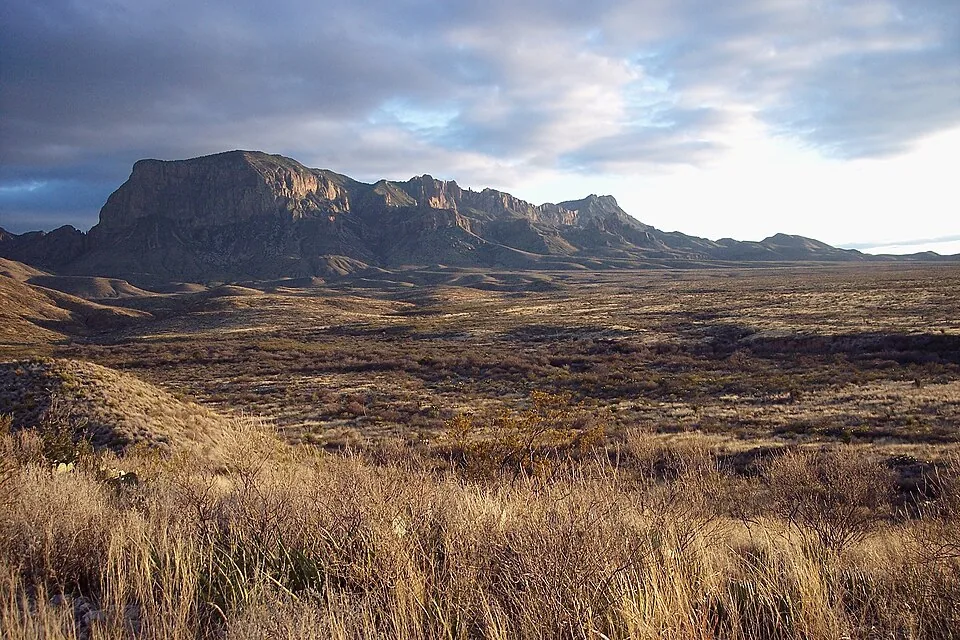
The Trump administration has temporarily paused border construction inside Big Bend National Park after bulldozers were spotted ripping through one of the most beloved stretches of wilderness in the American Southwest. The pause came not just from environmentalists and Democrats, but from Texas Republicans who apparently have a line they won't cross — and it runs through a national park. Nobody is throwing a party yet, because the word 'temporary' is doing a lot of heavy lifting here.
What's Actually Happening Down There
Customs and Border Protection chief Rodney Scott announced Monday that all construction activity in Big Bend National Park is on hold while he flies out for what he called a "personal, on-the-ground evaluation." Scott said on X that he plans to "listen to local leadership, community members and stakeholders" over the next couple of days. He also made sure to mention the "real" national security threats in the area, just so nobody got the impression he'd gone soft.
The New York Post reports that the administration has already been moving forward with a road, lights, miles of vehicle barriers, and buried fiber optic cables through the park, after backing off an earlier plan to build a 30-foot bollard wall through it. So the pause is not on a wall wall. It's on a somewhat-less-dramatic-but-still-very-much-a-wall wall. Progress.
CBP told people that the bulldozers spotted clearing land last week were just for "survey and design work." Sure. Surveys that require bulldozers. Very normal survey behavior.
The Bipartisan Part Is the Part Worth Reading Twice
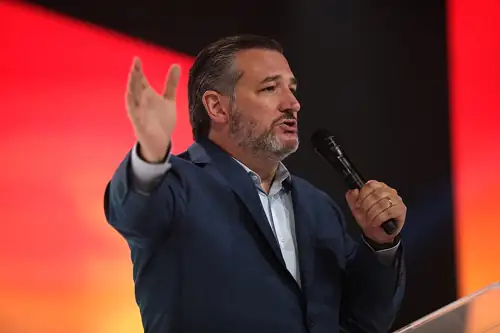
Here's the detail that actually moves this story out of routine Trump-administration-does-something-destructive territory: the opposition isn't just from the left. Democratic and Republican sheriffs in the region have both come out against the construction. Former national park officials are furious. Local residents who make their living off park tourism are furious. And Senator John Cornyn, a Republican from Texas, wrote directly to Homeland Security Secretary Markwayne Mullin to raise concerns.
Cornyn's letter, as reported by the New York Post, argued that the 1,000-foot riverbank cliffs and remote terrain around Big Bend already act as a natural deterrent to crossings. He described steep mountains, deep canyons, and expansive deserts. In other words: a Republican U.S. senator wrote a letter to a Trump cabinet secretary to explain that nature already built a wall there. The irony is almost too rich to eat.
Border crossings in the Big Bend area have historically been lower than other regions along the border and have dropped further over the past two years, according to the Post. So the argument for tearing up a pristine national park to stop a problem that is not especially acute there requires some creative logic.
Forty-Six Billion Dollars Doesn't Pause Easily
Congress handed the Trump administration $46 billion last summer to build a wall stretching from the Pacific Ocean to the Gulf of Mexico. That is not a number that produces cautious, methodical construction decisions. That is a number that produces bulldozers in national parks at speeds that make regulators dizzy.
Scott has publicly said he expects the first layer of the wall to be completed by the end of next year. The administration has been waiving regulations left and right to hit that timeline, including a broad regulatory waiver covering the Big Bend region that is currently being challenged in court by the Center for Biological Diversity. With that kind of deadline pressure and that kind of money in motion, a voluntary two-day pause for a listening tour is a pretty small concession to extract from this administration.
The Post describes this pause as "a rare concession" from Trump's team. And it is. Which tells you something about how intense the pressure has gotten when even a rare concession is on the table.
What the People Actually Fighting This Think
Activists who have been organizing against the Big Bend construction called the pause "welcome news" while making very clear they are not celebrating yet. The Center for Biological Diversity, which sued Homeland Security over the regulatory waivers, warned that construction could resume "at any moment." Their spokesperson Laiken Jordahl said the pause proves that "non-partisan public pressure is mounting" but was explicit that nothing short of canceled contracts, rescinded waivers, and scrapped wall plans across the entire greater Big Bend region would be acceptable.
Bob Krumenaker, who ran Big Bend National Park from 2018 to 2023 and now chairs the group Keep Big Bend Wild, told the Post he was "wary but optimistic." He laid out a clear checklist of what a meaningful response would actually look like: remove the equipment from the park, publish a transparent plan going forward, and repair whatever damage has already been done. "Let's hope they significantly modify their plans in response to what they hear," he said. The word "hope" is doing some real work in that sentence.
The Broader Pattern Along the Border
Big Bend isn't the only place where the wall-building blitz has run into resistance this year. Native American groups have accused contractors of desecrating religious sites. A small Texas town says the wall threatens its levee system. A Catholic archdiocese has complained that construction in El Paso mars a significant religious site. The administration keeps waiving regulations and pushing forward, but the opposition is getting louder and more geographically scattered.
What's different about Big Bend is the politics. When the resistance to a Trump priority project includes Republican sheriffs, a Republican senator, former park officials appointed across multiple administrations, and rafting guides who vote straight ticket, that is not a standard-issue environmental protest. That is a coalition broad enough to make the administration at least pretend to stop and think.
The Dingo Take
You are supposed to believe that sending the CBP director to stand in a national park for two days and "listen" represents a genuine policy inflection point. It does not. What it represents is an administration that got caught with bulldozers in a beloved national park, watched a Republican senator send a complaint letter, and decided to buy itself some breathing room before doing whatever it was going to do anyway. If the waivers aren't rescinded and the equipment doesn't leave, this pause is just optics with a Southwest backdrop.
The $46 billion price tag and the end-of-next-year deadline are the only numbers that actually matter here. Those numbers don't care about riverbank cliffs or stargazing or the feelings of local raft guides. They create pressure to build, fast, everywhere, and the Big Bend pause is a speed bump on a highway. Krumenaker and the folks at the Center for Biological Diversity are right to keep the heat on, because the moment the cameras move to the next outrage, the bulldozers will move too.
Cornyn wrote that the terrain itself already acts as a barrier. He's correct. The administration knows he's correct. Border crossings in Big Bend were already low and falling. None of that matters to a project whose actual purpose is to be visible, to be photographable, to be a monument to having kept a promise. Big Bend National Park is getting a wall not because Big Bend needs one, but because the map does.

Comments