Donald Trump announced Sunday that he is ordering the Pentagon to scale back joint military exercises with South Korea because, in his own words, North Korea has been 'unthreatening and respectful' to him personally. The 11-day drills involving 18,000 South Korean soldiers exist specifically to deter a nuclear-armed dictatorship from invading a U.S. ally. But sure, let's gut them because Kim Jong Un has been polite.
What Trump Actually Said, Word for Word
Trump posted on Truth Social that he is 'not happy' with the United States' longstanding agreement to conduct joint military exercises with South Korea. He cited his 'very good relationship with Kim Jong Un' as the primary reason. He also said the exercises 'send a signal that is totally inappropriate and hostile' to North Korea. To be clear, that is the intended function of a military deterrent.
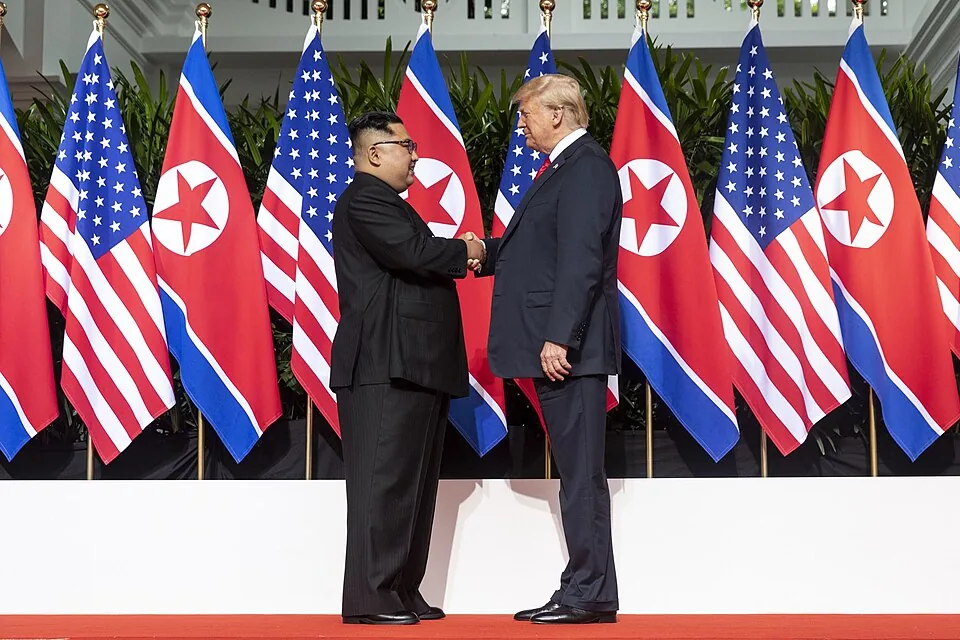
He said it was 'too late to cancel' the current exercises entirely, so he ordered Defense Secretary Pete Hegseth to 'substantially reduce' them instead. The day before this announcement, CBS News reports, Trump had posted a photo of himself standing next to Kim with the caption that the two leaders get along great 'despite the unfriendly look on this particular picture.' The whole thing reads less like foreign policy and more like a man managing a complicated situationship.
Trump also threw in that he had recently asked South Korea's president to join a U.S. effort to denuclearize Iran, and South Korea declined. He called this 'somewhat unrelated' to his decision to scale back the military partnership. He then immediately related it, because it was in the same Truth Social post, about the same country, on the same day.
What Those Exercises Actually Do
The drills Trump just kneecapped were designed to practice joint operations between U.S. and South Korean forces in realistic combat scenarios. According to CBS News, that includes live-fire exercises testing joint precision targeting, wet gap crossing operations, and distribution of prepositioned military equipment. These are not symbolic gestures. They are rehearsals for repelling an actual invasion.
The U.S. military's own description of the exercises called them 'the linchpin for regional peace and security' and an 'ironclad commitment' between the U.S. and South Korea to defend their homelands. That language was written by the Department of Defense. The same department whose secretary Trump just ordered to substantially reduce those exact exercises.
South Korea's presidential office said Monday it was closely following Trump's social media message and hoped for 'meaningful dialogue' between the two countries, according to AFP. That is diplomatic language for 'we just found out our primary security guarantor is making major alliance decisions via Truth Social post, and we are trying not to scream.'
North Korea's Response Was Actually Threatening
Here is a detail worth sitting with. North Korea on Friday threatened 'unspecified stern steps' against the U.S. and South Korea, calling the military drills a 'rehearsal for an aggressive war.' This is the country Trump just described as 'unthreatening and respectful.' On Friday, they threatened unspecified stern steps. On Sunday, Trump rewarded them by ordering the drills scaled back.
CBS News notes that this kind of threatening rhetoric from Pyongyang is typical ahead of major U.S.-South Korean exercises, and that experts say North Korea routinely uses these drills as a pretext to accelerate weapons testing and expand its arsenal. So the established playbook is: North Korea threatens, the U.S. and South Korea hold firm, and North Korea's neighbors remain safer for it. Trump just ripped up that playbook and handed North Korea a win they did not have to earn.
He Did This Exact Thing Before
This is not a new move. During his first term, Trump issued a surprise announcement after his 2018 Singapore summit with Kim that he was stopping the 'war games,' calling them 'provocative.' He said at the time, 'We will be stopping the war games, which will save us a tremendous amount of money, unless and until we see the future negotiation is not going along like it should.' The negotiations did not go along like they should. The exercises eventually resumed.
Trump met with Kim three times during his first term, most recently in 2019. No denuclearization agreement was reached. North Korea's weapons program continued expanding throughout and after that period. Since returning to office, CBS News reports, Trump has expressed interest in resuming those talks. Kim has not publicly reciprocated with anything resembling a concrete commitment.
What Kim has done is be photographed looking unfriendly next to Trump while Trump posts about how well they get along. As diplomatic strategies go, this one has a pretty clear winner, and it is not the United States.
The Iran Wrinkle Nobody Quite Knows What to Do With
Buried in Trump's Truth Social post was the revelation that he had asked South Korea to join a U.S. effort to denuclearize Iran. South Korea declined. Trump said this was 'somewhat unrelated' to his decision to reduce the military exercises with South Korea. It was in the same post. It was about the same country. The word 'somewhat' is doing a lot of heavy lifting there.
It is genuinely unclear what joining a U.S. effort to denuclearize Iran would even mean for South Korea, a country geographically, strategically, and politically about as far from the Iran nuclear question as you can get. But Trump asked, South Korea said no, and now South Korea is getting its joint exercises scaled back. The sequence of events is not subtle.
The Dingo Take
You are supposed to believe that the President of the United States restructured a critical military alliance, one built over 70 years specifically to deter a nuclear-armed dictatorship, because Kim Jong Un has been 'respectful' to him. Not because of any diplomatic breakthrough. Not because North Korea agreed to anything. Because Kim has been polite. This is the foreign policy of a man who responds to compliments the way a golden retriever responds to treats.
The actual cost here is not the money Trump always claims these exercises waste. The actual cost is credibility. Every ally watching this understands that American security guarantees now come with a personal relationship clause. If your leader flatters Trump enough, or if Trump decides he likes them enough, or if you fail to help with some unrelated geopolitical ask, the alliance gets adjusted via social media post. Japan is watching this. Taiwan is watching this. Every country that depends on U.S. deterrence is watching a president publicly undermine that deterrence in real time because a dictator smiled at him once in Singapore.
North Korea threatened 'unspecified stern steps' on Friday. Trump scaled back the exercises on Sunday. Kim Jong Un did not have to make a single concession to get this outcome. He just had to wait. Whatever you think of Trump's broader foreign policy instincts, that is not a deal. That is a giveaway.




Comments