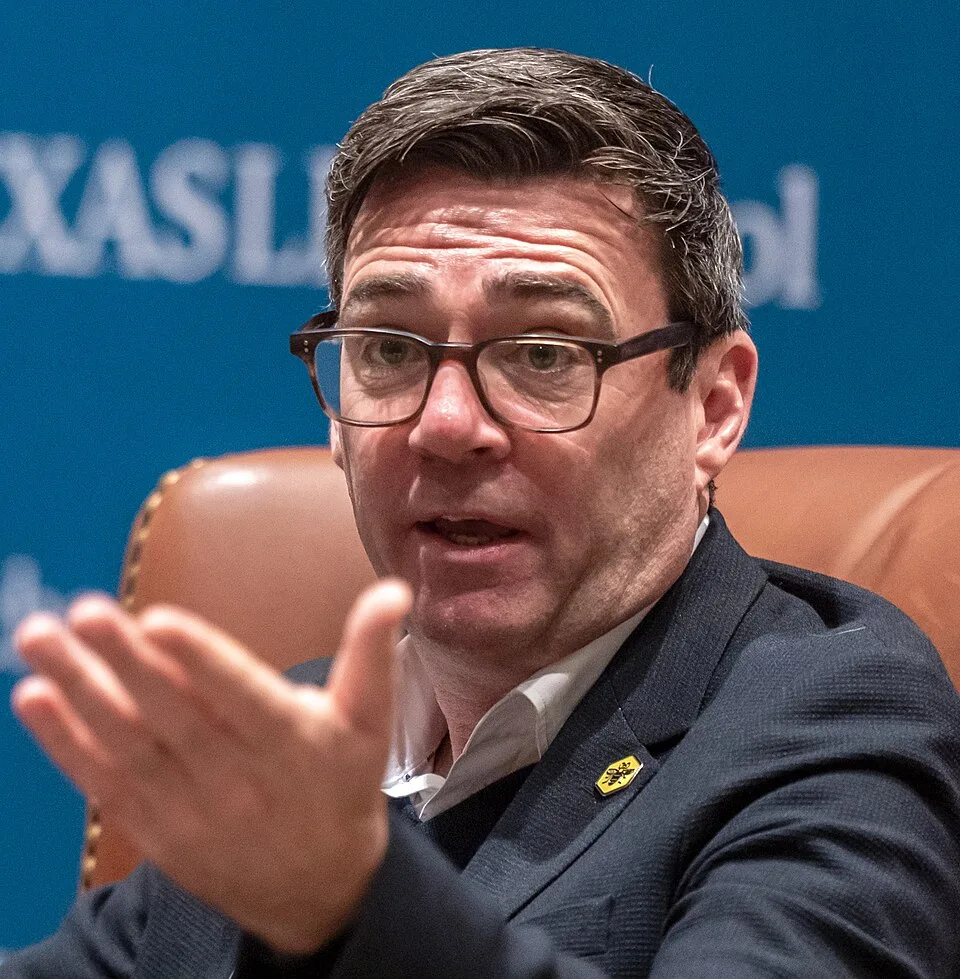
Andy Burnham became UK Prime Minister on July 20. By August 17, we were already learning he spent part of his first month in office trading messages with someone pretending to be Donald Trump's chief of staff. That's not a slow start. That's a land speed record for diplomatic embarrassment.
What Actually Happened Here
Politico broke the story, citing four officials who confirmed that Burnham chatted with someone he believed to be Susie Wiles, the White House chief of staff and one of the most powerful people in Washington right now. He did eventually start questioning whether the exchange was legitimate, which is something, but that skepticism apparently arrived after the conversation was already underway.
Downing Street, doing what Downing Street does, responded to Politico with the single most useless sentence in the English language: "We do not comment on national security matters." Which, translated from bureaucratic into English, means: yes, this happened, and we would very much prefer you stop asking about it.
One person briefed on the conversation told Politico only a "few messages" of "no significance" were exchanged. That's meant to be reassuring. It is not entirely reassuring. "No significance" is doing a lot of heavy lifting in that sentence, and the people saying it are the same people who let the conversation happen in the first place.
The Wiles Hacking Problem Is Bigger Than One Embarrassing Conversation
This didn't come out of nowhere. The Wall Street Journal reported back in May that Susie Wiles' cell phone contacts were hacked, and the fallout set off a White House and FBI investigation after senators, governors, and US business executives all reported receiving messages and calls from someone claiming to be her. That's not a targeted operation against one person. That's a broad, sustained campaign using her identity as a master key.
So the imposter who got to Burnham wasn't some lone amateur running a scam from a laptop. This is part of a documented, ongoing effort that already compromised communications at the highest levels of American power. The UK's new prime minister walked straight into a hole that Washington had already clearly marked with warning tape.
The British embassy in Washington was apparently alarmed enough by what happened that they proactively informed the White House about the incident, according to two anonymous officials cited by Politico. Think about what that means. The embassy felt the situation was serious enough to require a phone call to 1600 Pennsylvania Avenue. That is not the behavior of an institution that believes "no significance" is an adequate characterization of events.
Meet Andy Burnham, Who Has Had a Very Eventful First Month
Burnham took over from Keir Starmer on July 20, according to the New York Post, which described Starmer as "embattled" at the time of his departure. Burnham is a former Mayor of Greater Manchester who built a genuine political reputation on the ground in the north of England. He is not some untested backbencher. He knows what he's doing.
And yet. Four weeks into the most important job of his life, during what should have been an intensive period of security briefings and careful protocol establishment, he was texting with a fake American official. We don't know when exactly the messages were sent. We don't know what was discussed. We do know that the people around him felt the need to loop in the White House about it, which strongly suggests this was not treated internally as a minor clerical mix-up.
The timing matters. The UK-US relationship is always delicate, and under a second Trump administration, it requires even more careful management than usual. Burnham's team needed their first weeks to be about establishing credibility and trust with Washington. Instead, the first major story out of Downing Street involves an imposter and a federal investigation.
What We Don't Know, and Why That's the Problem
Politico reports that it was not immediately known what Burnham and the imposter discussed, nor precisely when the messages were sent. Those are two enormous unknowns to still be sitting on after this story has become public. Did the imposter ask about UK policy positions? Intelligence sharing arrangements? Burnham's personal read on Trump? Any one of those would be a serious problem.
The "few messages of no significance" line from the Downing Street briefer assumes the person asking the questions was also the one deciding what was significant. But the whole point of this kind of social engineering is that the target doesn't know they're being manipulated while it's happening. The imposter got to set the terms of the conversation. Burnham was playing catch-up from the moment he replied.
The Dingo Take
You are supposed to believe this was a minor incident involving a handful of harmless texts, quickly identified, quickly contained, and entirely beneath serious concern. You are supposed to accept that the British embassy's decision to call the White House was just routine housekeeping. You are supposed to feel fine about the fact that nobody can tell us what was discussed or when, and that the official response to the press was a sentence specifically designed to convey nothing.
The actual story here is that a sophisticated operation that already burned through senators, governors, and American executives got to the brand-new leader of one of the United States' closest allies inside his first month in office. Whoever is running this campaign now has a direct line of proof that Burnham's inner circle, at least briefly, could be reached using Wiles' identity. That's not sensitive communications. That's a road map.
Burnham may well recover from this. First-month stumbles don't have to define a premiership. But the pattern on the Wiles impersonation operation is now undeniable: it is wide, it is ongoing, and it is targeting people at the absolute top of the Western power structure. The FBI is investigating. The White House knows. And the person running the scam is presumably still out there, contacts list in hand, figuring out who to text next.



Comments