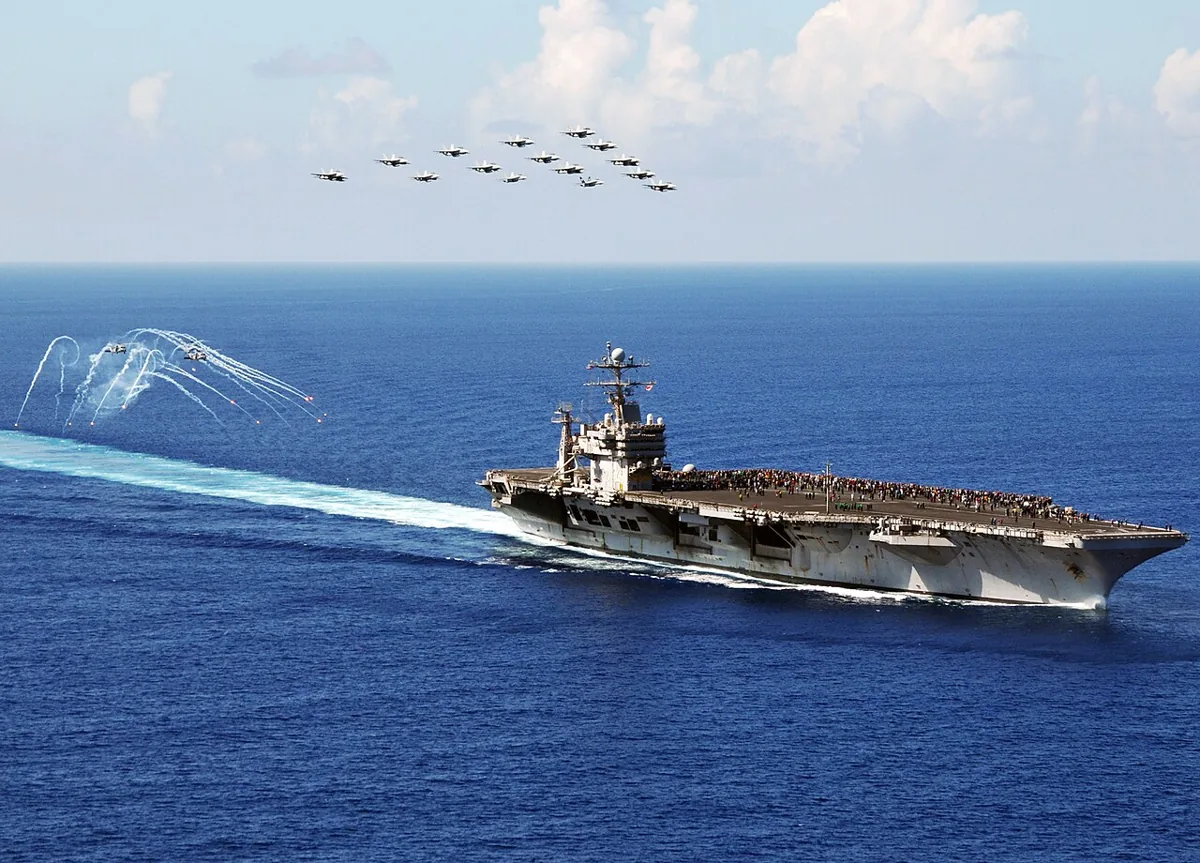
The USS Abraham Lincoln has been at sea for nearly nine months, its sailors running short on food, hygiene products, and mental health support, while their mail and care packages sit somewhere in a logistics backlog. President Trump's response, upon learning all of this, was essentially: sounds fine, keep them out there. Families are furious. Democrats are calling for a Pentagon investigation. And NPR is reporting the problems go well beyond one ship.
Nine Months Out, Running Low on Everything
According to NPR, logistics problems have plagued supply lines for American naval vessels since the beginning of the war in Iran. The USS Lincoln is the most visible case, but former Navy captain Sam Howard told NPR's Steve Walsh that when his son was deployed with the USS Tripoli Amphibious Ready Group, the crew faced immediate shortages of hygiene products and basic personal supplies.
The Tripoli group returned to its homeport in Japan in late July. The sailors still haven't received all their mail and care packages. Think about that for a second. They're home. The packages are not.
A Navy official, speaking anonymously because they weren't authorized to talk publicly, told NPR there is no standard handoff period between carriers, meaning the Lincoln could be ordered to leave as soon as the USS George Washington arrives in the region. That ship is currently en route to relieve the Lincoln. No timeline has been publicly confirmed.
Trump Weighed In. It Did Not Help.
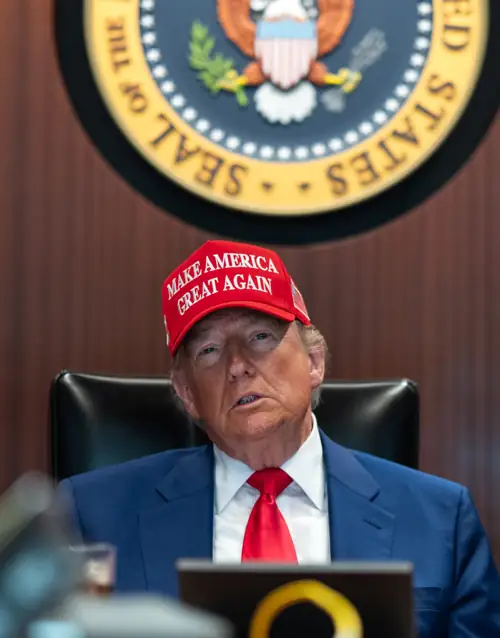
President Trump, never one to let a moment of human suffering pass without making it worse, recently commented that the Lincoln had not been deployed "nearly long enough." Families of the sailors condemned the remarks. Democrats began calling for the Pentagon to investigate conditions aboard the ship.
This is the same administration that has spent years wrapping itself in the flag and telling you it loves the troops more than anyone has ever loved anything. The sailors on the Lincoln are dealing with mental health crises and fresh food shortages after nine months at sea, and the president's contribution to that situation was to suggest they should stay longer.
The White House has not offered any detailed response to the supply and welfare concerns raised by the sailors' families.
Kushner Back in the Middle East, Still Trying to Untangle Gaza
Meanwhile, Jared Kushner, Trump's son-in-law and self-appointed diplomat-at-large, is in Israel meeting with Prime Minister Benjamin Netanyahu. This comes a day after Kushner met with Hamas leaders in Egypt, his first such meeting since helping broker a ceasefire roughly ten months ago, a ceasefire NPR describes as "shaky" and having seen "little progress."
According to NPR's Daniel Estrin, Kushner is pushing for Israel to greenlight a series of next steps: training a new Gaza police force, allowing an international stabilization force to enter the territory, and beginning rehabilitation of certain areas. These are not small asks. Israel doesn't trust a Palestinian committee to manage Hamas' weapons and wants stronger international oversight before agreeing to any of it.
The timing is awkward in the extreme. Israel is ten weeks from elections, and Netanyahu has no interest in being seen making concessions to Hamas on the campaign trail. Estrin told NPR that any progress Netanyahu agrees to will be handled quietly, behind closed doors. So Kushner is essentially trying to get a politically cornered prime minister to secretly do things that are publicly unpopular. Easy work if you can get it.
Ukraine Hit Russia With 800 Drones in a Single Day
On Sunday, Ukraine launched its largest single-day attack on Russia to date, firing more than 800 drones at over a dozen Russian regions with Moscow as the primary target, according to Russia's defense minister. At least 20 people were killed and dozens more injured as both sides escalated air attacks through the weekend and into Monday morning.
NPR's Charles Maynes says these strikes fit a deliberate pattern: Ukraine is trying to bring the reality of war back to Russian civilians by hitting not just military targets but energy infrastructure and logistics hubs. The strategic logic is to pressure the Kremlin into peace negotiations by making the war feel real to ordinary Russians.
It isn't working, at least not yet. The Kremlin maintains it is winning. Vladimir Putin went on Russian state television recently and told the country that Russians have "victory" in their DNA. Maynes says Ukraine's campaign has contributed to a general exhaustion after more than four years of war, but exhaustion and a seat at the negotiating table are two very different things.
Meta Heads to Court Tomorrow Over Kids and Addiction
On a completely separate front of institutions failing to protect people they were supposed to protect, Meta heads to federal court Tuesday in a landmark case brought by four states. According to NPR, the states accuse the company of deliberately designing its platforms to addict children, misleading the public about the risks, and illegally collecting data on minors.
The states are seeking up to $1.4 trillion in penalties and demanding product changes under consumer protection laws. Meta, in a statement to NPR, called the financial demands "vastly disproportionate" and the underlying claims "limited and unsubstantiated." The company's legal team is expected to argue that the states are overreaching.
This case is part of a broader wave of litigation aimed at holding social media companies responsible for what their products actually do to kids. Whether this particular lawsuit survives the inevitable procedural battles remains to be seen, but $1.4 trillion has a way of getting a company's attention.
The Dingo Take
You are supposed to believe that the Trump administration is the greatest friend American service members have ever had. Hold that belief up next to sailors who have been at sea for nine months without enough fresh food, without adequate mental health support, without their mail, while the commander-in-chief's public comment on the situation is that they should stay out even longer. These things cannot both be true.
The supply chain failures NPR uncovered are not some bureaucratic accident that nobody could have predicted. A war in Iran was going to strain naval logistics. Everyone who has ever read a history book about naval operations knew that. What we got instead was a president playing to cameras while sailors on the Lincoln rationed hygiene products and waited for packages that still haven't arrived weeks after some of them got home.
The Pentagon investigation Democrats are calling for should happen. It probably won't produce anything the current administration finds embarrassing, because nothing does. But the families who are speaking out deserve answers that don't begin with "nearly long enough."


Comments