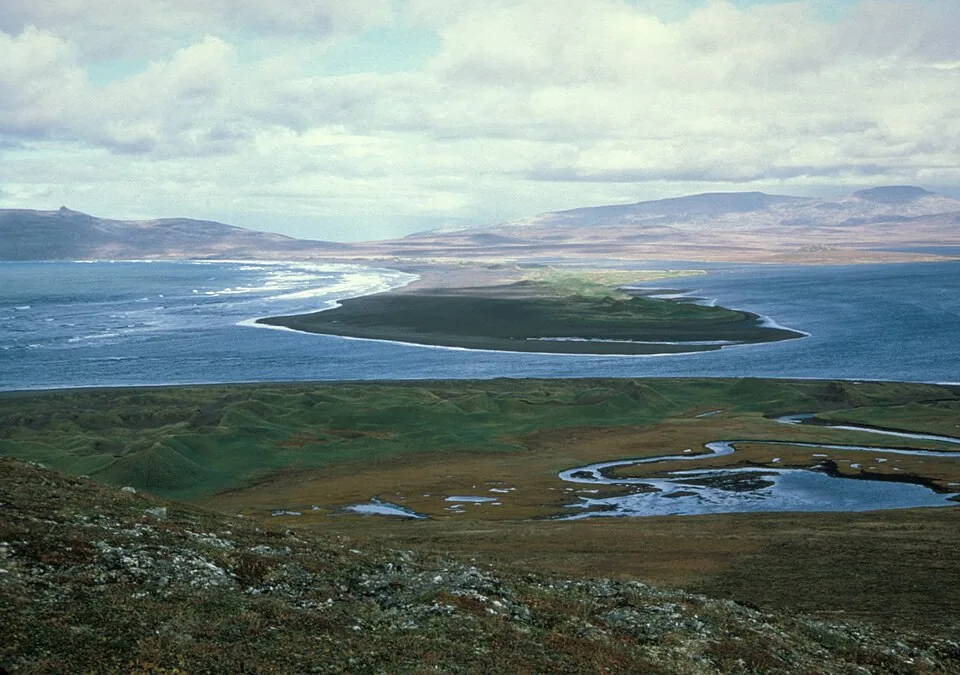
A charter plane carrying eight people went down Thursday afternoon near one of the most isolated stretches of western Alaska, federal authorities confirmed. The Cessna 441 was headed to Cape Newenham when it crashed just west of the Cape Newenham Long Range Radar Site at 12:15 p.m. local time. Rescue teams are on the way. The fate of everyone on board remains unknown.
What We Know Right Now
According to CBS News, the aircraft departed Ted Stevens Anchorage International Airport and was bound for Cape Newenham, a remote coastal location in western Alaska that sits hundreds of miles from anything resembling a major population center. Two pilots and six passengers were on board when it went down.
The National Transportation Safety Board's Alaska region chief, Clint Johnson, confirmed the crash but said he did not immediately have details on the status of those aboard. That is the part of this sentence that stops you cold. Eight people on a small plane in one of the most unforgiving corners of North America, and the initial word from the top federal official on scene is: we don't know yet.
The FAA confirmed the aircraft type as a Cessna 441, a twin-engine turboprop that seats up to ten and is a workhorse of bush aviation in Alaska. It is the kind of plane that connects remote communities to the rest of the world in a state where roads simply do not exist for vast stretches of the map.
Search and Rescue Is Moving
The Alaska Rescue Coordination Center said it launched a search and rescue mission after receiving a report of what it called an "aircraft incident" near the Cape Newenham Long Range Radar Site, CBS News reports. The phrasing "aircraft incident" is the kind of bureaucratic language that obscures rather than clarifies, but the response it triggered is real and it is urgent.
The Rescue Coordination Center said it would release additional information as it became available and did not respond to questions at the time of reporting. That is standard operating procedure in the early hours of a search and rescue operation in a place that remote. It does not make the silence easier to sit with.
Cape Newenham sits on a peninsula jutting into the Bering Sea in the Yukon-Kuskokwim Delta region. This is not a place where help is close. Weather in this part of Alaska can shift without warning, terrain is brutal, and the logistics of getting rescue personnel to a crash site in this region are complicated in ways that most people who have never looked at a map of western Alaska would not immediately appreciate.
Who Leads the Investigation
The FAA has confirmed that the NTSB will lead the investigation into the crash, with the FAA assisting. That is standard procedure following any aviation accident in the United States, and it means federal investigators with significant resources and expertise will be the ones piecing together what happened here.
Alaska has a uniquely complicated aviation safety record, and not by accident. The state has more registered pilots per capita than anywhere else in the country and relies on small aircraft to connect communities that have no other practical link to the outside world. The NTSB investigates Alaska aviation accidents with regularity. The geography virtually guarantees it.
What caused this particular crash is completely unknown at this stage. Weather, mechanical failure, pilot error, terrain, or some combination of factors could all be in play. The investigation will take time. Right now, none of that is the urgent question.
The Waiting
The urgent question is what happened to the eight people on that plane. And as of Thursday afternoon, nobody was saying.
Federal officials confirmed the crash. They confirmed the number of people on board. They confirmed a rescue mission is underway. What they could not confirm, at least not yet, is whether anyone walked away from this. In a crash near a remote radar installation in western Alaska in the middle of August, that is not a small thing to not know.
More information will come. It always does, eventually. In the meantime, eight families are waiting for a phone call, and rescue teams are moving as fast as the terrain and the distance will allow them.
The Dingo Take
Eight people on a small plane. A remote radar site on the Bering Sea coast. A search and rescue mission underway and no word on survivors. There is nothing darkly funny to extract from this one. Sometimes a story is just what it is: people in danger, other people trying to reach them, and the rest of us waiting.
What this crash does remind you of, uncomfortably, is how much of Alaska runs on exactly this kind of flight. Charter planes, bush pilots, small turboprops threading their way between communities that would be completely cut off without them. It is aviation as essential infrastructure, and it carries real risk every single day. The NTSB will do its job and eventually tell us what went wrong. That work matters.
For now, watch for updates from the Alaska Rescue Coordination Center. The only thing that matters in the next several hours is whether the people on that plane are alive. Everything else can wait.


Comments