Ken Paxton has raised $9.2 million for his Senate campaign. His Democratic opponent has raised $68.6 million. Elon Musk has noticed this problem and is apparently prepared to write a check large enough to make it someone else's.
The Numbers Are Embarrassing, So Let's Start There
According to Federal Election Commission filings, Democratic Texas Senate candidate James Talarico has raised more than seven times what Paxton has through June 30. Talarico is sitting on $21.5 million in cash. Paxton has $1.8 million. In Senate race terms, that is not a fundraising gap. That is a fundraising crater.
And yet, somehow, this race is functionally tied. An Emerson College poll conducted August 9 and 10 had Paxton leading Talarico 47% to 46% among likely voters. Eight nonpartisan public polls conducted since the Republican primary collectively show a dead heat. Texas, it turns out, will Texas regardless of your bank account balance.
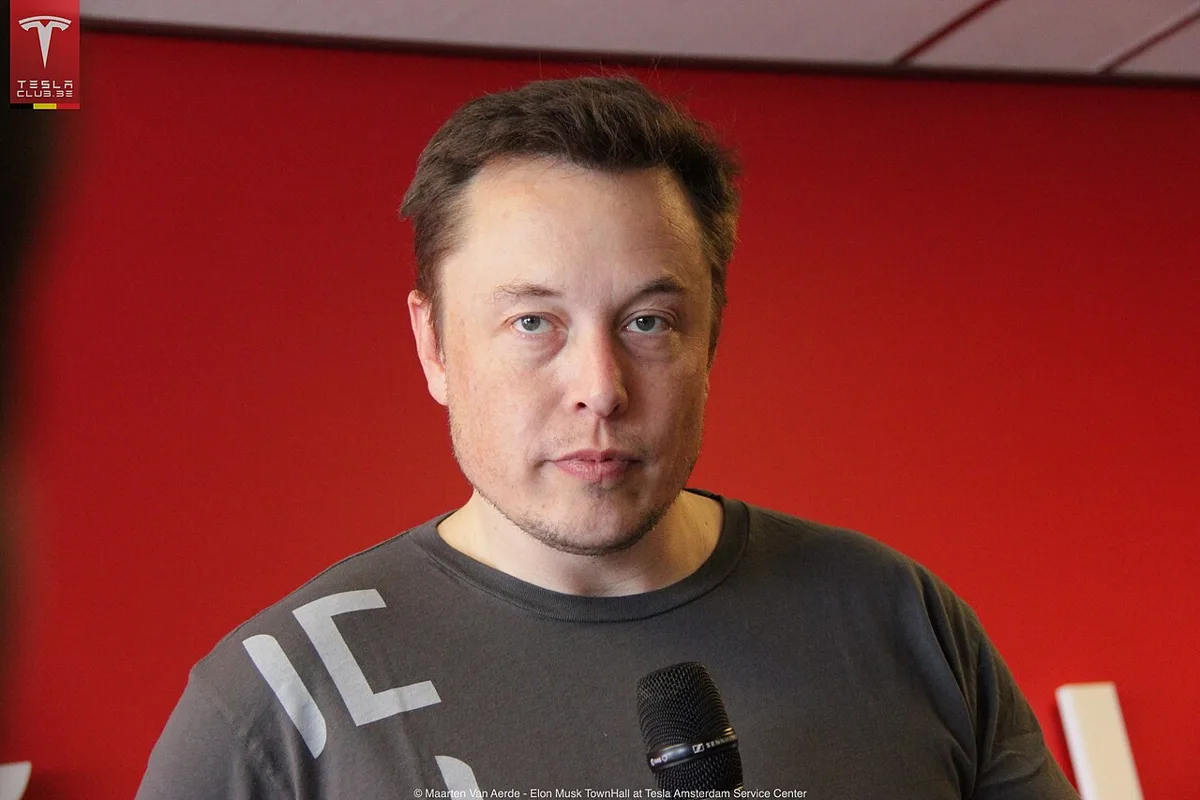
This is where Musk comes in. Officials briefed on the matter told Wired that Musk is expected to spend between $100 million and $200 million boosting Republicans in the 2026 midterms, with the Texas race among the races most likely to benefit. When one candidate has $1.8 million and a billionaire backer is preparing to spend a hundred times that on turnout operations, the definition of 'campaign finance' starts to get philosophically interesting.
Musk Has Done This Before, at Scale
This would not be new territory for Musk. During the 2024 presidential election, he spent at least $288 million helping Donald Trump and other Republicans, according to an analysis of year-end FEC filings. Most of that money flowed through America PAC, the super PAC Musk bankrolled specifically to put Trump back in the White House.
America PAC paid third-party canvassing firms more than $46 million across battleground states to target low-propensity voters, according to Wired. Trump swept six battleground states, though Trump's own team was notably skeptical that America PAC's paid canvassing operation deserved the credit rather than, say, the candidate himself. Nothing quite like your billionaire patron spending a quarter billion dollars and your campaign quietly suggesting it maybe didn't matter.
Musk did not slow down after the election. The New York Post reports he gave more than $73 million to Republican causes in 2025 alone, including roughly $45 million back to America PAC and three separate $5 million checks written on the same day in June to MAGA Inc., the Congressional Leadership Fund, and the Senate Leadership Fund. This year he has already dropped $10 million on a super PAC backing Republican Kentucky Senate candidate Nate Morris. The man is not exactly penny-pinching.
What $200 Million Actually Buys You
Costas Panagopoulos, a distinguished professor of political science at Northeastern University, told the New York Post that the sum has real potential impact, particularly when directed at voter turnout machinery. "It's a considerable sum that has the potential to shake things up in certain races across the country," he said.
The nuance Panagopoulos offers is worth sitting with. "Money does not dictate outcomes in elections," he said, but large spending can force opponents to spend more defensively and "create communication imbalances that are hard to overcome." Translation: you may not be able to buy a win outright, but you can absolutely drain the other side's resources and jam their ability to get their message out.
Beyond Texas, Panagopoulos flagged Senate races in Georgia, Ohio, and Maine as places where Musk's cash could potentially move the needle. Those are three states where Democrats were hoping to either defend seats or flip them. The prospect of a nine-figure outside spending blitz complicates every one of those calculations.
Democrats Are Not Exactly Thrilled
The Democratic response to all of this will predictably be: raise more money and scream about billionaire influence. Panagopoulos told the New York Post that Democrats will respond, noting that "even if they can't find someone with pockets as deep as this, there are other ways to raise funds to combat what might be happening on the Republican side."
That is true. Democrats have shown they can raise enormous sums from small donors, particularly when they have a villain to point at. Musk, who spent 2025 chainsawing federal agencies as the public face of DOGE before his falling-out with the White House, is not exactly a figure who inspires calm. His involvement in a race tends to motivate the other side's donors in ways that are genuinely hard to model.
Still, Talarico is already outraising Paxton seven-to-one and it is still a toss-up. The question is not whether Democrats can compete with Musk's money nationally. The question is whether they can compete with it plus whatever grassroots enthusiasm Republicans generate in a state that has not elected a Democrat to statewide office since 1994.
The Dingo Take
You are supposed to believe that a man who may spend $200 million on a single cycle of elections is just a concerned citizen exercising his constitutional rights. That the fact that one person can functionally adopt a Senate race the way you might adopt a highway median is a feature of democracy rather than a bug eating it alive. That the candidate with $1.8 million in the bank is running a serious, competitive campaign and not just a placeholder waiting for a wire transfer.
What is actually happening is that Ken Paxton, a man who spent years under felony indictment and was impeached by his own party's legislature before being acquitted by a Republican-controlled Senate, is now the vehicle through which the world's occasionally richest man will attempt to purchase one more Senate seat. Paxton is not a serious fundraiser. He is a brand. And Musk, who has turned political spending into a full-time hobby since 2024, is betting that a sophisticated turnout operation can substitute for a candidate who cannot raise money on his own merits.
Maybe it works. Texas has a way of rewarding Republicans regardless of the specifics. But if Paxton wins a seat he could not have come close to funding himself, backed by hundreds of millions from a single donor who also has contracts worth billions with the federal government, someone should probably say out loud that this is a weird and broken way to run a democracy. Not that saying it out loud has ever changed anything. Just that silence on the matter feels like the wrong choice.


Comments