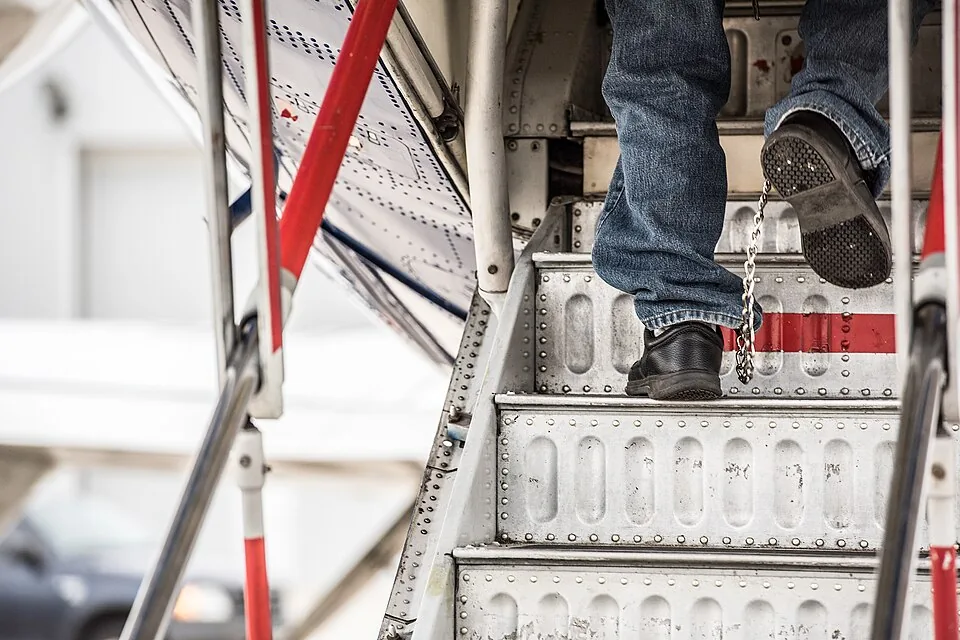
Twenty people were flown from the United States to Liberia on Thursday, dropped off in a country most of them have never set foot in, and a handful of them refused to leave the plane. That last part is doing a lot of work as a metaphor for this entire policy. The Trump administration is calling it a success.
What Actually Happened at Roberts International Airport
The flight landed at Roberts International Airport outside Monrovia. Roughly 20 deportees from multiple countries stepped off — or in some cases, didn't. According to a U.S. official who spoke to CBS News, a small group of deportees resisted and refused to deplane after the aircraft arrived. They were physically escorted off the plane. Then they got back on. Their current whereabouts are unknown.
This is not a minor logistical footnote. These are human beings who were so determined not to be left in a country they have no connection to that they climbed back onto a deportation flight. That is the level of desperation we are talking about here.
Liberia's information minister, Jerolinmek Piah, confirmed the arrivals and said the 1,200 deportees expected under the arrangement will include African nationals as well as people from North America, South America, and the Caribbean. Liberia's justice minister, Natu Oswald Tweh, told reporters Tuesday that most of the deportees had committed migration-related violations and that they could apply for asylum in Liberia if they chose to.
The Deal: What Liberia Gets, What the U.S. Gets
The Guardian reports that the U.S. sweetened the arrangement by extending visitor visas for Liberians from 12 to 36 months and pledging $124 million in assistance. So Liberia agreed to take up to 1,200 people it has no obligation to house, and in exchange it gets longer tourist visas and a nine-figure check. The Trump administration gets to say it deported 1,200 more people.
The Liberia deal is now the largest single third-country deportation arrangement the administration has secured. According to a new report by Refugees International and Human Rights First, the administration has reached deals with at least 35 countries total and has sent roughly 23,000 people to 26 of them as of early August. About ten of those destination countries are in Africa.
Immigration lawyers have been saying for months what the numbers are starting to confirm: third-country deportation is a legal workaround. If someone has a court order protecting them from being sent back to their home country, ship them somewhere else entirely. Problem solved, constitutionally speaking, if you squint hard enough and don't think about the person.
The Price Tag and the Paper Trail
A February report from Senate Foreign Relations Committee Democrats put some numbers on what this policy actually costs. The Trump administration paid more than $32 million to five governments to accept roughly 300 third-country deportees. Rwanda received $1.1 million per person for seven deportees. Equatorial Guinea got $7.5 million for 29 people, a sum that exceeded all U.S. aid to that country over the previous eight years.
Here is the kicker. The same report found that more than 80% of those sent to third countries had since returned to their home countries anyway, often at additional taxpayer expense. The State Department disputed the report's characterization of its enforcement record, which is the diplomatic equivalent of saying "we disagree with your math" without showing your work.
The report also found cases where deportees with active U.S. court-ordered protections were removed to Ghana and Equatorial Guinea before being sent onward to other countries within days. Courts said they couldn't be deported. The administration deported them anyway, just with an extra layover.
Liberia Is Already in the Middle of Another Deportation Fight
If the name Liberia sounds familiar in the context of Trump administration deportation news, it should. CBS News reports that the administration has been trying to deport Kilmar Abrego Garcia to Liberia. Abrego Garcia is the man who was wrongfully deported to El Salvador last year, returned to the United States, and is now facing human smuggling charges here. A federal judge in Maryland has blocked that effort for now.
So the same country the administration just used to debut its largest third-country deportation scheme is also where it wants to send the man at the center of one of its most embarrassing legal and political fiascos. Liberia is pulling a lot of weight in the Trump immigration portfolio right now.
The broader third-country deportation network includes South Sudan, the Central African Republic, and the Democratic Republic of the Congo, according to CBS News. Those are countries currently experiencing armed conflict, political instability, and documented human rights abuses. The administration chose them as destinations for people it could not legally send home.
What Human Rights Groups Are Saying
Human rights advocates have been consistent and blunt: this policy is inhumane and illegal under international law. The core argument is that sending people to countries where they face danger, or from which they will simply be funneled back to the places they fled, violates the international principle of non-refoulement, the legal obligation not to return someone to a place where they face serious risk of harm.
The Guardian notes that in many cases, migrants are deported to countries they have never visited, face safety risks there, and ultimately have little choice but to return to the home countries they were originally fleeing. The deportation, in those cases, accomplished nothing except burning through money and terrorizing people.
The Trump administration's response has been consistent too: the deportations are legal, effective, and serve as a deterrent. The 80%-return-rate figure from the Senate report does not appear to have prompted any reconsideration.
The Dingo Take
People got back on the plane. That is the image to hold onto here. Not the press conference, not the $124 million, not the ministerial briefings about visa extensions. Twenty people were flown to a country they did not come from and some of them physically reboarded the aircraft rather than accept the situation. The U.S. government's response was to escort them off again, and now nobody knows where they are. This is what a $32-million-per-300-people deterrence strategy looks like up close.
The Senate report finding that over 80% of third-country deportees ended up back in their home countries anyway is the number that should be leading every story about this policy. The administration spent $1.1 million per person to send seven people to Rwanda, and most of them went home anyway, costing taxpayers again on the back end. By any measurable standard of effectiveness, this is a catastrophically expensive way to accomplish nothing. But it generates footage of planes taking off, and that is apparently the actual product being sold.
The Liberia deal is the biggest one yet, and there are 34 more countries in this network. The administration is not slowing down. It is scaling up, signing new agreements, and sending more flights, all while courts play whack-a-mole trying to enforce protections that keep getting routed around. If you are waiting for the part where someone in a position of authority looks at the 80% return rate, the million-dollar-per-head price tags, and the people climbing back onto planes, and says out loud that this is not working, do not hold your breath.





Comments