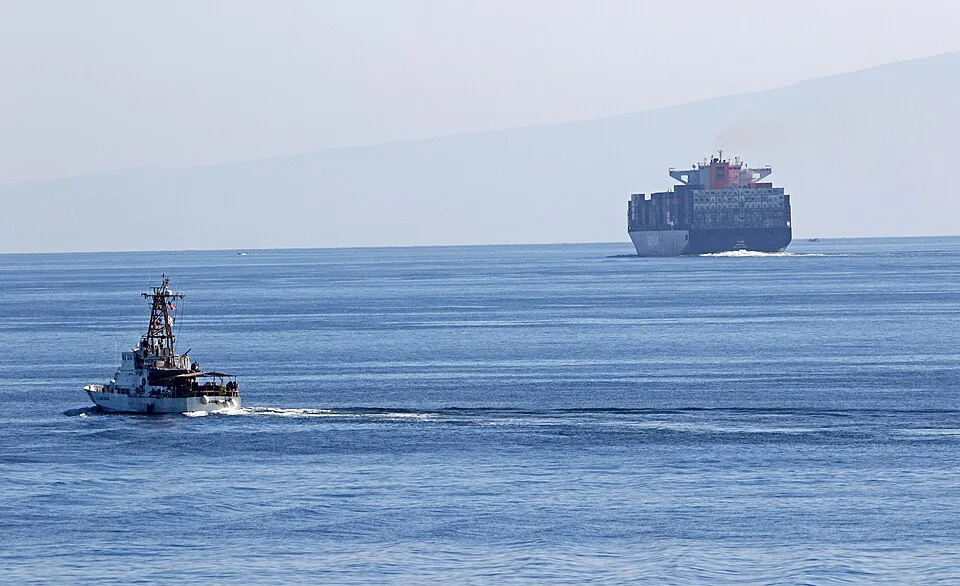
Six months into a war that was supposed to end Iran's nuclear program, the Strait of Hormuz is carrying about 4% of its normal shipping traffic, global energy markets are a mess, and an Iranian taxi driver is working 15-hour days just to keep protein on the table. The Trump administration's response to all of this is, essentially: good, we'll do more of it.
The Waterway That Keeps the World's Lights On Is Basically Closed
The numbers from the U.K. Navy's Maritime Trade Operations center are genuinely staggering. According to a UKMTO assessment cited by CBS News, only 21 inbound and 18 outbound commercial transits were recorded through the Strait of Hormuz in the week ending August 7. That is not a slowdown. That is a near-total shutdown of one of the most strategically vital shipping lanes on the planet.
Before this war started, those numbers would have run into the hundreds every single week. The strait is the only exit ramp for energy products from several of the world's biggest oil producers. There is no alternate route. If you are a tanker captain moving Saudi crude or Qatari LNG, your choices right now are: take the northern route that Iran controls, take the southern route close to Oman that the Trump administration calls safe, or just stay home. Most operators are staying home, or taking the Iranian-controlled route, which tells you something about how much confidence they have in Washington's assurances.
UKMTO still rates the risk to mariners in the waterway as severe. The U.S. and Iran have both imposed unilateral restrictions and both claim to control the strait, which means the legal and physical reality on the water is a kind of enforced chaos that no insurance underwriter in their right mind is going to sign off on.
Iran Is Hurting. Iran Is Also Not Surrendering.
The Associated Press, via CBS News, paints a portrait of an Iranian economy under genuine duress. Grocery stores are stocked but unaffordable. Unemployment is climbing. Wages have lost roughly half their value in a year. Ahmad Karimi, a 52-year-old taxi driver and father of two, told AP he is working 15-hour days and has cut fruit, protein and leisure out of his family's life entirely. "We have virtually given up on many things," he said. That is not propaganda. That is a man describing a country being slowly strangled.
But Hadi Kahalzadeh, an expert on Iran's economy at Brandeis University, offered the Trump administration a very unwelcome corrective. "Iran's resistance capacity not only avoids collapse," Kahalzadeh said, "it also prevents the economic pain from translating into the political pressure and changes that the U.S. expects." This is the part that matters. Pain and capitulation are not the same thing, and Iran has been living under Western sanctions for decades. They have gotten good at it.
Iran has spent years building workarounds: a shadow fleet for oil exports, informal cross-border trade networks, third-country purchasing arrangements for restricted goods, expanded domestic production. This is a country that has been stress-tested by sanctions repeatedly and has developed institutional muscle memory for surviving them. The Trump administration seems to be betting that more pressure means faster results. History, and at least one Brandeis economist, disagrees.
Tehran's Counter-Move: Make the Pain Regional
Iran is not sitting still while the economic noose tightens. Iran's parliament speaker flew to Baghdad on Thursday to meet with Iranian and Iraqi businesspeople, telling them they are "now the soldiers and commanders of this battlefield," according to CBS News. Iran finalized a preferential trade agreement with Oman on Friday, part of what officials describe as a wider push to build regional economic relationships that can partially insulate the country from U.S. pressure.
This is Iran's core strategy laid bare: if Washington is going to run an economic war, Tehran is going to build an economic coalition. The country is attacking oil-rich neighbors and U.S. regional bases, disrupting Hormuz shipping to drive global energy prices up, and trying to make the cost of this conflict high enough that someone blinks. So far, the blinking is happening in the form of collapsing tanker traffic, not in Tehran.
Major General Abdolrahim Abdollahi, Iran's Chief of Staff, added the requisite military menace on Friday, warning in a Telegram post that any "miscalculation" by Iran's enemies would produce a "revolutionary, crushing, regret-inducing, and devastating" response. His acting Defense Minister linked national security explicitly to economic stability. The message is unified: Iran is framing this as a total national effort, not a government in its final hours.
The Administration's Plan: Squeeze Harder, Hope for Different Results
Vice President JD Vance told reporters Thursday that "the most effective tool that we have is the economic pressure that we can apply." Treasury Secretary Scott Bessent went further, saying Washington expects both allies and rivals to join the expanded sanctions campaign against Iran. That is an ambitious ask in a world where much of the Global South has watched this war with undisguised skepticism about American motives.
Trump has been threatening an "economic D-Day" against the Islamic Republic, which is the kind of phrase that sounds very decisive until you look at a chart showing Hormuz shipping at 4% of normal and realize the economic war has been underway for months already and Iran is still standing. The administration launched this conflict to stop Iran's nuclear program. Six months later, the fight is primarily about who controls a shipping lane and how much pain each side can absorb. That is not how this was sold.
The ceasefire in June briefly pushed transit numbers up before collapsing and yielding to more fighting. The current phase, according to CBS News, is characterized by a standoff in which major military strikes have mostly given way to economic warfare. Which sounds almost civilized until you remember that 96% of the shipping that used to move through one of the world's most critical waterways has simply stopped.
The Dingo Take
You are supposed to believe that a war launched to stop Iranian nuclear development is going well because a taxi driver in Tehran is skipping fruit. That is the current state of the argument. Six months of fighting, a naval blockade, and a near-total shutdown of the Strait of Hormuz have produced: an Iranian economy that is suffering, an Iranian government that is actively building regional trade alliances to survive, and a global energy market that is absorbing continuous punishment. The administration promised D-Day. What we have is an extremely expensive stalemate.
The Hormuz number deserves to be repeated until people actually absorb it. Four percent. One of the most important shipping lanes in the world is operating at four percent of its pre-war volume. Every container that does not transit that strait is a cost absorbed somewhere in the global economy, usually by people who have nothing to do with Iranian nuclear policy or American strategic objectives. The people filling up their cars in South Korea and Japan and India are paying for this war in ways that never show up in a Pentagon briefing.
The experts are saying, clearly and on the record, that economic pain and political capitulation are not the same thing, and that Iran has specifically built systems to prevent the first from producing the second. The administration is responding by promising more of the same. That is not a strategy. That is a definition of a bad bet held too long by someone who refuses to look at the table.





Comments