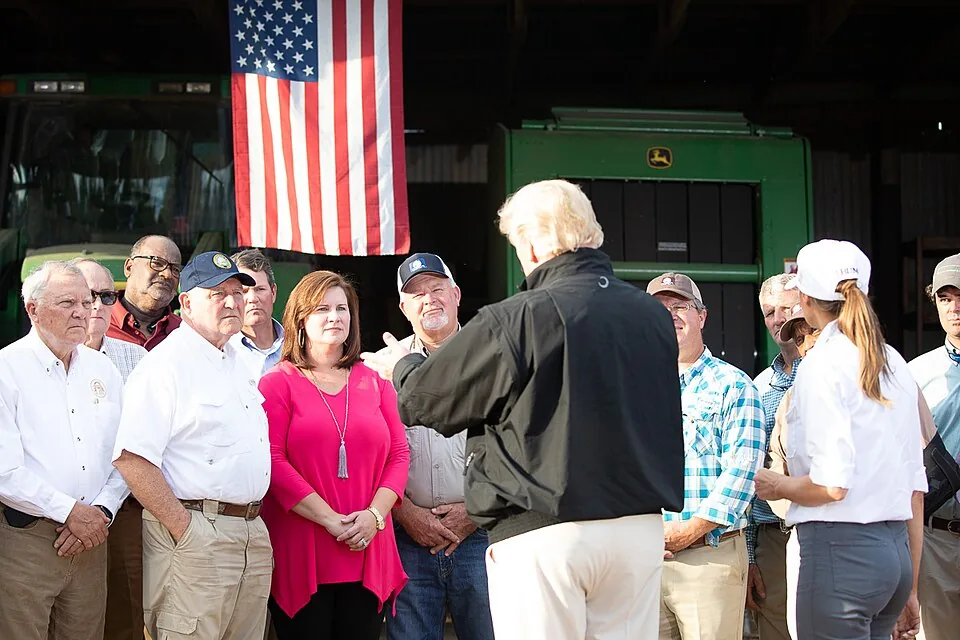
Ground beef now costs $6.89 a pound on average, up 57% over five years, and the guy who spent the last year slapping tariffs on everything that moves has decided that the answer, actually, is fewer tariffs. President Trump announced Friday that the U.S. will waive higher tariffs on up to 300,000 metric tons of ground beef imports for the next 90 days. Experts say it probably won't do much. The president says otherwise. We've been here before.
What Trump Actually Announced
The president posted on Truth Social Friday that imported ground beef, up to 300,000 metric tons worth, will enter the country with "no out-of-quota tariff" for 90 days. Those out-of-quota tariffs are the higher rates that kick in when import volumes exceed pre-set limits under World Trade Organization rules. Waiving them, in theory, opens the door for significantly more foreign beef to hit American supermarket shelves in the short term.
Trump also claimed a commitment from unspecified parties that the imported beef will be sold at 25% below current market prices. "This deal will reduce prices for Americans while giving space for our Great American Beef Herd to grow again," he wrote. No details were provided about who made that commitment, how it will be enforced, or what happens on day 91.
Why Beef Is This Expensive in the First Place
This isn't a tariff problem. It never really was. CBS News reports that beef prices have been climbing for decades, driven by a shrinking cattle herd and relentlessly strong consumer demand. The herd itself is under serious structural pressure: worsening droughts across grazing regions are drying up pasture land, forcing ranchers to buy costly supplemental feed or, in many cases, cull their herds early to cut losses.
The USDA has been tracking this slow-motion agricultural crisis for years. Fewer cattle means less beef. Less beef and the same demand means higher prices. That's not a supply chain problem you fix with a 90-day tariff window. That's a years-long rebuilding project, assuming the climate cooperates, which lately it has not been inclined to do.
This Is Not the First Time Trump Has Tried This
Back in February, Trump signed an executive order boosting beef imports from Argentina by 80,000 metric tons. That was supposed to help too. CBS News notes that some experts expressed skepticism at the time, pointing out that the additional supply amounted to less than 1% of total U.S. beef consumption. One percent is not a number that moves markets.
Now we're being offered 300,000 metric tons, which sounds substantially more impressive until you remember that the U.S. beef market is enormous, Americans eat a staggering amount of hamburgers, and the structural forces driving prices up haven't changed at all since February. The same experts who doubted the Argentina deal have no particular reason to feel differently about this one.
The 25% Price Cut Promise Deserves Scrutiny
Trump said there's a "commitment" that this imported beef will sell at 25% below current market prices. At $6.89 a pound on average, per the Federal Reserve Bank of St. Louis citing federal labor data, that would put ground beef closer to $5.17 a pound. That would genuinely help families who are rationing meat purchases. The question is what that commitment is, who made it, and what the mechanism for enforcement looks like.
The White House has not released details of any formal agreement. There is no announced legal framework for compelling private retailers or distributors to sell imported beef at a specific price point. In American retail, prices are set by markets and margins, not presidential Truth Social posts. The 25% figure may be aspirational. It may be a handshake deal. It may be something else entirely. We don't know, because the administration hasn't said.
What 90 Days Actually Gets You
The 90-day window is doing a lot of work in this announcement. It's long enough to generate a news cycle about falling beef prices. It is probably not long enough to meaningfully rebuild supply chains, shift retailer pricing structures, or address any of the underlying drought and herd-size issues that created this crisis.
When the window closes, the out-of-quota tariffs come back. The cattle herd will not have recovered. The drought will not have ended. If the imported beef did suppress prices temporarily, they'd be expected to bounce back. If it didn't suppress prices meaningfully, the administration will have spent 90 days on a policy that generated a lot of headlines and a lot of burger-related photo ops and left grocery bills exactly where they were.
The Dingo Take
You are supposed to look at this announcement and see a president fighting for working families at the checkout counter. A man who cares about the price of a pound of ground beef. A dealmaker who got a 25% price commitment that nobody can describe or verify. What you are actually looking at is an administration that spent the better part of a year weaponizing tariffs as a universal policy tool, contributed to a broader cost-of-living squeeze, and is now selectively waiving tariffs on one product for 90 days as a headline.
The beef crisis is real. Six dollars and eighty-nine cents a pound is real. Families cutting back on protein to make rent is real. But the causes of that crisis are drought, decades of herd contraction, and structural agricultural economics, not a tariff problem that a temporary import window fixes. Experts said the same thing about the Argentina deal in February. CBS News reported their skepticism then. Nothing has changed in the underlying math.
The 90-day clock is the tell. Real policy doesn't come with a 90-day expiration date and a vague social media promise about prices. Real policy involves the USDA, ranchers, water management, long-term herd recovery programs, and the kind of unglamorous work that doesn't generate a Truth Social post. This is a burger-flavored press release. American consumers deserve actual solutions, and they are not getting them.




Comments