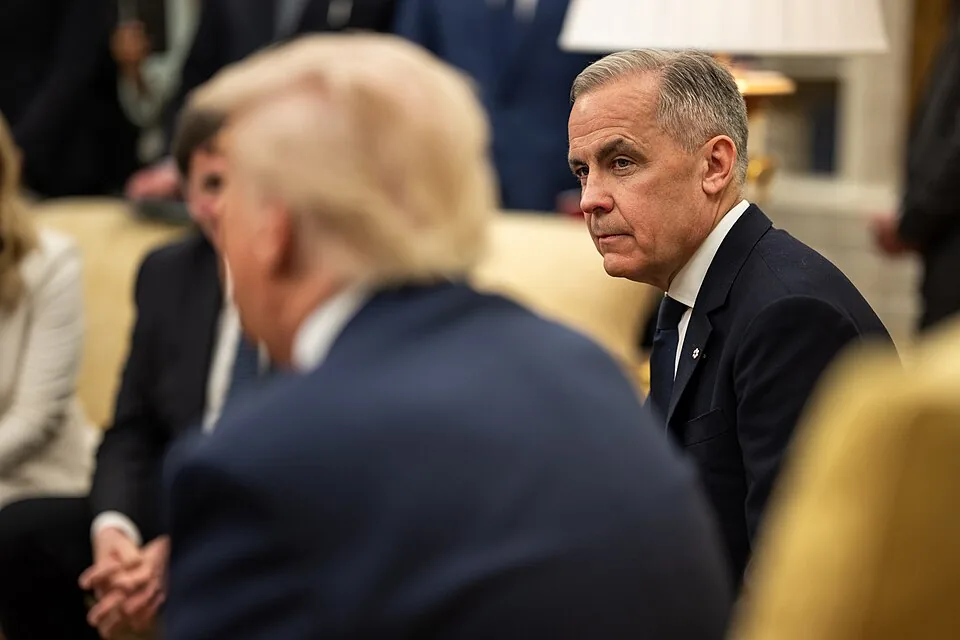
The United States woke up Saturday morning having torched its relationship with Canada a little further, slapping 50% tariffs on $20 billion worth of Canadian goods after last-ditch negotiations fell apart Friday night. Hockey sticks. Tongue depressors. Steel. All of it. Canada says it's hitting back, dollar for dollar, starting the Tuesday after Labor Day.
How We Got Here, Fast
The tariffs were originally set to kick in Wednesday at 12:01 a.m. Trump extended the deadline three days to let talks continue. The talks did not work. According to CBS News, after a year of operating under a 10% baseline tariff, with most Canadian imports actually exempt under the U.S.-Mexico-Canada Agreement that Trump himself signed during his first term, the administration decided this week that wasn't punishing enough.
U.S. Trade Representative Jamieson Greer told reporters Friday night that Canada had declined to finalize a deal under terms both sides had supposedly agreed to earlier in the week. By Saturday morning he was on Fox News saying there are 'no new planned talks with the Canadians.' That's the whole diplomatic readout. We're done talking. Go sit in the corner.
What Canada Was Actually Offering
Canadian Prime Minister Mark Carney laid out exactly what Canada put on the table before Washington walked. CBS News reports that Canada offered to drop its remaining retaliatory tariffs on steel, aluminum, and autos if the U.S. substantially lowered its own. Canada also offered to pressure provinces into restoring U.S. alcohol sales, which had been pulled as a retaliatory measure.
That's not nothing. That's a real concession package. But according to a senior Trump administration official, Washington wanted more on steel, aluminum, autos, and lumber, and wasn't prepared to give ground on any of it.
Carney's summary of the breakdown was blunt: 'They asked too much and offered too little.' He also said 'last-minute changes in the U.S. proposed terms were unfair, uneconomic, and called into question the reliability of any deal.' Translation: the U.S. moved the goalposts at the end, again, and Canada decided it wasn't going to keep chasing them.
What Canada Is Hitting Back With
Carney announced Saturday in Ottawa that Canada will release the details of its retaliatory measures 'in the coming days,' with the tariffs coming into force the Tuesday after Labor Day. The retaliation will target steel, dairy, appliances, agricultural equipment, pulp and paper, and electronics, CBS News reports. Dollar for dollar.
Ontario Premier Doug Ford, who runs Canada's most populous province, backed Carney with exactly the kind of statement that should make certain American senators nervous about their re-election math. Ford said Carney had his 'full support' for 'tariff for tariff, dollar for dollar' retaliation and that 'everything needs to be on the table.' Doug Ford is not exactly a raging progressive. When he's lining up behind a trade war against Washington, you've managed something genuinely impressive in the wrong direction.
The Numbers, Which Are Bad
The 50% tariff hits about 5% of everything Canada ships to the U.S. annually, per CBS News. That sounds manageable until you remember that Canada and the United States traded $880 billion worth of goods and services last year. These two countries are not casual trade partners. They are structurally, historically, deeply economically entangled in a way that took decades to build.
Greer spun the U.S. position as protecting American workers and supply chains, telling Fox News that Canada 'always had the best deal' and still would have come out ahead under the final terms. Carney, standing in Ottawa, told a different story about what those final terms actually looked like. One of these people is telling the full truth. The pattern of this administration's trade negotiations over the past year suggests it probably isn't Greer.
The Bigger Picture Nobody Wants to Say Out Loud
This is not a normal trade dispute between normal trading partners. Trump has spent the better part of two years threatening to make Canada the 51st state, picking fights over NATO, feuding over a bridge in the Detroit area, and treating a country that shares a 5,525-mile border with us like a hostile foreign power that needs to be brought to heel.
And now the two countries, which CBS News notes sold each other $880 billion in goods and services last year, are heading into a full retaliatory tariff cycle with no talks scheduled and no diplomatic off-ramp visible. The political impact, CBS News notes, will likely dwarf the economic fallout. That's saying something, because the economic fallout is going to be substantial.
The Dingo Take
You are supposed to believe that a country sharing the world's longest undefended border with us, a country that fought beside American soldiers in two world wars and every major conflict since, a country that is our second-largest trading partner and one of our closest intelligence allies, needed to be taught a lesson with 50% tariffs on hockey sticks and tongue depressors. That is the policy. That is what we are doing right now.
Greer's framing on Fox News was a masterpiece of motivated reasoning. Canada 'always had the best deal.' Canada was the one that walked away. America just wanted to protect its workers. What he left out is that Canada came to the table with real concessions, the U.S. changed its demands at the last minute, and the talks collapsed because Washington decided winning the news cycle mattered more than closing a deal. Carney called it 'unfair, uneconomic.' That's diplomatic language for 'they sandbagged us and we're not pretending otherwise.'
The USMCA, the trade deal Trump signed with great fanfare during his first term, was supposed to be the framework that kept this relationship stable. It is now apparently optional, depending on the week and the mood. Canada starts retaliating September 9th. There are no new talks scheduled. The administration that couldn't stop bragging about its deal-making ability has managed to pick a trade war with the country that is most geographically, economically, and historically impossible to treat as an enemy. History will have thoughts about this.




Comments