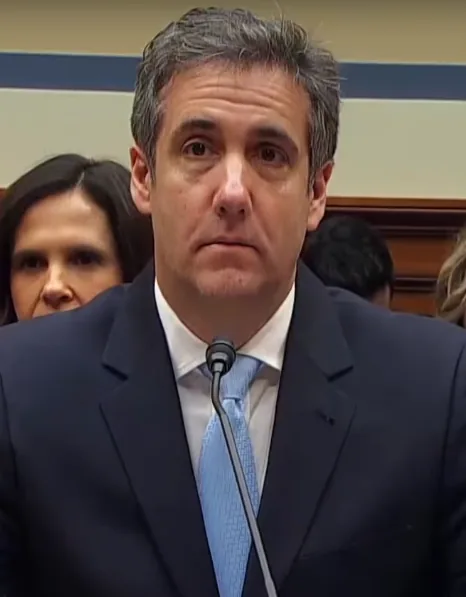
Donald Trump, a man convicted of 34 felony counts of falsifying business records, sat down for a cozy, wide-ranging radio interview with Michael Cohen, the man whose testimony helped put those felony counts on his record. They talked about ballrooms and the economy. Everything is completely normal and fine.
The Reunion Nobody Asked For
According to Axios, the interview aired in full on Sunday and marks the first time Trump and Cohen have spoken publicly since the hush money trial that ended with Trump's historic criminal conviction. The two men discussed Trump's proposed ballroom, the state of the economy during his second term, and the president's favorite hobby: complaining that the justice system is weaponized against him.
Let that sink in for a second. The man who was convicted is now publicly chatting with the man who testified against him, and one of the topics they landed on was how America's legal system is being used as a weapon. Against Trump. Who was convicted. Of 34 felony counts. With Cohen's help.
Who Is Michael Cohen, Refresher Edition
For anyone who missed the last decade of American political chaos, Michael Cohen was Trump's personal attorney and self-described fixer for years. He went to prison himself after pleading guilty to tax evasion, bank fraud, campaign finance violations, and lying to Congress. He served time. He came out of it a committed Trump critic, wrote a book about it, started a podcast about it, and then became a key witness in the Manhattan District Attorney's case that resulted in Trump's conviction.
Cohen sat in that courtroom and testified under oath about payments made to Stormy Daniels and how the records covering those payments were falsified. The jury believed him. Thirty-four times over. And now he and Trump are doing a radio interview together about ballrooms.
Trump's Memory Is Apparently Very Flexible
There is a version of events in which a person might hold a grudge against the witness whose testimony contributed directly to their criminal conviction. Trump spent years calling Cohen a rat, a liar, and considerably worse. Cohen spent years calling Trump a con man and a criminal. These are not two people who have historically enjoyed a warm relationship since the break.
And yet here we are. Axios reports the interview was, by all accounts, remarkably friendly. They discussed the economy. They discussed a ballroom Trump apparently wants to build. They did not, as far as the reporting indicates, spend much time on the part where Cohen's testimony helped convict Trump of three dozen felonies. Some reunions are just like that, apparently.
What This Actually Tells You About Trump's Second Term
The optics here are worth sitting with. Trump is a sitting president who was convicted of 34 felony counts before taking office for the second time. That conviction has not been expunged. It has not gone away. It is just sort of there, parked in the background, while Trump does radio interviews with the star witness against him like it's a podcast episode from 2019.
This is the presidency now. Former fixers, criminal records, ballroom discussions. The Axios report notes this is a significant moment precisely because of how publicly adversarial the two men were during and after the trial. The fact that Trump is openly welcoming Cohen back into something resembling good standing says less about Cohen's rehabilitation and more about Trump's complete indifference to what any of it looks like.
The Weaponization Conversation Is Particularly Rich
One of the topics the two men reportedly covered, per Axios, is how so-called weaponization of the justice system is destroying America. Cohen, who was convicted and went to prison. Trump, who was convicted and became president. These two men, together, discussing how unfair the legal system is.
The irony does not appear to have caused either of them any visible discomfort. It rarely does when you're on the receiving end of your own argument.
The Dingo Take
You are supposed to believe this is a normal thing that happens in a functioning democracy. A president convicted of 34 felonies welcomes back the witness who helped convict him, and they shoot the breeze about ballrooms and economic vibes. If you wrote this as a scene in a political satire novel, your editor would send it back and tell you it was too on the nose.
What the Cohen reunion actually signals is something worth paying attention to beyond the absurdity of it. Trump does not rehabilitate people out of sentiment. He does not do friendly interviews out of nostalgia. Cohen has a platform, an audience, and a particular credibility with people who know Trump's history from the inside. The fact that Trump is now warmly engaging with him publicly suggests Cohen may be useful again in some capacity, or that Trump has calculated he is no longer a threat worth keeping at arm's length. Either interpretation is interesting, and neither reflects particularly well on either man.
But mostly, this story exists as a snapshot of where American political life has landed. The convicted president and his convicted former fixer, chatting amiably on the radio, griping about how weaponized everything is. Somewhere out there, thirty-four felony counts are just sitting in a courtroom file, waiting for someone to care.




Comments