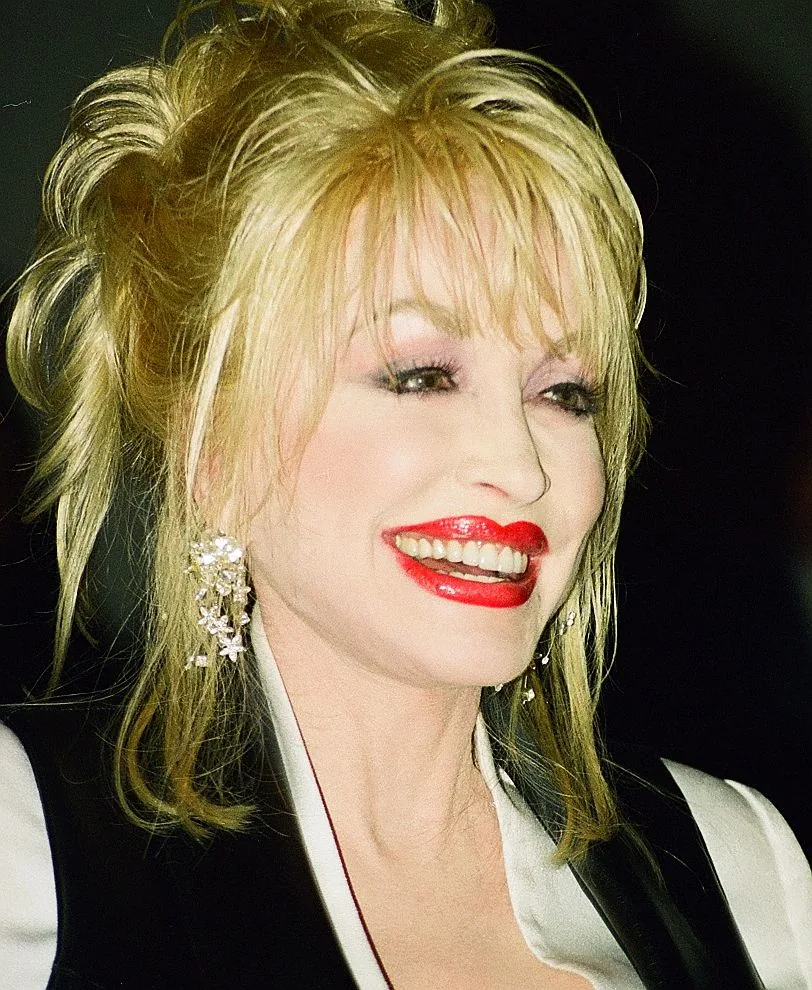
Dolly Parton is gone. The girl born in a one-room Appalachian cabin to a father who couldn't read, who went on to sell 100 million records and build a $650 million empire on nothing but raw talent and iron will, died Tuesday at 80. Her family announced the news in a video her nephew said Parton herself had asked him to record years ago, because even in death, Dolly Parton was the one running the show.
How She Told the World She Was Leaving It
Brian Seaver, Parton's nephew and head of security, delivered the announcement via Instagram video. "My name is Brin Seaver, son of Cassie Parton, and I'm representing the Parton and Owens family today announcing the passing of my aunt, Dolly Rebecca Parton Dean," he said. He noted that Parton had asked him to record this message years earlier, before it felt real to either of them.
Her death came after a difficult stretch. According to NBC News, Parton suddenly canceled a Las Vegas show in May 2026, disclosing she had been treated for kidney stones for several years and that her immune and digestive systems had been "all out of whack." She being Dolly, she made even that announcement funny. "Lord, they dig more stones out of me a year than the rock quarry in Rockwood, Tennessee," she said in a statement. The woman was incapable of being anything other than herself, right up until the end.
She also lost her husband, Carl Thomas Dean, in March 2025. They had been married since 1966. Carl, by all accounts, was the rare person on earth who was completely content to stand in the shadow of someone famous, because he loved her that much. Parton said after his death that words couldn't do justice to the love they'd shared for more than 60 years. After sixty years with Dolly Parton, we believe him.
What 100 Million Records and 11 Grammys Actually Means
Let's put the numbers on the table, because they deserve to sit there. Over a career spanning more than 60 years, Parton sold over 100 million records and won 11 Grammy Awards, making her one of the best-selling musical performers in history, full stop. Not best-selling female country artists. Not best-selling anything with an asterisk. One of the best-selling musical performers of all time, NBC News reports.
She wrote "Jolene" in 1974 and topped the country charts for the first time. The song was inspired, improbably, by a bank teller who flirted with her husband when they were newlyweds. She turned petty jealousy into an immortal piece of American music. She also wrote "I Will Always Love You," which Whitney Houston turned into one of the greatest vocal performances in pop history in 1992. Two songs that defined two different eras of American music, both from the same pen, both from a woman who started performing at church in East Tennessee before most kids have learned to tie their shoes.
In 1977, she became the first female country artist to have an album sell over a million copies. She did it with a self-produced record. In 1977. The music industry barely let women in the room back then, and Parton was already running the table.
From a One-Room Cabin to Hollywood
She was born January 19, 1946, the fourth of twelve children, in a one-room cabin on the banks of the Little Pigeon River near Sevierville, Tennessee. Her father couldn't read or write. Her mother sang Appalachian ballads around the house. By age 6, Dolly was writing her own songs. By 13, she was performing on local radio and television and had already made her debut at the Grand Ole Opry, where she met Johnny Cash.
The day after she graduated high school in 1964, she left for Nashville. That's not a metaphor or a romanticized detail. She literally got on a bus the morning after graduation. She spent her early years writing songs for other artists, including with her uncle Bill Owens, before catching the attention of country star Porter Wagoner and eventually breaking out entirely on her own.
Hollywood found her in 1980, when she made her film debut in "9 to 5." She wrote and performed the title song, earned two Golden Globe nominations for her acting, and landed an Oscar nomination for the song. She went on to appear in "Steel Magnolias" and "The Best Little Whorehouse in Texas." She got a star on the Hollywood Walk of Fame in 1984. Katherine Dacey, a professor at the Berklee College of Music, told NBC News that Parton's high soprano voice got its distinctive character from her fast vibrato and vocal twang. That's the clinical description. What it actually sounds like is home.
The Business Brain Behind the Rhinestones
People who dismissed Dolly Parton as a caricature, as a walking punchline about big hair and bigger curves, were making the oldest mistake in the book: confusing the presentation for the person. Parton knew exactly what she was doing. "It costs a lot of money to look this cheap," she once said. She built a $650 million fortune and maintained creative control throughout a career in an industry that chewed women up and handed their royalties to men in suits.
She built Dollywood. She launched the Dollywood Foundation to provide poverty relief and fund educational programs in East Tennessee. She was, by every measure, a serious businesswoman who happened to also be one of the most beloved entertainers in American history. The rhinestones were a choice. The intelligence was non-negotiable.
And she was a committed Christian who was also a vocal supporter of LGBTQ rights and marriage equality, including for transgender people, long before it was politically safe to say so in country music circles. "If you're the fine Christian that you think you are, why are you judging people," she said during a 2017 interview with Larry King. "That's God's job." A lot of people who claim her faith could stand to read that quote about fifty more times.
The Dingo Take
You are not supposed to get too sentimental in the news business. That's the rule. But Dolly Parton was the rare public figure who earned it without asking for it, without manufacturing it, and without ever making you feel manipulated by it. She was the real thing in an industry, and a country, full of very expensive fakes.
What she built is genuinely staggering. A hundred million records. Eleven Grammys. A film career. A theme park. A philanthropic foundation in one of the poorest corners of Appalachia. Creative control in an era when women in country music were routinely told to smile and cash the check someone else was writing. She did all of it while being funnier than almost anyone in the room and kinder than the business had any right to expect.
And she wrote "Jolene" because a bank teller winked at her husband. If that doesn't tell you everything you need to know about what happens when talent, humor, and a healthy amount of righteous human feeling collide in one person, nothing will. We won't see another one like her. We rarely do.


Comments