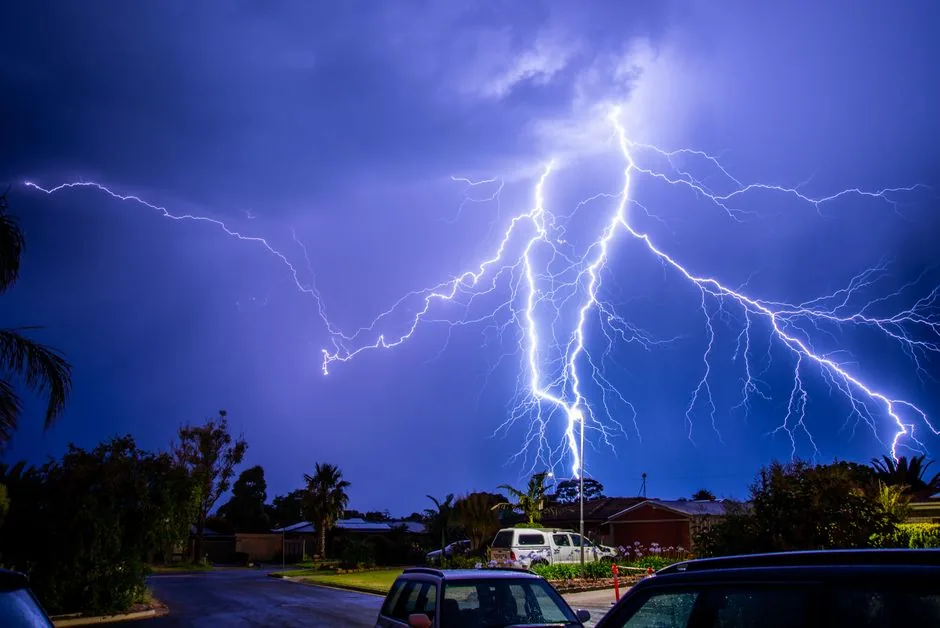
A mother and her two-year-old daughter were struck by lightning in Margate, Florida on Sunday and killed — standing next to their car, in a suburb, on an ordinary afternoon. Kenya Glasgow was 31. Her daughter Kennedi had just turned two. There is no gentle way to write that sentence.
What Happened in Margate
According to The Guardian, the strike happened in Margate, a city just outside Fort Lauderdale in Broward County. Kenya Glasgow and her toddler were found on the ground next to their car. Neighbors called emergency services. First responders rushed both of them to a local hospital.
They did not survive. Despite intense efforts to save them, both Kenya and Kennedi died shortly after arriving at the hospital. A mother and her child, gone within the span of a Sunday afternoon.
Neighbor Prince Moody told the local NBC News affiliate that he was inside his home when the strike hit. His house shook. His son came to get him. "My son said, 'Dad, there's a lady on the floor. She got hit,'" Moody recalled. That is how fast it happened.
The Cruel Math of Lightning
Here is the thing about lightning that makes this story so brutal to process: the odds were almost impossibly against this happening. The CDC estimates that the chance of any individual getting struck by lightning in a given year is less than one in a million. There are roughly 37 million lightning strikes across the United States every year, and the overwhelming majority of them hit nothing and no one that matters to anybody.
And when lightning does hit a person, nearly 90 percent of them survive it. That is the number the CDC puts out. Nine out of ten people walk away.
Kenya Glasgow and her daughter Kennedi did not. They were the statistical outlier, the almost-impossible scenario, the fraction of a fraction of a fraction. None of that math makes it easier to look at.
Florida and Lightning: An Old and Deadly Relationship
Florida is, without exaggeration, the lightning capital of the United States. The combination of afternoon heat, Gulf moisture, and sea breeze collisions makes the state a thunderstorm factory from roughly May through September every single year. Floridians know this. They learn it in school. They hear it on the weather forecast constantly.
Knowing the risk exists and being able to protect yourself from it are two very different things. You cannot always see the storm coming in time. You cannot always get inside fast enough. Sometimes you are standing next to your car in a Margate parking area on a Sunday, and that is simply where you are when the sky decides.
This is not a policy failure or a political story. It is just a terrible thing that happened to a young woman and her toddler who had no warning and no chance.
A Community Left With the Aftermath
The neighbors who watched this unfold are going to carry it. Prince Moody's son is going to carry it. The first responders who worked on a two-year-old in an emergency room on a Sunday are going to carry it.
The Guardian has not yet reported on any organized community response, fundraising, or public statements from Margate city officials as of this writing. What the reporting gives us is a name, an age, a location, and a neighbor's voice shaking as he described what his kid told him. That is the whole story right now. Sometimes that is enough.
The Dingo Take
You are not supposed to be able to die like this in 2026. That sounds like a ridiculous thing to say, because of course you can, because lightning does not care what year it is. But there is something specifically disorienting about a story like this dropping into a news cycle that is otherwise full of things humans are actively choosing to do to each other. Kenya Glasgow and Kennedi did not end up in the wrong place because of a policy, a crime, a war, or a decision anyone made. They were just outside. Next to their car. In Florida. In August.
The two-year-old did not get a chance to remember any of it. That is the sentence that will sit with you if you let it.
There is nothing to fix here, no villain to point at, no outrage to direct anywhere useful. Just two people who deserved a completely unremarkable Sunday afternoon and did not get one. The least we can do is say their names clearly: Kenya Glasgow. Kennedi. Gone on a Sunday in Margate, Florida. That counts for something, even if it does not feel like enough.





Comments