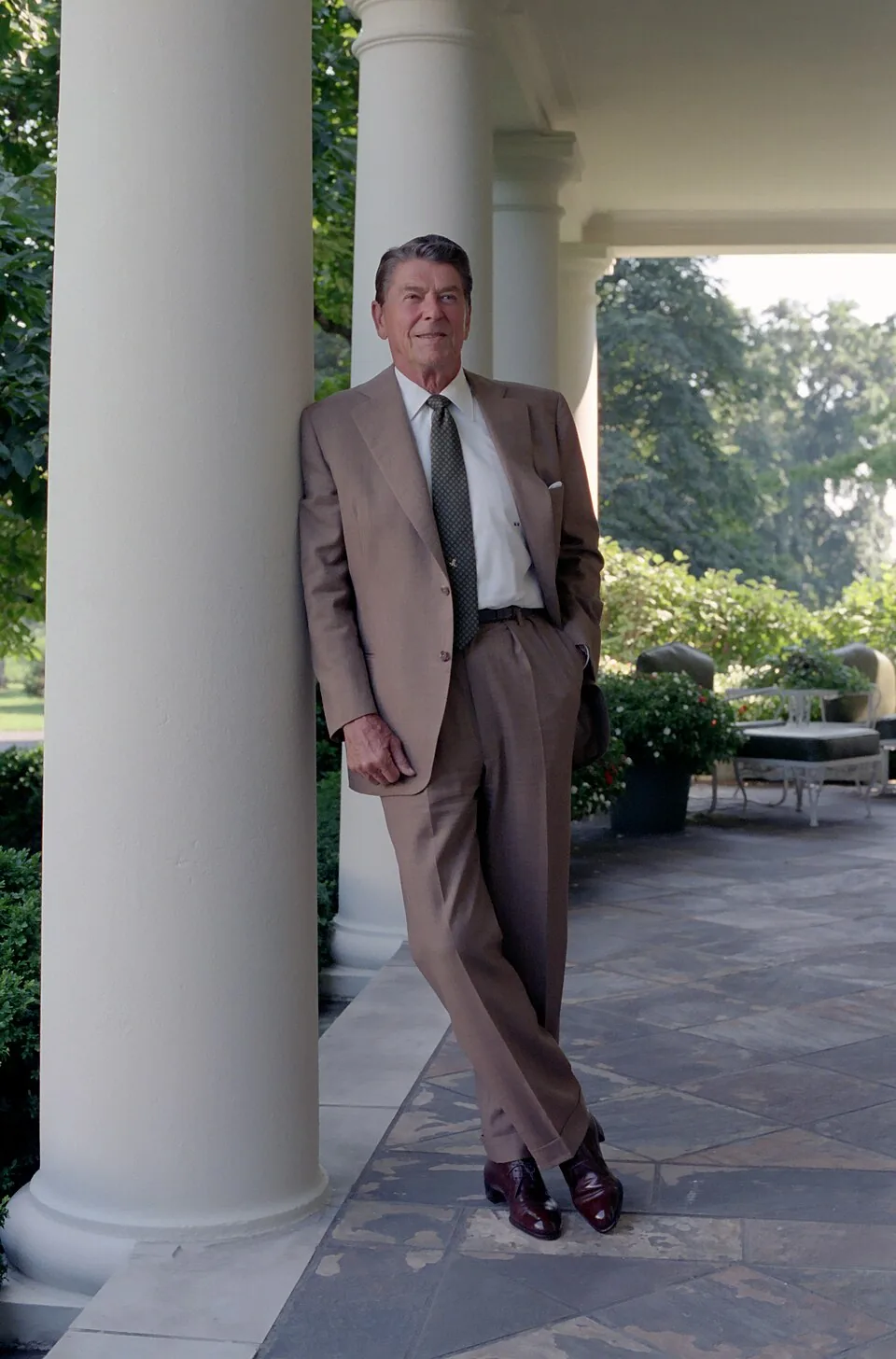
Forty-six years ago, Ronald Reagan ended a presidential debate with a single question that demolished Jimmy Carter's reelection campaign. Now Robert Reich is arguing Democrats should borrow it, point it straight at Donald Trump, and watch the whole MAGA economic mythology collapse in real time. Given the numbers involved, it is not a bad plan.
The Question That Has Always Been a Weapon
On October 28, 1980, Reagan looked into a camera and asked the American public: 'Are you better off now than you were before this presidency?' Carter never recovered. The question worked because it cut through every talking point and every spin cycle and landed directly in the gut of every voter who had spent the previous four years watching their purchasing power dissolve.
According to Reich, writing in The Guardian, Democrats running in the November midterms should steal that question wholesale and ask it loud, ask it often, and let the answer do the work. The argument is not complicated. Unless you are very wealthy, the answer right now is an unambiguous no, and the receipts are sitting right there in plain sight.
$1,100 Per Household, and That's Just the Tariffs
Start with the tariffs, because the tariffs are everywhere. The Yale Budget Lab estimates they are costing the average American household $1,100 per year. If you find Yale too liberal for your tastes, the conservative Tax Foundation put last year's tab at $1,000 per household. The ideological gap between those two numbers is, notably, zero dollars.
As Reich details in The Guardian, those tariffs are not abstract. Cleaning supplies and toilet paper are up at least 5%. Household furnishings are up at least 8%. Clothing is up at least 14%. Cars cost more. New homes cost more to build. Other analyses find the tariffs have added as much as 0.7 percentage points to the consumer price index. This is not a rounding error. This is a tax on existing, breathing, grocery-shopping Americans, collected not by the Chinese government but by American consumers at the register.
Trump's response to all of this has been to announce that the US economy is, quote, 'doing unbelievably from the standpoint of Wall Street.' He said this, Reich notes, on the same day new data showed US consumer sentiment dropping in August, with economic pessimism rising among Republicans as well as Democrats.
The War, the Strait, and the Gas Pump
Then there is the war in Iran, which is doing its own damage to the household budget. Oil tankers remain stranded in the Strait of Hormuz, and according to Reich's column, that blockage has added roughly $670 per household to gas costs since the conflict began. Energy bills overall have increased three times faster than the general inflation rate during the Trump presidency, according to an analysis from The Century Foundation and Protect Borrowers cited in The Guardian.
The national average monthly utility bill hit $280 in early 2026, a 12% jump since the end of 2024, just before Trump's second term got underway. The Republican legislative response to soaring utility prices has been to eliminate billions in clean energy subsidies and push harder toward fossil fuels. So the thing that is making your bills go up is being protected and subsidized, and the things that might eventually bring your bills down are being gutted. This is the plan.
The Iran conflict is also squeezing fertilizer supplies, which is pushing food prices higher. As Reich reports, millions of Americans are now struggling to afford groceries. The war front and the economic front are not separate problems. They are the same problem wearing different hats.
Medicaid Cuts Paid for Tax Cuts for Billionaires, More at 11
The fiscal architecture of this administration is not subtle. Trump's large-scale tax cuts, which The Guardian piece notes mostly benefited major corporations and the wealthiest Americans, are being paid for in part through Republican cuts to Medicaid and Medicare. Last month, Trump announced he is ending Medicare subsidies that had kept drug prices low for seniors. Republican rollbacks of the Affordable Care Act have stripped health insurance from millions of Americans.
There is also the matter of a $464 million no-bid contract for a special fleet of deportation jets, paid for with taxpayer money, that Reich reports have almost never been used. That is nearly half a billion dollars for planes sitting on the ground, while Medicaid budgets are being slashed to cover tax relief for people who do not need tax relief. That sentence should be on a bumper sticker.
Even the MMR vaccine situation is costing families money. Trump's executive order splitting the measles-mumps-rubella shot into three separate injections, rather than one, is adding doctor's visits and costs to families with children. Republican Senator Bill Cassidy went on ABC's This Week and said plainly that this is why Trump's poll numbers are falling, calling it out as a decision with, quote, 'no rationale in science.'
The Stock Market Is Fine. Most Americans Don't Own the Stock Market.
Trump keeps pointing to Wall Street as proof of economic success. S&P 500 companies are on pace for roughly 50% year-over-year earnings growth in Q2, according to The Guardian, the highest rate since mid-2021. Pharmaceutical companies and big oil are posting banner profits. On paper, the market looks extraordinary.
The problem is who owns the market. The richest 1% holds more than half the value of US-listed stocks. The richest 10% hold 92% of it. Even when you fold in retirement accounts, only 16% of adult Americans have assets exceeding $100,000. When Trump talks about the roaring stock market, he is describing the lived experience of a very small group of people, and he is describing it to the very large group of people who are not in that group and are currently struggling to pay a $280 monthly utility bill.
The July jobs report Reich cites makes the disconnect even starker: the economy shed 23,000 jobs that month, wage growth slowed, and the unemployment rate only fell because more people stopped looking for work entirely. That is not a healthy labor market. That is people giving up.
Reich's Advice: Keep It Simple, Keep It Economic
Reich's core argument in The Guardian is that Democrats have a habit of getting distracted, of taking bait on culture war fights about socialism or identity politics, of letting the conversation drift away from the material conditions that are actually driving voter anger. His advice for the midterms is to resist that temptation completely.
Just ask the question. Are you better off now than you were before this presidency? Then answer it, specifically, with numbers, with product categories, with utility bills and drug prices and gas receipts. Let the Republican incumbents try to defend a $1,100 annual tariff tax and a $464 million fleet of unused deportation planes at the same time.
The midterms are on November 3rd. The question is already written. Democrats just have to decide whether they are willing to ask it.
The Dingo Take
You are supposed to believe this is a complicated strategic question for Democrats. It is not. The opposing party has raised your grocery bill, your utility bill, your gas bill, your healthcare costs, and your clothing costs, while cutting taxes for corporations posting 50% profit growth and spending half a billion dollars on planes that don't fly. The playbook writes itself. The only way to lose this argument is to stop making it.
The Reagan comparison is actually kind of beautiful in its cruelty. Republicans have spent forty years worshipping at the altar of that debate moment, teaching it in political science classes, citing it as genius. And now the economic conditions their own president created have turned it into a weapon pointed directly at them. Reagan's ghost is going to cost the GOP the House. There is a certain poetry in that, if you are the type to find poetry in political catastrophe.
The real tell here is Senator Bill Cassidy going on national television to say Trump has 'lost sight of affordability for the parent' and 'lost sight of the convenience for the American family.' When your own party's senators are handing opposition researchers their attack ads pre-written, you are not in a strong position. Democrats do not need a brilliant strategy. They need a working printer and a calendar that says November 3rd.





Comments