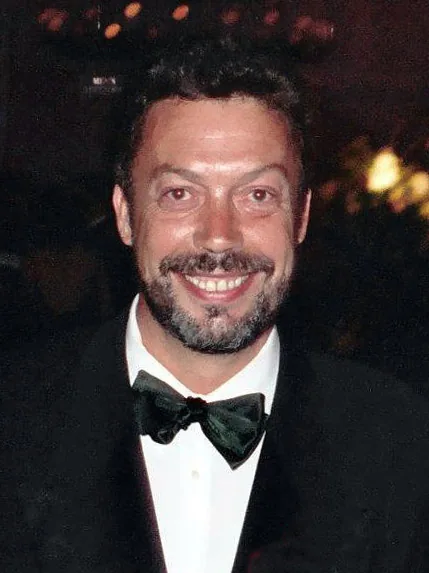
Tim Curry, the British actor who spent five decades proving that the villain is always the most interesting person in the room, died Tuesday evening at his home in North Hollywood, California. He was 80. His manager confirmed the news, and according to TMZ, which first broke the story, law enforcement sources found no foul play suspected in his death.
A Career That Was Genuinely One of a Kind
Born in Cheshire, England in 1946, Curry started where all the best actors start: on the London stage. He cut his teeth on the West End before crossing the Atlantic and making himself permanently unforgettable.
The résumé is almost absurd in its range. Frank N. Furter. Pennywise the Dancing Clown. Long John Silver. Cardinal Richelieu. Wadsworth the butler in Clue. The Lord of Darkness in Legend. Rooster in Annie. He collected Emmy, Grammy, and Tony nominations and wins across decades, which is a combination almost nobody pulls off. The Recording Academy, the Television Academy, and Broadway all had to reckon with him at different points. Most actors get one of those. Curry got all three.
What made him singular was the thing that's hardest to teach: he made you want to watch the bad guys win. Every villain he played had charm, wit, and a kind of magnificent self-possession. He didn't camp it up for cheap laughs, even when the role demanded camp. He played it real. That's the trick. That's why people are still watching Rocky Horror fifty years later.
The Stroke That Changed Everything
In 2012, Curry suffered a major stroke. It was a serious blow for a performer whose whole instrument was physical presence, timing, voice. He largely withdrew from public life after that, making only occasional appearances.
Page Six reports that in an October 2025 segment on CBS Sunday Morning, one of his last major interviews, Curry opened up about his health struggles and what he'd been sitting with in the years since. The conversation was as characteristic of him as anything he ever put on screen: honest, a little theatrical, and genuinely unafraid.
His father, James Curry, had died of a stroke back in 1958, when Tim was just a boy. So when his own stroke hit, Curry told CBS he thought immediately of his dad. That detail lands. The thing he'd been carrying for decades suddenly became personal in a new way.
His Final Interview Was Very Tim Curry About the Whole Thing
In that same CBS Sunday Morning conversation, Curry addressed death with the kind of serene, dry wit that felt completely in character for a man who spent his career making darkness look good. He said it would be, quote, "very comforting to go bye bye."
He laughed saying it, Page Six notes, and then added: "I want to earn it. I want to earn the privilege of not being here. I think I might very well embrace it." Then, with perfect comic timing, he clarified that he "tried to avoid" death and was "not galloping toward it."
That's the quote. A man nearing the end of his life, in fragile health, finding the exact right words to be funny, brave, and a little heartbreaking all at once. If you wrote that as a scene in a movie, people would call it too on the nose. Life, apparently, did not get that note.
What He Leaves Behind
Rocky Horror is the obvious one, and it deserves to stay obvious. The film has run in midnight screenings around the world continuously since 1975. Curry's Frank N. Furter is the reason. A character that could have been a joke, played as a fully realized person with genuine menace and genuine heartbreak underneath the glitter. It should not have worked as well as it did. It absolutely worked.
Then there's Pennywise. The 1990 TV miniseries adaptation of Stephen King's It gave Curry one of the great horror performances on screen, the kind that genuinely traumatized a generation of children and shaped how people think about clowns forever. Tim Burton's version of Gotham, the BBC's version of Shakespeare, animated kids' films, prestige period pieces, he was in all of it and always the best thing in whatever he touched.
The scope of what he put into the culture is difficult to calculate. He didn't just play iconic roles. He created the template for how those roles get played. Every sinister charmer who came after him is working from a blueprint he wrote.
The Dingo Take
Eighty years old, five decades of work, a stroke that would have ended most people's public lives entirely, and his last interview was a bit about wanting to "earn the privilege" of dying. Tim Curry was, to the end, better at this than everybody else.
There is a specific kind of cultural grief that hits when someone whose work raised you actually goes. Curry was the villain at the center of things you watched as a kid that you didn't fully understand until you were an adult, at which point you understood them completely and loved them even more. That's a rare gift to give an audience. Most entertainers get one generation. He got several, in different ways, for different reasons, all of them legitimate.
No bad takes today. No discourse. Just go put Rocky Horror on, or pull up that Tim Curry Clue scene, or rewatch the IT miniseries if you're feeling brave. The man made an enormous amount of beautiful, weird, joyful, terrifying art, and he had the grace to leave us with a quote about death that was funnier than most people's best material. That's the whole career, right there.



Comments