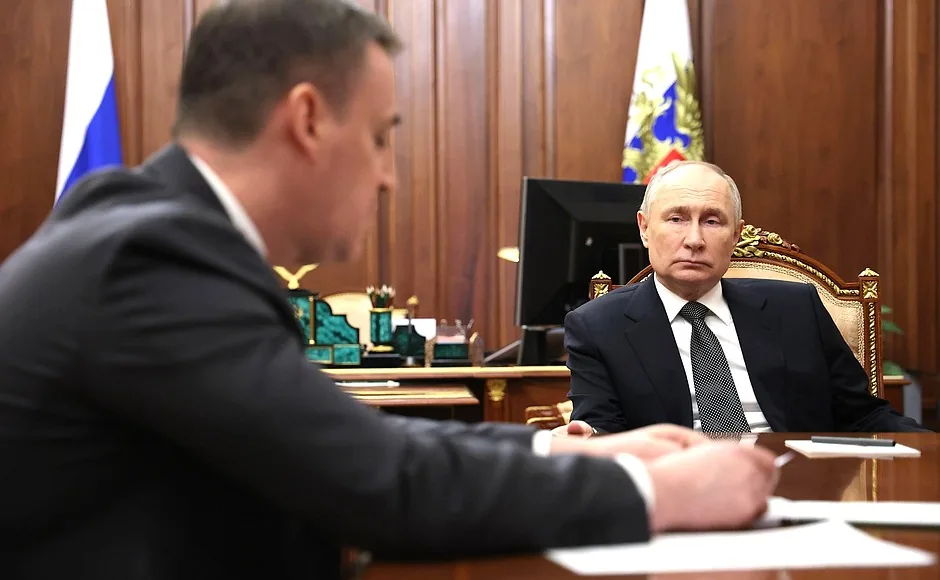
Vladimir Putin is staring down a $125 billion deficit, a 14% interest rate on his national debt, and an economy that Sen. Richard Blumenthal says is 'on the verge of major crisis.' The Senate already passed a bill to make it worse, 86 to 11. Now it's sitting in the House, going nowhere, while Russian drones level Ukrainian hospitals every single night.
The Bill Graham Died Fighting For
The Lindsey O. Graham Sanctioning Russia and Iran Act of 2026 is named for a reason. As CBS News reports, the late South Carolina senator spent years championing this legislation alongside Connecticut Democrat Richard Blumenthal, and the Senate pushed it across the finish line shortly after Graham's sudden death, passing it before leaving for August recess.
The bill is not subtle. It would give the president authority to slap tariffs of up to 100% on the top five purchasers of Russian oil or natural gas. That's not a diplomatic nudge. That's a boot on the throat of the revenue stream keeping Putin's war machine alive. There are carve-outs for countries importing less than 15% of their gas from Russia who are actively working to reduce that dependency, so it's not a blunt instrument being swung blindly at American allies.
It also ramps up sanctions authority against oligarchs and the financial institutions propping them up, and it takes direct aim at what Blumenthal calls 'the shadow fleet,' the network of tankers and front companies Russia has been using to quietly sell oil and dodge existing restrictions. This is comprehensive. This is the thing you build when you're serious about actually hurting someone economically.
86 to 11. Read That Again.
The Senate passed this bill 86 to 11. In 2026. In this Senate. That number is so staggering it almost reads like a typo. Blumenthal himself flagged it on Face the Nation Sunday, saying 'not many measures doing that kind of successful passage these days,' which is the politest possible way of noting that bipartisan agreement at this scale is roughly as common as a solar eclipse.
The Connecticut senator described the bill as 'the result of painstaking, sometimes painful, negotiations' with the U.S. trade representative, the White House, and members of both parties. This wasn't rammed through. It was built carefully, with buy-in from across the spectrum, to survive exactly the kind of scrutiny that kills ambitious legislation.
And yet, here we are, with the House back from a five-week recess this week, and the bill's path forward described by CBS News as 'uncertain.' In Washington, 'uncertain' usually means 'someone powerful doesn't feel like dealing with it.'
Zelenskyy's Homework Assignment for Congress
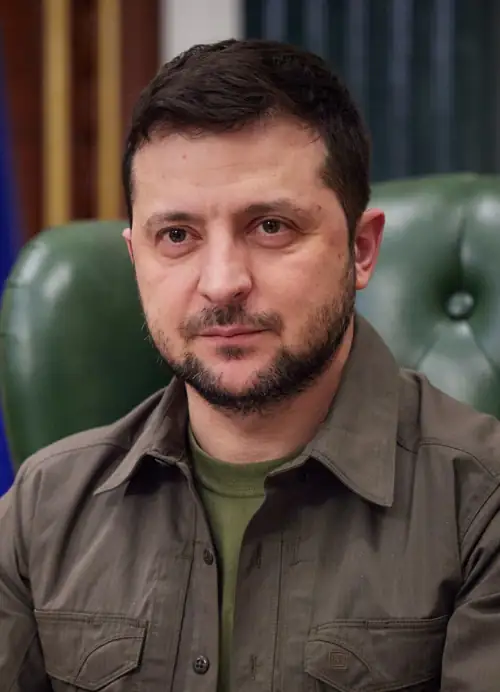
Blumenthal was in Ukraine last week. He met with President Volodymyr Zelenskyy. According to CBS News, Zelenskyy gave him a list of priorities, which Blumenthal called 'a homework assignment.' Item number one on that list: the Russia sanctions bill. Not weapons. Not diplomatic recognition. Not a specific military package. The sanctions bill.
That matters. Zelenskyy has been at war for years. He knows his battlefield better than any senator, any think tank analyst, any cable news commentator. He looked at everything available to him and said: hurt Putin's money first. The man whose country is being bombed every single night told an American senator that throttling Russian oil revenue is his top ask. Maybe Congress should listen to the person whose cities are actually on fire.
Blumenthal also told Face the Nation that he urged Zelenskyy to visit the House and speak with members directly, the way he did with the Senate. 'I'm very hopeful that he will because he's Ukraine's strongest advocate,' Blumenthal said. Which is a kind way of saying: maybe hearing it from the man himself will move some people off the dime.
The Economic Moment That Won't Last Forever
Here's what the numbers look like right now, per Blumenthal's account on CBS News. Russia is staring down a deficit of approximately $125 billion, equal to about 5% of its GDP. Its national debt carries a 14% interest rate. The economy, by the senator's description, is 'on the verge of major crisis.'
That is not a country running at full capacity. That is a country grinding through a war it is paying for in borrowed time and borrowed money. The window to maximize economic pressure on Putin is not permanent. Sanctions work best when they accelerate a collapse that's already in motion. Waiting for the House to sort out its feelings about executive authority while Putin's economy teeters is not a strategy. It's malpractice.
Blumenthal was direct about the stakes on Sunday: 'This kind of sanctions bill, throttling the flow of revenue to his war machine could undercut completely his ability to wage this brutal, murderous war.' That's not spin. That's the straightforward logic of economic warfare. Cut the money, cut the war.
The Drone Strike That Happened Friday
While the House was on recess, a Russian drone strike hit west of Kyiv on Friday night. CBS News reports it was the deadliest attack of 2026 in Ukraine. Blumenthal described it as 'only one of every night's bombardment of hospitals, homes, schools,' and said bluntly that 'Putin is killing Ukrainians in cold blood with his missiles and bombs.'
This is the backdrop against which House members are returning from five weeks off, apparently undecided about whether to pass a bill that the Senate cleared with 86 votes. One night of Russian drone strikes would be a tragedy. Years of them, while the tools to economically cripple the person ordering them sit in legislative limbo, is something else entirely.
Blumenthal said visiting Ukraine was both 'exhilarating' because of Ukraine's progress and 'heartbreaking' because of the toll. He went. He saw it. Now he's asking his colleagues in the House to act on it. The question is whether they will.
The Dingo Take
You are supposed to believe this is complicated. House Democrats have 'concerns,' we're told, about giving the president more tariff authority. That's a real debate worth having in the abstract. But the Senate just had that debate and resolved it, 86 to 11, after months of negotiations with the White House and trade officials specifically designed to constrain that authority to the five biggest buyers of Russian oil. The 'concerns' were raised, addressed, and voted through by a margin that almost never happens on anything anymore. At what point does 'concern' become an excuse?
Putin's economy is wobbling. His war chest has a leak. The tool to widen that leak passed the Senate in a landslide, was Zelenskyy's personal top priority, and is named after the senator who spent years building it and didn't live to see it signed into law. The House has been on vacation for five weeks. They're back now. The math here is not hard.
Every day this sits is another day Russian oil revenue flows into missiles pointed at Ukrainian hospitals. Blumenthal flew to Kyiv, met the president of a country at war, and came back with a homework assignment. The homework is done. The House just has to turn it in.



Comments