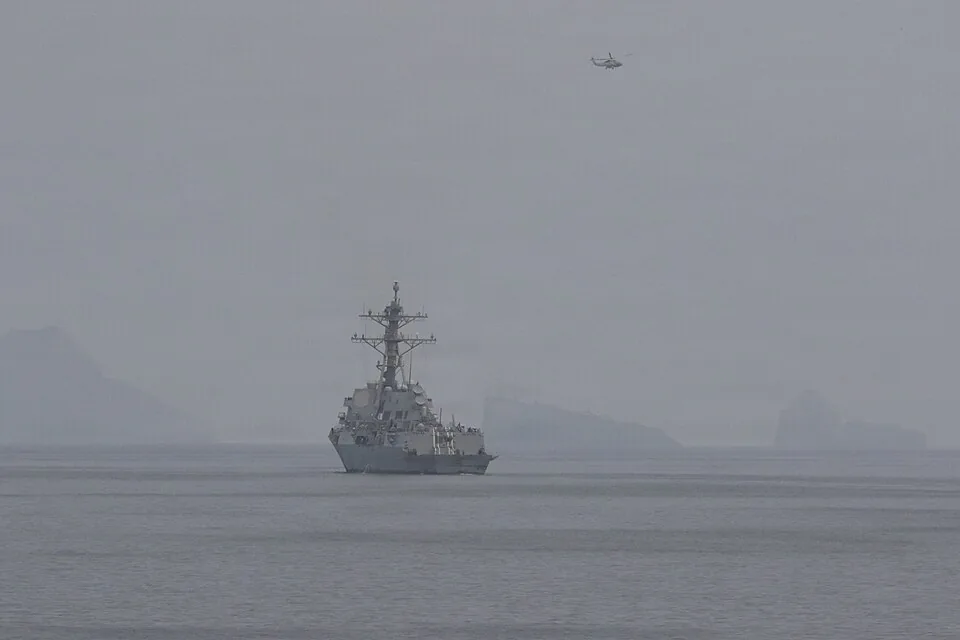
The United States military has bombed Iranian targets in the Strait of Hormuz again, this time to stop Iran from putting new mines in the water that the U.S. spent two weeks fishing the old mines out of. This is where we are. One week after Trump announced a 'Zero Tolerance' policy on new mine placement, Iran apparently decided to test exactly how tolerant zero tolerance actually is.
What Actually Happened
According to Axios, U.S. forces struck Iranian military targets specifically to prevent the deployment of sea mines in the Strait of Hormuz. A U.S. official confirmed the strike, which marks the first known American military action inside Iran since Trump paused a two-week campaign in the strait in late July.
The timing here is worth sitting with for a second. The U.S. military had literally just finished clearing all mines from the strait's main shipping lane last week. All of them. Done. Cleared. And then Iran, apparently, started moving to put new ones in. So the U.S. hit them before they could.
Trump's Warning Was Not Subtle
When Trump paused the July campaign, he did not leave a lot of interpretive wiggle room. Axios reports he explicitly told Iran that any ship or boat caught placing new mines would be, in his words, 'immediately and systematically destroyed.' He called it a 'Zero Tolerance' policy, which is the kind of phrase that sounds strong right up until someone tests it.
Iran tested it. The U.S. responded with strikes. On one level, that's the policy working exactly as advertised. On another level, it's also the latest chapter in an ongoing military confrontation with a major regional power that has been running hot since July with no clear endgame in sight.
Why the Strait of Hormuz Matters So Much
For anyone who needs a quick geography refresher: the Strait of Hormuz is a narrow chokepoint between Iran and Oman, and roughly 20 percent of the world's oil supply passes through it. When Iran mines it, global energy markets panic. When the U.S. has to clear those mines under fire, it is a full military operation, not a Coast Guard patrol.
Iran has understood the strategic value of this waterway for decades. Threatening it is one of the few asymmetric levers Tehran can pull against Western economic interests without launching a conventional war. The problem is that the Trump administration has now made it very clear it will respond kinetically every time Iran reaches for that lever, which raises a serious question about where this cycle ends.
The Bigger Picture: A Conflict With No Exit Ramp Visible
This latest strike is, by Axios's accounting, part of a pattern that started with a two-week military campaign in July, paused, and has now resumed with at least this additional action. That is not a one-off. That is a rolling military confrontation with Iran that the American public has received very little official explanation for in terms of long-term strategy.
What are the terms under which this stops? What does the U.S. want Iran to do, permanently, that would end the strikes? Is there a diplomatic track running alongside the military one, or is the plan just to keep hitting Iranian assets every time Tehran makes a threatening move? These are not rhetorical questions. They are the questions that every American whose country is conducting military strikes on a foreign nation deserves answered.
What We Don't Know Yet
The Axios report, sourced to a single U.S. official, is short on specifics about what exactly was struck, how large the operation was, and whether there were casualties on either side. That kind of information gap is standard in the immediate hours after a military action, but it also means the full picture is still forming.
Iran has not yet issued a public response as of this reporting. Whether Tehran absorbs this latest strike, retaliates through proxies, or attempts to mine the strait anyway will tell us a lot about how seriously they are reading the Trump administration's threats at this point.
The Dingo Take
You are supposed to believe this is all under control. The mines are cleared, the policy is zero tolerance, the bad guys are on notice, and every time they step out of line we blow up their stuff. Neat and tidy. Except we are now in the third month of a running military conflict with Iran in one of the most economically critical waterways on the planet, and the official explanation for how it ends is, essentially, vibes.
This is not about whether Iran deserves to get hit for mining international shipping lanes. They do. Mining a strait that 20 percent of global oil passes through is a genuine act of economic warfare and a physical danger to civilian vessels. The strikes may be legally and strategically defensible. But 'defensible' and 'thought through' are not synonyms, and right now the Trump administration is doing an excellent job of the former while showing very little evidence of the latter.
At some point, someone in Washington is going to have to explain what the off-ramp looks like, because 'we will keep bombing them every time they try' is a policy that works until it doesn't, and the consequences of it not working in the Strait of Hormuz are not abstract. They show up at the gas pump, in shipping costs, and potentially in a war nobody in the American public voted for or was asked about.





Comments