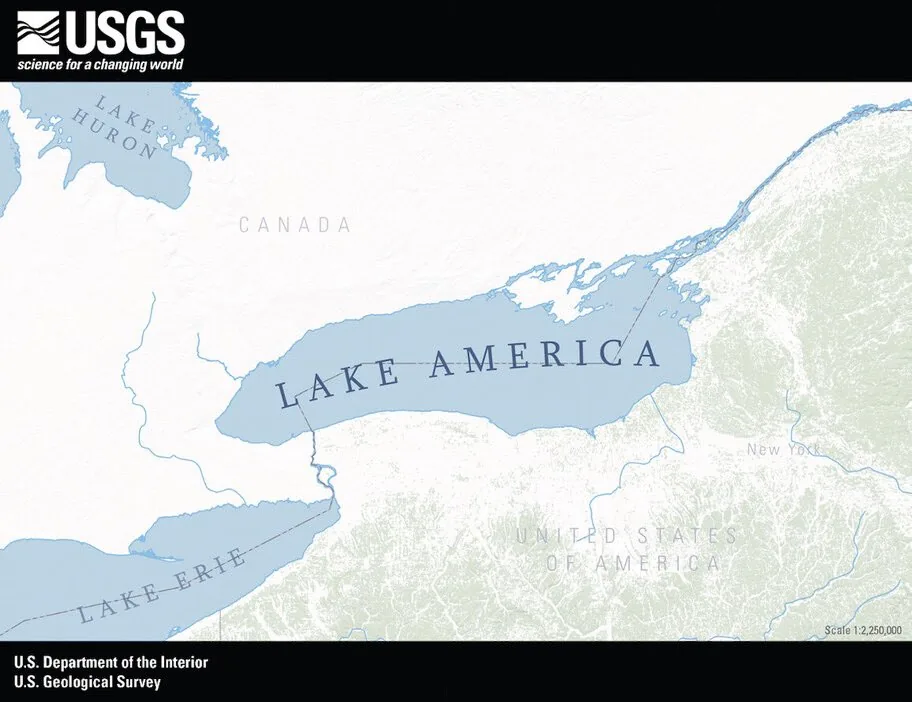
Donald Trump renamed Lake Ontario "Lake America," and the country looked up from its phones long enough to say: absolutely not. A Reuters-Ipsos poll from late August found that 63 percent of Americans oppose both the rename and the steep new tariffs Trump has slapped on Canada after trade talks between the two countries collapsed last month. Apparently renaming a Great Lake doesn't poll as well as it sounds in a cabinet meeting.
How We Got Here: A Perfectly Normal Diplomatic Spiral
Trade negotiations between the United States and Canada fell apart last month. That's not unusual in a Trump administration. What followed, however, was a little more on-brand. Rather than returning to the table, the White House escalated, layering new tariffs onto one of America's closest and longest-standing trading partners, a country that shares nearly 4,000 miles of border and, until recently, something resembling goodwill.
Then came the Lake Ontario thing. Trump signed an order renaming Lake Ontario — one of the five Great Lakes, a body of water that has existed under that name since before the United States existed as a country — to "Lake America." The lake, for what it's worth, has not commented. Canada has.
According to Axios, the rename is part of a broader pattern of escalation the Trump administration has been running against Canada since the trade talks collapsed. The logic, if there is any, appears to be that symbolic gestures and economic punishment will bring Ottawa to heel. The polling suggests this strategy is not going great.
Six in Ten Americans Are Not on Board
The Reuters-Ipsos numbers are blunt. More than six in ten Americans, 63 percent, oppose the Lake Ontario rename. That same poll found similar opposition to the new round of tariffs on Canadian goods. This is not a close call. This is not within the margin of error. This is most of the country telling the White House that picking a fight with Canada over a lake name is not the use of executive power they had in mind.
To put that in perspective: 63 percent opposition is the kind of number you see for things people genuinely, broadly, across-party-lines dislike. Rename a Great Lake after yourself, apparently, and you can unite the country — just not in the direction you were hoping for.
With midterm elections getting closer, as Axios notes, this is the kind of polling that tends to make congressional Republicans quietly stare at their shoes. Tariffs on Canada mean higher prices on goods that cross that border constantly. "Lake America" means your constituents are reading news articles about a lake rename instead of anything resembling a governing agenda.
The Canada File Is Getting Expensive
Canada isn't just a friendly neighbor with good maple syrup. It's the United States' second-largest trading partner. The two economies are deeply, structurally linked in ways that tariffs don't surgically target so much as they detonate into.
When trade talks collapse and steep new tariffs follow, the costs don't land on Ottawa politicians. They land on American businesses that rely on Canadian supply chains, American consumers who buy Canadian goods, and American industries that export across the border and now face retaliatory measures in return. This is how tariff fights work. It is not complicated. It keeps happening anyway.
The Reuters-Ipsos polling capturing opposition to both the tariffs and the lake rename in the same breath is telling. People aren't separating the silly symbolic gesture from the economically painful policy. They're reading them together as a single mood, a White House that is angrier at Canada than it is interested in the cost of that anger to ordinary Americans.
The Midterm Clock Is Ticking
Here is what every Republican running for a House or Senate seat in 2026 is doing right now: looking at a map of their district, figuring out how many constituents work in industries touched by Canadian trade, and doing quiet, panicked math.
Midterm elections historically punish the party in power when things feel unstable, expensive, or pointlessly chaotic. Renaming a Great Lake while simultaneously raising prices through tariffs on a neighboring democracy checks all three boxes simultaneously. Axios flagged the midterm timing specifically as context for why this polling matters, and that context is not subtle.
Trump has never been particularly moved by polling he doesn't like, which is a consistent character trait if not a governing strategy. But the members of Congress who need to win individual races in individual states don't have that luxury. Sixty-three percent opposition is not a number you campaign alongside. It's a number you try to change the subject away from.
The Dingo Take
You are supposed to look at a map of the Great Lakes, lakes that predate the United States, that Canada and America literally share, that have carried their names for centuries, and believe the correct response to a trade dispute is to rename one of them after the country you're already in. "Lake America." As opposed to all the other Lake Americas that apparently needed disambiguation. This is not diplomacy. This is not strategy. This is a president who ran out of levers and pulled the one labeled "body of water."
The tariffs are the actually serious part of this. Renaming a lake is embarrassing, but tariffs on Canada raise prices, disrupt supply chains, invite retaliation, and damage a trade relationship that took decades to build. The polling opposition to both in the same breath suggests Americans have figured out that these two things are coming from the same place: an administration more interested in performing toughness toward allies than in thinking through what that performance costs.
Sixty-three percent is a lot of people. It's more than voted for Trump in 2024. It's more than watch any given cable news channel. It is, in other words, a genuine national consensus forming around the idea that this particular fight, with this particular country, over this particular lake, is not worth it. The midterms are coming. Lake Ontario is still Lake Ontario in Canada. And nobody is winning here except the Canadians, who at this point have the moral high ground and, honestly, deserve it.




Comments