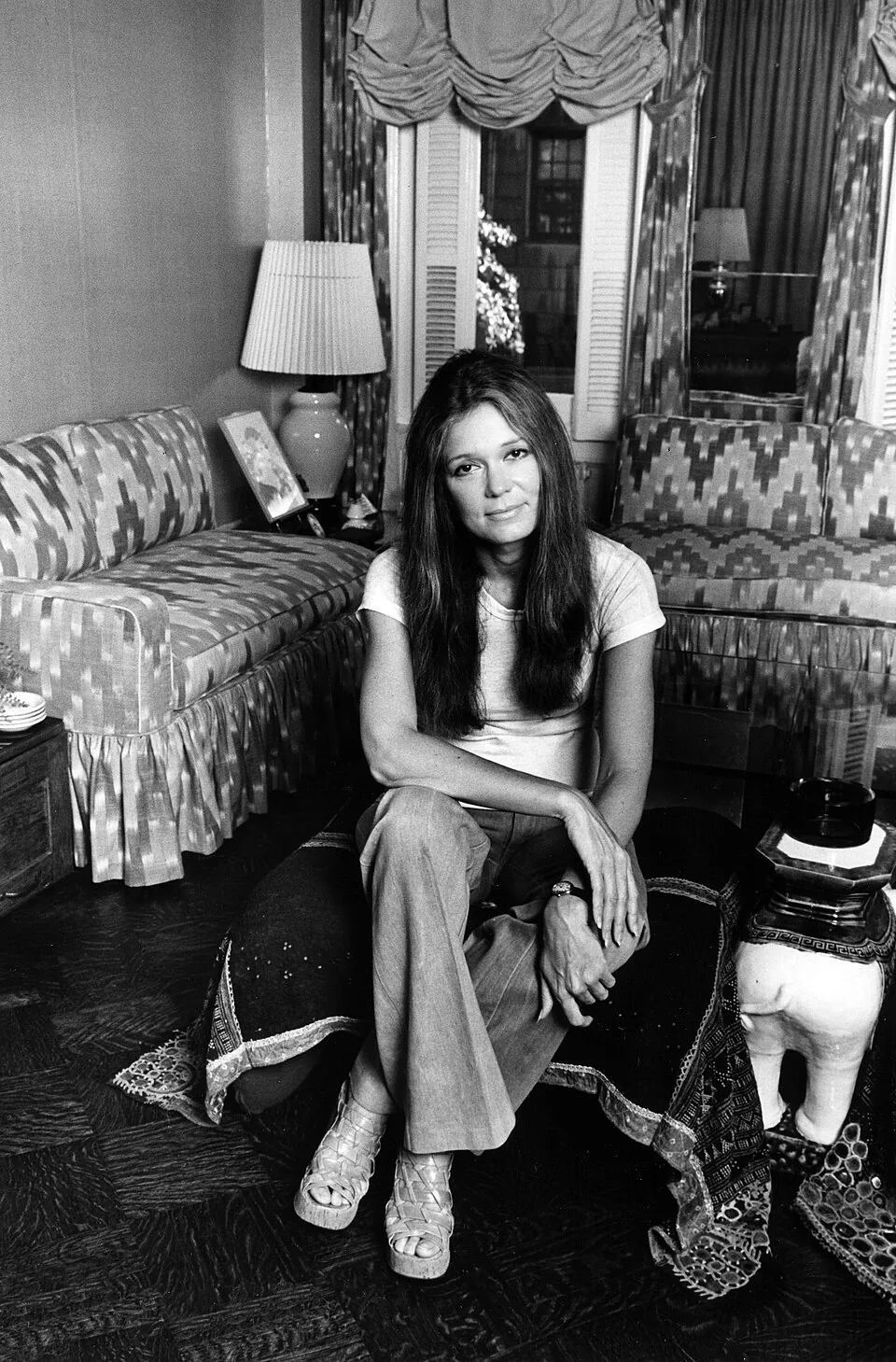
Gloria Steinem died Wednesday at her home in New York City. She was 92, she was surrounded by people who loved her, and she spent roughly seven decades making the most powerful men in America deeply, profoundly uncomfortable. That is not a bad way to go.
The Woman Who Rewrote What Women Could Do
NPR reports that Steinem's death was announced in a statement posted to her Instagram, which gave no cause of death. "Gloria Steinem passed away peacefully at her home in New York City, surrounded by some of the many who loved her," the post read.
She was born in Toledo, Ohio, in 1934. She graduated from Smith College in 1956 with a degree in government studies, spent two years in India on a fellowship traveling with people organizing against caste violence, and then returned home to break into journalism at the exact moment journalism wanted nothing to do with women. Specifically, it wanted women to cover food, makeup, babies, and celebrities. Steinem had different plans.
The Bunny Suit That Started Everything
In 1963, Steinem went undercover at one of Hugh Hefner's Playboy Clubs for Show magazine. The resulting exposé, "A Bunny's Tale," pulled apart Hefner's carefully constructed mythology that his empire was some kind of sexual liberation project, beneficial for men and women alike. What Steinem found was low wages, degrading conditions, and the same old power arrangements with a cottontail stapled on.
It was a defining move, and not just because of the story itself. It was a demonstration that women could do serious, dangerous, hard-hitting investigative journalism at a time when the industry insisted otherwise. Steinem recalled in a 2020 NPR interview that she and other women "could not write about political subjects for the existing magazines." So she went and wrote political subjects anyway, just dressed as a cocktail waitress.
The stunt made her nationally known. What she did with that attention is the whole rest of the story.
Building a Magazine Into a Movement
In 1972, Steinem co-founded Ms. magazine, which NPR describes as widely regarded as the first national magazine run by and written for women. This was not some niche publication. It was a direct provocation to the entire women's magazine industry, which at the time treated its readers as wives and mothers first and human beings somewhere further down the list.
"I think that all of us, when we read those magazines, get a sense of dishonesty," Steinem told NPR at the time. "It doesn't help you to change your life."
Ms. covered abortion, domestic abuse, lesbianism, and gender roles at a moment when mainstream publications treated all of those subjects as either shameful or irrelevant. Its 1977 cover story on sexual harassment, according to NPR, later became the basis for the 1980 film 9 to 5, starring Dolly Parton. A feminist magazine article about workplace abuse became one of the most beloved comedies in American cinema history. That's the kind of cultural penetration most movements spend decades failing to achieve.
She Also Helped Build the Political Machine
Steinem's work was not limited to the page. In 1971, she helped found the National Women's Political Caucus, an organization focused on recruiting, training, and endorsing women running for office. At the time it was established, 15 women served in Congress. There were 363 women state legislators. Seven women were serving as city mayors. Today, according to NPR, those numbers stand at 150, 2,476, and 428 respectively.
You can argue about how much of that progress is directly attributable to the caucus. You cannot seriously argue that the trajectory moved the wrong way. Steinem told NPR in 1971 that women had been doing all the unglamorous work of political campaigns for generations and getting none of the power. "We're not going to do that anymore," she said. "Let the male candidates do their own typing."
That quote is 55 years old and still lands.
The Recognition, and the Complications
In 2013, President Obama awarded Steinem the Presidential Medal of Freedom, the country's highest civilian honor. "Because of her work, across America and around the world, more women are afforded the respect and opportunities that they deserve," Obama said at the ceremony. "She also changed how women thought about themselves."
Steinem's legacy was not without friction. NPR notes that early in her career she was briefly involved with a CIA-backed organization that sent American students to Soviet-sponsored youth festivals during the Cold War. This became a point of contention for some feminists. Steinem defended her involvement, arguing the CIA never tried to control the organization's direction. Whether you find that convincing likely depends on how much you trust the CIA's capacity for hands-off involvement in anything, which is to say, draw your own conclusions.
None of it meaningfully dented what she built. The body of work is simply too large, and the impact too measurable, to reduce to a Cold War footnote.
The Dingo Take
Ninety-two years old, and she died at home, peacefully, surrounded by people who loved her. In this world, that counts as one of the better endings available. There will be no shortage of tributes in the days ahead, and most of them will be deserved.
But here is the thing worth sitting with: Steinem did not operate in a moment when the culture was ready for her. She operated in active opposition to a culture that had assigned women a very specific, very limited set of permitted topics and then told them to be grateful. She did not wait for permission. She went undercover in a Bunny suit, she co-founded a magazine with no template to follow, she helped stand up a political caucus from scratch, and she did all of it while the people in charge of the institutions she was challenging insisted there was nothing wrong with those institutions in the first place. Sound familiar?
The fight she spent her life on is not finished. The reproductive rights she championed and experienced personally were stripped back by the Supreme Court four years ago. The political representation she organized for is still far short of proportional. The magazines she said were dishonest have been replaced by platforms that found new and creative ways to tell women who they are supposed to be. None of that diminishes what she did. It just means there is more left to do, and fewer people of her particular caliber to do it.





Comments