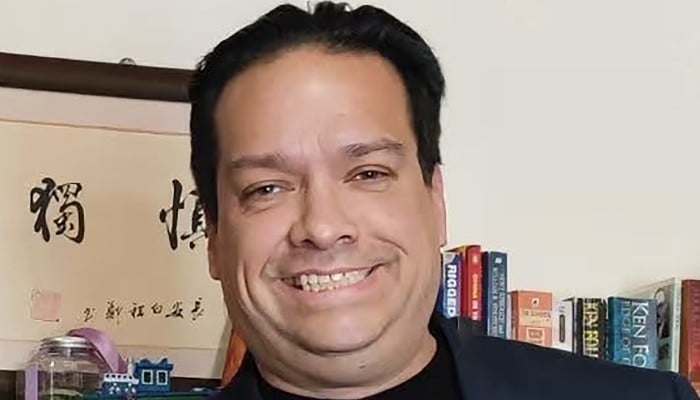
A Texas-born American journalist who spent years writing propaganda for Chinese state media just got handed a two-year federal prison sentence for doing something considerably worse: running recruitment operations for China's Ministry of State Security. Thomas Weir Pauken II, 51, pleaded guilty and won't appeal, according to his attorney. He got paid at least $100,000 for his trouble, and the government's read-by-Xi Jinping pipeline was apparently just the perk.
The Setup: A Reporter, a Handler Named 'Cathy,' and a Burner Phone
According to court documents cited by CBS News, Pauken's arrangement with Chinese intelligence goes back to at least 2019. He was working at the direction of Chinese government operatives, including a handler he'd met back in 2017 who identified herself only as 'Cathy.' That's not a nickname the FBI gave her to be cute. That appears to be how she operated.
Cathy told Pauken his reports were being read directly by President Xi Jinping. Whether that's true or a classic intelligence community flattery tactic designed to make an asset feel important, it worked. Pauken kept writing. He kept meeting people. He kept taking money, which according to the Justice Department was often wired directly to his wife's bank accounts.
At some point, Cathy decided writing wasn't enough. She asked Pauken to recruit assets who could provide classified information to China. In one instance, federal court documents show he was instructed to meet a person referred to as 'Person 1' and hand over a Samsung phone, a laptop, and pre-configured passwords for Signal, Telegram, and a Chinese cloud storage service called NetDisk. That's not a journalist doing journalism. That's a spy doing spy things.
The Arrest: Caught at the Border, Then Immediately Honest
Pauken got stopped by Customs and Border Protection in January 2025 when he returned to the United States. What followed, according to a federal court affidavit filed by FBI Special Agent Timothy J. Healy, is one of the more remarkable moments of self-incrimination in recent memory.
During interviews with CBP and FBI agents, Pauken reportedly told investigators he was 'eighty percent sure' that the person he was trying to recruit into the Trump administration would hand classified information to China. He also said he had advised that person not to do it. Which is, sure, technically a point in his favor, and also the kind of statement that will absolutely appear in your sentencing documents.
He was arrested in February 2026. His most recent public Facebook post, made under the alias 'Tom McGregor,' showed photos of his wife and child on a Washington D.C. trip. He captioned it warmly. He was arrested shortly after.
The Resume: CCTV, Xinhua, and a Family Name to Protect
Pauken moved to China in 2010 and built a career in Chinese state media over the following decade and a half. He worked for CCTV, China's state broadcaster, and most recently served as an editor at Xinhua, China's official state news agency, a position he held starting in 2024. CBS News reports he published two books under his real name, one on U.S.-China relations in 2019, and one on the city of Shenzhen in 2023.
The 'Tom McGregor' alias wasn't an intelligence cover. It was reportedly his father's idea. His father, Thomas Pauken Sr., is a former chairman of the Texas Republican Party and once ran for governor of Texas. Senior apparently wanted some professional distance from Junior's increasingly conspicuous work amplifying Chinese state narratives. You can understand the instinct, even if the solution didn't ultimately matter much.
The Justice Department's Assistant Attorney General for National Security, John A. Eisenberg, put it without ceremony in the department's press release: 'Pauken betrayed his country for money.'
The Sentence: Two Years, No Passport, No Classified Assets Compromised
Pauken was sentenced to two years in federal prison plus 36 months of supervised release, with no international travel permitted, CBS News reports. His defense attorney, Charles Burnham, noted that 'as the government agreed in court, Mr. Pauken did not provide any classified information to the Chinese.' That's a meaningful legal distinction and worth saying plainly.
What he did do, prosecutors say, was support MSS operations, recruit potential intelligence assets, and collect six figures doing it. The government's position is that you don't have to hand over a classified document to cause serious national security damage. Building the pipeline is the crime.
China's Ministry of Foreign Affairs did not respond to a request for comment, per CBS News. This is not surprising.
The Dingo Take
Two years. That's what you get for spending the better part of a decade actively supporting a foreign intelligence service's recruitment operations inside the United States, all while collecting a paycheck from China's state news agency and writing books about how great Shenzhen is. Two years and no overseas travel. For context, people have done more time for marijuana convictions in states where it's now sold legally at strip mall dispensaries.
The 'eighty percent sure' line deserves to live in infamy. The man sat across from federal agents, having just been stopped at the border, and volunteered that he was nearly certain the person he had been trying to place inside the Trump administration intended to leak classified information to Beijing. He said this out loud. To the FBI. As a defense. Whatever you think about the sentence, whatever you think about the case, you have to admire the absolute confidence it takes to self-incriminate at that level while apparently believing it helps your situation.
The broader story here isn't really about Pauken. It's about the fact that this is, as CBS News notes, just the latest in a series of federal prosecutions tied to Chinese intelligence operations on American soil. One journalist. One handler. One hundred grand. Multiply that across however many cases aren't making the news yet, and you start to understand why counterintelligence officials have been screaming into the void for years. The operation isn't subtle. It's just persistent.


Comments