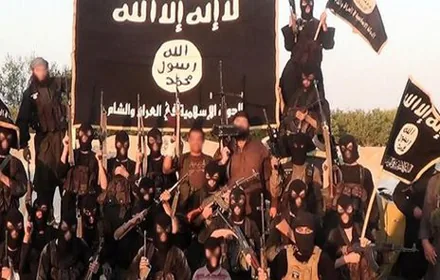
A young woman raised in Canada since she was two years old joined ISIS in 2014, rode in a van through the Turkish darkness toward Syria, and saw human heads displayed on the outskirts of Raqqa before she even reached her destination. She escaped. She became an informant. And she sat down with NPR this week to explain, step by careful step, exactly how something like this happens to a person.
It Started With a Hate Crime at a Train Station
S. — NPR is protecting her identity, using only her initial — was born in Pakistan to Somali parents and raised in Canada from the age of two. She was a regular teenager until her brother was shot and killed by a drug-impaired acquaintance. That kind of loss cracks something open in a person. For S., it pushed her toward religion.
She became more devout. She started wearing a hijab and a long dress. And almost immediately, she became a target. According to NPR's reporting by Tom Bowman and Gabriel J. Sánchez, S. and her family were attacked at a train station by strangers who sprayed them with bear mace. Unprovoked. Because of how she was dressed. Shortly after, men on a train made comments implying she might blow it up.
This is the part of the story that is genuinely important and genuinely uncomfortable to sit with. Before any radical ideology entered the picture, before any bad actors got their hooks in, a teenage girl in Canada was being physically assaulted and publicly humiliated for practicing her religion. The radicalization pipeline had a clear entry point, and Islamophobia built it.
A Boarding School, a Bad Influence, and a One-Way Ticket to Turkey
Between high school and university, S. enrolled in a religious boarding school in eastern Canada. She was trying to find community, safety, a place where she wouldn't get maced for wearing a hijab. Instead, she found a Somali woman who had previously joined al-Shabab, the al-Qaida-linked militant group, and who began coaching S. to leave the West entirely.
The pitch was sophisticated, as NPR reports. It wasn't just the woman's personal persuasion. It was reinforced by religious scholars telling her the West was dangerous, that she would be targeted, that she needed to leave. S. told NPR the messaging was doing something to her brain. That is, notably, exactly what a years-long propaganda and grooming operation is designed to do.
Canadian intelligence agencies were already watching. They showed up at her job, called her at home, came to her house. S. described this as frightening and pressuring rather than protective. Her parents, stressed by the government attention, eventually asked her to leave. The Somali woman offered to pay for her travel. In 2014, barely out of her teens, S. flew to Turkey. She told NPR she genuinely believed she was going to a Muslim country to live freely and practice her religion. She was not wrong that she had been failed by every system around her. She was catastrophically wrong about where she was headed.
The Van, the Farmhouse, the AK-47s
Istanbul is where the smugglers took over. S. was loaded into a van with other ISIS recruits and driven south through the night into Syria. NPR reports that they were abruptly stopped and the doors swung open. Men pointed at a distant farmhouse and told them to run.
At the farmhouse, armed men with AK-47s and machine-gun-mounted pickup trucks were waiting. They took everyone's passports. All of them. Right there. If there was a moment where the exit door closed behind her, that was it.
From there, a caravan to Raqqa. The ISIS capital. The self-proclaimed caliphate she had been told was a utopia. And then, on the outskirts of the city, S. looked out the window. According to NPR, what she saw were severed heads. ISIS was already deep into its campaign of filmed beheadings, the orange jumpsuits, the masked men with knives performing for cameras and taunting the West. S. had arrived at the center of it.
Refusing ISIS Husbands and Planning an Escape
At a crowded guest house by the Euphrates River, a married couple was put in charge of the group of Arab and Western women. Their immediate priority was pairing the women with ISIS fighters. S. was presented with four candidates for husband. She refused all four.
The punishment, per NPR's reporting, was immediate: threats of beatings, denial of clothing and showers, confinement to her room. S. began plotting escape with another Canadian woman who was pregnant and equally desperate to get out. When the couple left the house, they went out the back door, got into a random taxi, and ran.
NPR's article cuts off there, but the arc of the story is known: S. survived, eventually got out of Syria, and came back to work as an informant against ISIS, helping to save others from the same pipeline that swallowed her. She is now living somewhere in western Canada, her city undisclosed, her name protected, sitting in conference rooms telling her story to journalists.
The Dingo Take
You are supposed to read a story like this and file it under "terrorism" and feel appropriately alarmed about radicalization and move on. Don't do that. Because the actual story here is a teenager in Canada who lost her brother to gun violence, turned to her faith, got physically attacked for wearing religious clothing, got stared at on trains, got pushed out of her family home by the pressure of government surveillance, and was then actively recruited by someone who offered her belonging, purpose, and a plane ticket. The Islamic State did not find some pre-radicalized fanatic. They found a grieving kid who had been failed, repeatedly, by the country she grew up in.
That is not a defense of anything she did. It is an explanation of how the machine works, and the machine requires raw material. Islamophobic harassment creates alienation. Alienation creates vulnerability. Vulnerability creates recruits. Western governments have spent decades and billions of dollars on the back end of this problem while doing essentially nothing about the front end. Then they show up at a young woman's job to intimidate her and act surprised when the intimidation pushes her further away.
S. escaped. She became an informant. She is alive and talking to NPR from an undisclosed city in Canada. That is, genuinely, remarkable. But for every S. who gets out and finds a way to do something useful with the wreckage of that experience, there are others who don't escape the farmhouse, or the guest house, or Syria at all. The story NPR has told here is worth reading in full and sitting with for longer than it's comfortable to sit with.




Comments