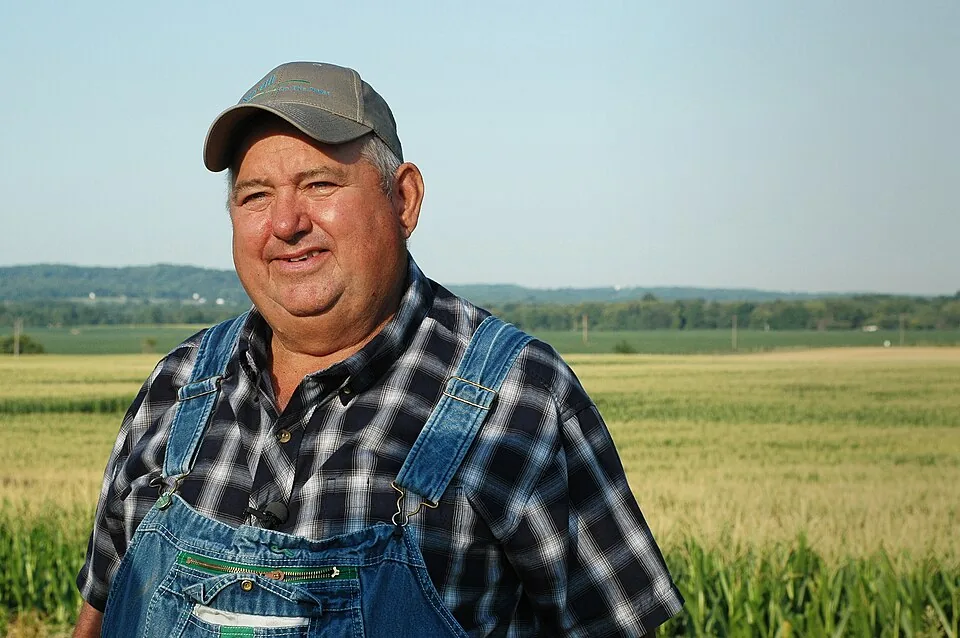
Montana farmers voted for Donald Trump three times. Now Canada has slapped retaliatory tariffs on $20 billion worth of U.S. goods, including the farm equipment those same farmers were counting on buying. The wheat is still growing. The irony is ripening faster.
A Trade War Lands in the Golden Triangle
After the Trump administration imposed tariffs on Canadian products, Ottawa fired back earlier this month with retaliatory tariffs covering $20 billion in U.S. goods. Farm equipment made the list. According to NPR, most farm equipment imported from Canada is now subject to a 15% tariff or higher.
The people feeling this most acutely live in Montana's Golden Triangle, a stretch of north-central Montana that touches three Canadian provinces and produces some of the most significant wheat and barley yields in the entire country. This isn't some abstract trade dispute playing out in a think tank white paper. This is happening to real farms, in real communities, where the U.S. and Canadian economies are so intertwined they basically share a circulatory system.
The Montana World Trade Center at the University of Montana puts the cross-border trade figure at $1 billion. Canada is, by a wide margin, the state's single biggest trading partner. Canadian companies buy Montana cattle, ship them north, and feed them Montana barley. The whole system runs on relationships built over generations. The Trump administration blew a hole in it in a matter of weeks.
The Equipment Bill Nobody Budgeted For
Steve Sheffels is a wheat farmer and the president of the Montana Grain Growers Association. He told NPR he had been planning to buy a new drill and grain bins sourced from Canada, drawn in by favorable exchange rates that made Canadian equipment a smart buy. Now he's not sure he can afford them.
"I'd like to consider buying a new drill and I'm also looking at grain bins that come out of Canada and I'm afraid I won't be able to afford them," Sheffels said.
Farmers in this region had leaned on Canadian suppliers precisely because the economics made sense. A favorable exchange rate plus quality equipment equals a smarter operation. That math doesn't work anymore. A 15% tariff premium on already-expensive machinery, layered on top of the soaring fuel and fertilizer prices farmers were already absorbing, is the kind of thing that turns a tight year into a brutal one.
The Uncertainty Is the Damage
Lee Dahlman is a fourth-generation wheat farmer and cattle rancher outside the tiny town of Dutton, Montana. He just finished the wheat harvest. He told NPR he's been adapting where he can: investing in soil-based probiotics to cut fertilizer costs, rotating in chickpeas and lentils to naturally restore nitrates to his fields. He's trying to control what's controllable.
But what's not controllable is the whiplash. "Things are more volatile," Dahlman told NPR. "The uncertainty is what bothers me."
That word, uncertainty, is the one that keeps showing up. It's not just the tariff number itself. It's not knowing whether this is a negotiating tactic that quietly dissolves in six months or a permanent restructuring of a trade relationship that Montana farmers have relied on for their entire working lives. You can't make a 10-year equipment investment under those conditions. You just wait, and waiting costs money too.
The Political Mess Nobody Wants to Say Out Loud
Montana voted for Donald Trump three times. Overwhelmingly. The farmers getting squeezed by these retaliatory tariffs are, in many cases, the same people who put him back in office. NPR notes that this makes the politics around tariffs genuinely complicated for producers in the state.
Dahlman is trying to square the circle the way a lot of Trump-supporting farmers do: trust the process, wait for it to soften. "I think I've got this administration figured out," he told NPR. "A lot of it comes out pretty harsh, pretty quick, pretty fast. But it usually softens as time goes."
That's a lot of faith to extend to an administration currently making your grain bins cost 15% more. Montana Department of Agriculture Director Jillien Streit, who runs her own family farm near the Canadian border, gave NPR the most diplomatically pained summary possible: "It's just sad that food has to be a bargaining chip." She's been pushing farmers to diversify into regional markets. She's trying to find the silver lining. It requires squinting.
This Is Not the First Rodeo
American grain farmers have dealt with flat commodity prices since the 1970s. They've survived rising interest rates. They watched Trump's first trade war threaten decades of business relationships, and now they're watching it happen again in a second term.
Sheffels has managed to insulate himself somewhat. He told NPR he's invested in precision agriculture technology, computers that more selectively apply pesticides and liquid nitrogen fertilizer, saving him tens of thousands of dollars in inputs. Smart adaptation. But there's a limit to how much individual ingenuity can offset a policy decision made by someone who has never had to price a grain bin.
Sheffels also made clear that this isn't purely an economic grievance for him. His wife is Canadian. "You don't treat your neighbors like this," he told NPR. That's not a talking point. That's a person watching his government pick a fight with his family's country.
The Dingo Take
You are supposed to believe that tariffs are a strategic masterstroke, a bit of short-term pain in service of a long-term win that will bring manufacturing roaring back to American soil and restore leverage the U.S. has supposedly lost. Go sell that story to Steve Sheffels, who can't afford the Canadian grain bins he was counting on, or to Lee Dahlman, who is adding soil probiotics to his fields because the uncertainty is too thick to plan around. These are not coastal elites who voted against Trump and are now whining about consequences. These are fourth-generation farmers in deeply red Montana who gave this administration three mandates and are now watching Canada's retaliatory tariffs eat into their operating margins.
This is what the second trade war actually looks like at ground level. Not winning. Not leverage. It looks like a wheat farmer in Dutton, Montana, rotating chickpeas into his fields to avoid buying fertilizer he can no longer afford, and telling a reporter that the uncertainty is what gets to him. It looks like a state agriculture director straining to call a tariff war an "opportunity" while running her own farm near the border it's disrupting. It looks like a man saying, quietly and without drama, that you don't treat your neighbors like this.
The Trump administration has done this twice now, and the playbook is identical: announce sweeping tariffs, absorb the retaliation, let the people who voted for you take the hit, and wait for a deal that may or may not come. Montana farmers are betting it softens. History suggests they should hedge that bet the same way they're hedging their fertilizer costs: creatively, carefully, and with very low expectations.


Comments