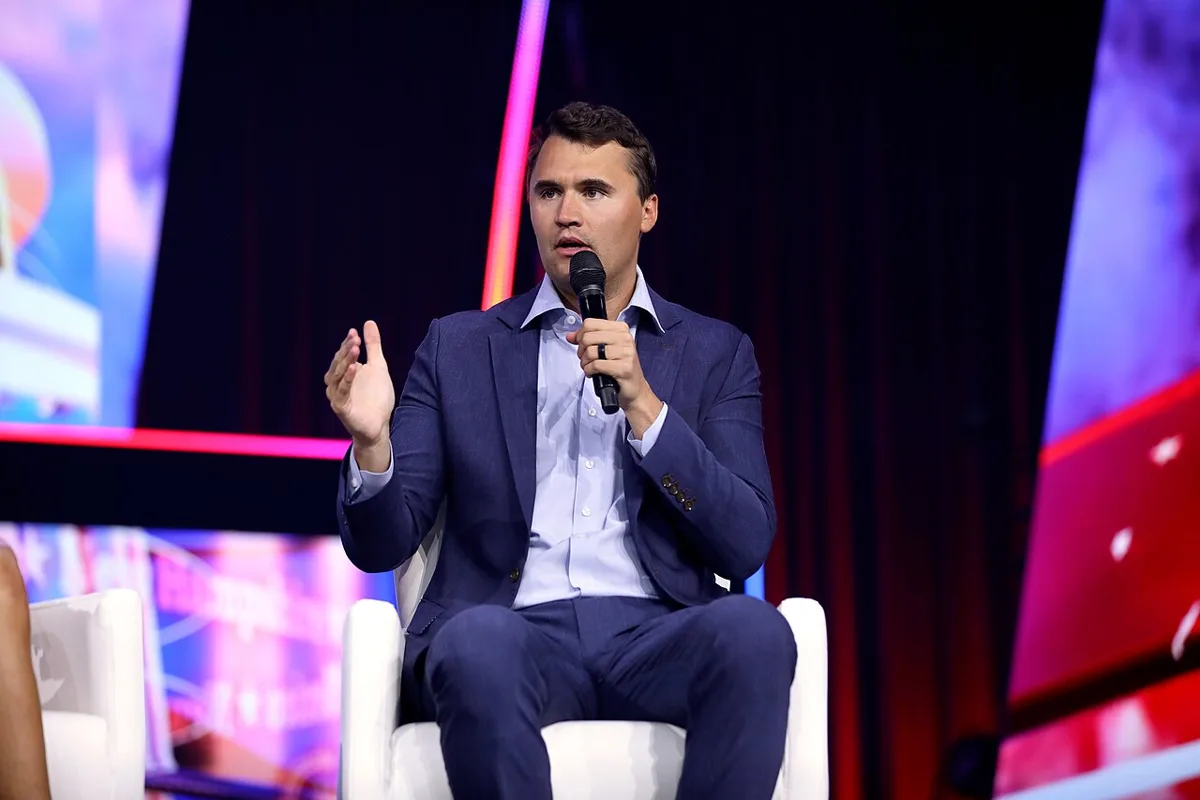
A year after Charlie Kirk was shot dead from a rooftop during a campus rally, his family is pointing the finger at the university that hosted him, the police who secured him, and the state of Utah — arguing that every single one of them could see the danger coming and did absolutely nothing about it. The legal notice, filed on September 9, uses language that is almost physically painful to read: they put a polarizing political figure in an outdoor quad surrounded by tall buildings and called it a security plan. They called it walking him into a fishbowl.
What the Family Is Actually Alleging
The legal notice, first reported by the BBC and its US partner CBS News, names Utah Valley University, local police, the state of Utah, and a collection of university officials as defendants. The core argument is brutally simple: they knew Kirk was a target, they knew the venue was dangerous, and they did it anyway.
According to the filing, the university failed to conduct any meaningful security assessment before the event, failed to station enough officers, and — this one is hard to read — didn't even have an ambulance on site. A man who had received death threats was speaking in front of thousands of people, on a campus surrounded by elevated rooftops, with no ambulance standing by.
The family's attorney, D. Loren Washburn, also drew a line that should have been obvious to anyone planning a Kirk event in 2025: the attempted assassination of Donald Trump by a rooftop shooter had happened the previous year. 'The risk of a rooftop shooter should have been especially top-of-mind,' Washburn wrote. That's not hindsight. That was the news cycle everyone had lived through.
The Shooter and Where That Case Stands
Tyler Robinson, a 23-year-old Utah man, has been accused of climbing onto a roof and shooting Kirk while he addressed a crowd of thousands at the campus quad. Robinson is due in court next month to receive his trial date, according to the BBC.
He has denied charges of aggravated murder — a capital offense in Utah — along with six additional counts. Prosecutors are seeking the death penalty. So while the criminal case grinds forward, the family is simultaneously pursuing civil liability against the institutions they believe created the conditions for the killing.
That's two separate legal fights running on parallel tracks. One to punish the man who pulled the trigger. One to hold accountable everyone who handed him the opportunity.
The University's Response, Which Is Nothing
Utah Valley University confirmed to CBS News that they were aware of the legal notice. Their full statement, in its entirety: 'UVU addresses legal matters consistent with our established processes. Our focus remains on supporting our campus community.'
That is a sentence that says nothing. It is a noise that sounds like words. To be fair to UVU's lawyers, there is probably not a great answer here, given that the venue they approved apparently featured no rooftop security, no ambulance, and no meaningful threat assessment for a man who was, at that moment, one of the most polarizing conservative figures in America.
The university had no further comment.
The One-Year Mark
The legal notice was filed on September 9, one day before the one-year anniversary of Kirk's death. That timing is not accidental. In American civil law, a notice of claim like this is typically a required precursor to a full lawsuit, and filing it on the eve of the anniversary was a deliberate public statement as much as a legal one.
Kirk was 31 years old when he was killed. He had built Turning Point USA into one of the most influential right-wing youth organizations in the country. Whatever you thought of his politics, he was a young man speaking at a college event, and he was shot dead in front of thousands of people who had come to hear him talk.
The BBC has been tracking the broader fallout from his death, including separate reporting on conservative students struggling to fill the void his death created, and workers who lost jobs after posting about him. The impact has been wide. The accountability, so far, has been narrow.
The Dingo Take
You are supposed to believe that nobody saw this coming. That's the implicit defense here, and it is not going to hold up. Trump had been shot at by a rooftop gunman in 2024. Kirk was Trump's self-described close friend and political ally. Kirk received threats. Kirk was placed in an open-air quad surrounded by tall buildings with no ambulance, no meaningful police presence, and no one watching the roofs. The family's attorneys aren't reaching for a theory. They're describing a security plan so thin it barely qualifies as one.
The civil case against UVU and Utah officials is going to be a long, messy legal fight, and universities have deep pockets and longer attention spans than grieving families. But the 'fishbowl' description in that court filing is going to follow every defendant in this case for years. Because that's exactly what it was. Someone looked at the setup, looked at the threat environment, and decided it was fine. It was not fine.
The criminal trial will determine whether Tyler Robinson spends his life in prison or is put to death by the state of Utah. The civil case will determine whether institutions ever pay a price for the kind of negligence that turns a political rally into a killing ground. Both questions deserve serious answers. So far, the university has given us corporate boilerplate. The courts are going to have to do the rest.

Comments