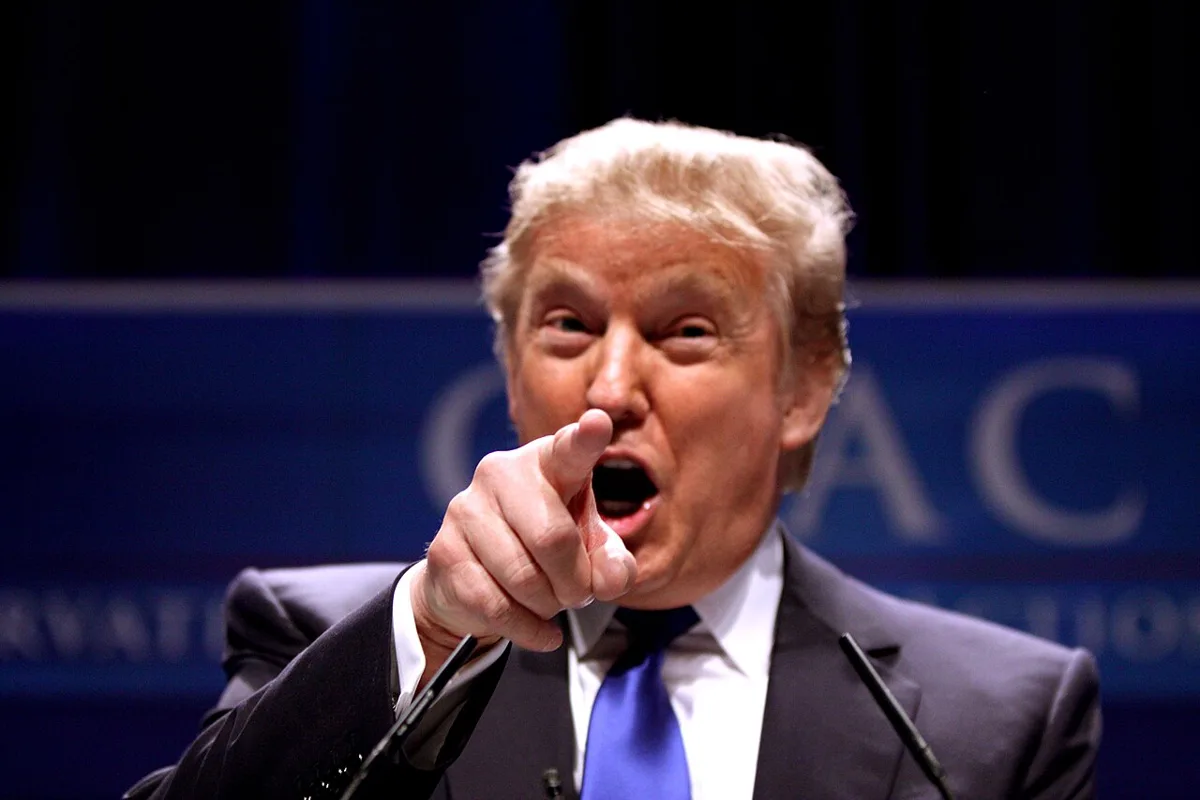
For the second year running, the Trump administration has decided that Palestinian officials don't get to show up to the United Nations — you know, the international body that exists specifically for situations like this. The State Department announced Wednesday it is again denying entry visas to Palestinian Authority and PLO officials ahead of next week's UN General Assembly in New York. Mahmoud Abbas, the 91-year-old president of the Palestinian Authority, will reportedly have to address the gathering by video link. Again.
What the State Department Actually Said
The State Department's statement accused the Palestinian Authority and the PLO of failing to live up to unspecified commitments to the United States, citing their use of international legal bodies — specifically the International Criminal Court and the International Court of Justice — as evidence of bad faith. The department also accused them of "glorifying terrorism."
Read that again slowly. The United States government is punishing Palestinian officials for using the International Criminal Court and the International Court of Justice. The official international legal mechanisms that exist precisely to adjudicate disputes like this one. The administration's position, laid out plainly, is that seeking legal remedies through established international institutions is itself disqualifying behavior.
The full statement framed the visa ban as a consequence of Palestinian leadership's "ongoing activities that undermine the prospects for peace." The Palestinian Authority's foreign ministry fired back Thursday, calling the sanctions an "unjustified measure" that "contradicts the efforts being made to restore trust" and undermines the political groundwork needed for a two-state solution.
The UN Has a Workaround. Barely.
According to the New York Times, the UN General Assembly is set to vote on a draft resolution Thursday that would allow Abbas to address the gathering remotely. That's the institutional equivalent of the world's most important diplomatic forum setting up a Zoom call because one permanent member of the Security Council won't let the invited speaker through the airport.
This is not a small thing. The UN General Assembly is held in New York because the US signed a binding 1947 headquarters agreement guaranteeing that member states' representatives could attend. The United States has obligations here, not just opinions. The Trump administration blowing past those obligations for a second consecutive year is not a policy quirk. It is a deliberate choice to use physical access to American soil as a weapon against a diplomatic body the US helped create.
Last year, Abbas also spoke by video conference, according to The Guardian. So the Palestinian delegation has now been frozen out of two consecutive General Assemblies. The 2026 general debate opens September 22.
Why This Is Bigger Than a Visa Dispute
Strip away the State Department language about "commitments" and "reform" and what you have is this: the US is telling Palestinian leadership they are not permitted to engage in international diplomacy unless that diplomacy goes through Washington first. No ICC. No ICJ. No UN speeches in person. The only channel available is the one the Trump administration controls.
That is not a peace process. That is a chokehold dressed up in press release language.
The Palestinian Authority's response was notably measured given the circumstances. Their foreign ministry statement called the ban "unjustified" but framed it in terms of its damage to trust-building and the two-state solution — the diplomatic framework that, at least officially, the United States still claims to support. Whether anyone in this administration actually believes that anymore is a genuinely open question.
Second Year, Same Play
The Guardian notes this is the second consecutive year the Trump administration has barred Palestinian officials from traveling to New York for the General Assembly. That pattern matters. The first time, you could call it a statement. The second time, it's a policy.
The administration has constructed a neat logical trap: engage international institutions to seek accountability, and lose your visa. Don't engage international institutions, and lose your leverage. Accept whatever the US and Israel offer, or lose access to the only global forum where you have a formal seat. It is a system designed to produce silence, not peace.
The UN general debate starts September 22. Palestinian leadership will watch it from somewhere else, on a screen, for the second year in a row.
The Dingo Take
You are supposed to believe this is about Palestinian reform failures and terrorism glorification. The timing — announced days before the one annual event where Palestinian leaders have a guaranteed global platform — is just a coincidence. The fact that this is the second consecutive year it has happened is just consistency. The State Department's objection to Palestinian officials using the ICC and ICJ, the institutions the international community built specifically to handle conflicts like this one, is just a principled stance. Sure.
What this actually is: the United States using visa policy to kneecap Palestinian participation in international diplomacy, in apparent violation of its own treaty obligations, while simultaneously claiming to support peace. The 1947 UN Headquarters Agreement exists because the world decided, after the last catastrophic failure of international order, that diplomacy needed a protected space. The Trump administration is treating that agreement as optional when it's politically convenient to do so. That should bother people across the political spectrum, because the precedent does not stay contained to one conflict.
Mahmoud Abbas will give his speech on a video call, to an assembly of world leaders gathered in a city he is not allowed to enter. The rest of the world will watch. They are drawing their own conclusions about what American leadership looks like right now, and no State Department statement is going to change that math.


Comments