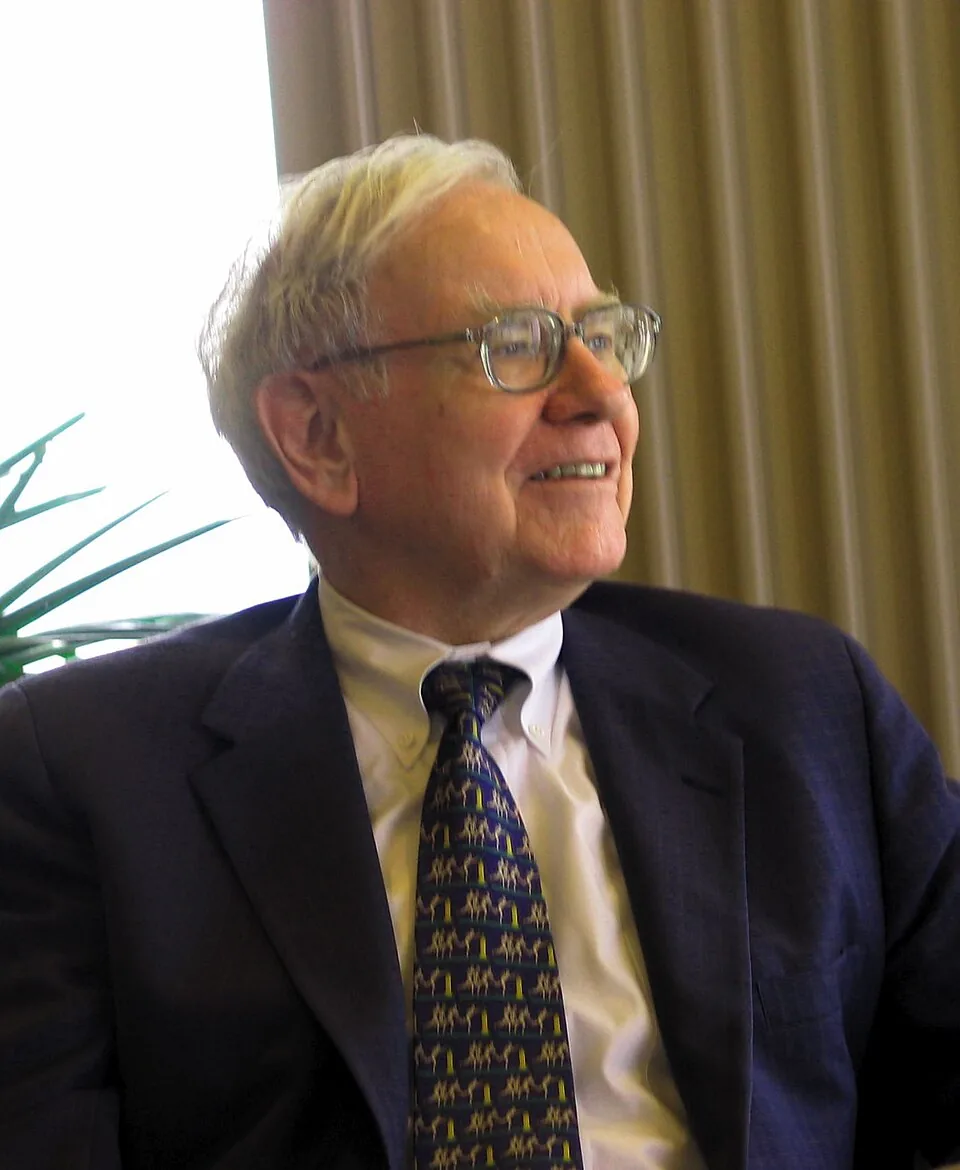
Warren Buffett, 96 years old and still making billion-dollar bets on Alphabet as recently as this summer, announced Friday that he is stepping down as chairman of Berkshire Hathaway after more than five decades in the role. His son Howard takes over immediately. The man who turned a dying textile company into a $145 billion personal fortune is now, officially, chairman emeritus of the empire he built.
What Actually Happened Friday Morning
Berkshire Hathaway released a shareholder letter from Buffett Friday in which the Oracle of Omaha announced he would be vacating the chairman title he has held since 1970. According to CBS News, he will become chairman emeritus and stay on the board of directors, meaning he is not disappearing entirely. He is just, finally, letting go.
Howard G. Buffett, Warren's son, takes over as chairman immediately. As NPR reports, Howard has been a Berkshire board member since 1993, which is longer than most of today's working adults have been alive. Greg Abel, who took over as CEO eight months ago, stays in that role. The org chart is now fully reshuffled.
This is the second major move in a succession plan that Buffett has been quietly executing for years. CBS News notes that when Buffett tapped Abel as CEO in May 2025, it surprised investors because most assumed Abel would not take over until after Buffett died. Buffett, apparently, had other ideas.
The Numbers, Because the Numbers Are Insane
Let's just sit with this for a second. According to NBC News, Berkshire Hathaway's share price rose more than 5,500,000% from the 1960s through Buffett's retirement as CEO. The S&P 500 returned roughly 39,000% over the same stretch. That is not a typo. The index that most professional fund managers cannot beat returned thirty-nine thousand percent, and Buffett lapped it by a factor of more than a hundred.
He built that record starting from a struggling Massachusetts textile manufacturer that most sane investors would have written off. He turned it into a conglomerate that now owns BNSF railroad, Geico, Fruit of the Loom, Duracell, Dairy Queen, and Benjamin Moore, among dozens of others, as NBC News details. The company is worth over a trillion dollars.
And then, this summer, per NBC News, the 96-year-old initiated a new investment in Alphabet that is now worth more than $27 billion. He told CNBC he made a mistake by not buying sooner. At 96. Still doing post-mortems on missed opportunities and writing nine-figure checks.
The Letter He Wrote, and What It Actually Says
Buffett's Friday letter to shareholders is, by any measure, a graceful exit. "Father Time always wins," he wrote, according to CBS News and NBC News. "He has, however, been generous with me. He has given me the opportunity to see Berkshire reach a point where I am more confident than ever about what lies ahead."
He was also specific about why now. CBS News reports that Buffett cited Abel's performance directly, writing: "My expectations for him were sky high from the start, and he has exceeded them. He has taken hold of the Chief Executive Officer job in every respect. He has been making the decisions that matter for some time now, and I have not had to think twice about any of them." That is a full-throated endorsement, not a reluctant hand-off.
Greg Abel, for his part, returned the respect. "Warren's impact on Berkshire and its owners is without parallel in the history of American business," Abel said in a statement quoted by NPR. "The culture Warren built and the values he championed will remain at the heart of Berkshire, and Howard will be their guardian." Corporate boilerplate, yes. Also probably true.
The Succession Plan That Actually Worked
Michael Winters, a professor of management at Notre Dame's Mendoza College of Business, told CBS News that Buffett approached succession the same way he approached investing: methodically, well in advance, without waiting for a crisis to force the issue. "He laid out the pieces of his succession plan years in advance and has carried out the transition step by step," Winters said.
This is rarer than it sounds. Most companies treat CEO succession like a fire drill: everyone knows they should have a plan, nobody actually has one, and when the moment arrives it becomes a boardroom soap opera. Buffett spent years signaling Abel's role, cultivating Howard as a board presence since 1993, and stepping back from operational decisions gradually rather than all at once.
NBC News notes that the company itself said, when Buffett gave up the CEO title eight months ago, that he planned to hold onto the chairman title. Friday's announcement means he moved faster than expected on that too. The man runs ahead of his own schedule.
The Part Where He Gives It Away
At 96 and with a net worth north of $145 billion, Buffett ranks as the 10th richest person in the world, according to the Bloomberg Billionaires Index as cited by CBS News. He is also one of the most aggressive philanthropists alive. NBC News reports that over roughly a decade he donated nearly $50 billion to the Bill and Melinda Gates Foundation alone.
He also co-created The Giving Pledge, a public commitment for the ultra-wealthy to donate the vast majority of their fortunes. His own pledge: "More than 99% of my wealth will go to philanthropy during my lifetime or at death," per NBC News. Whatever you think about billionaires, that is not the behavior of someone hoarding it.
The Dingo Take
You are supposed to believe that the American economy rewards talent and patience and long-term thinking. Warren Buffett is the single most effective argument for that belief, and also the guy who will make you feel terrible about your 401(k). He bought a failing textile company six decades ago, ran it like a quiet midwestern obsessive, and compounded his way to a trillion-dollar empire by simply refusing to do anything stupid. The 5,500,000% return is not a boast. It is a rebuke of an entire industry of people who charge fees to underperform an index fund.
What is actually striking about Friday's announcement is how undramatic it is. No board revolt. No activist investor circling. No awkward public deterioration forcing the issue. A 96-year-old man wrote a letter, said his successor is doing great, mentioned that time eventually wins, and handed over a title he has held for 56 years. The succession worked because he planned it like a portfolio: diversified, patient, stress-tested over years rather than weeks.
Howard Buffett as chairman is not a power grab or a vanity move. By the terms Berkshire has always laid out, the chairman role is meant to be a cultural guardian, not an operator. Greg Abel runs the company. Howard protects the ethos. Warren watches from the board and presumably still calls CNBC when he spots a missed opportunity. Which, given the Alphabet call at 96, he absolutely will.



Comments