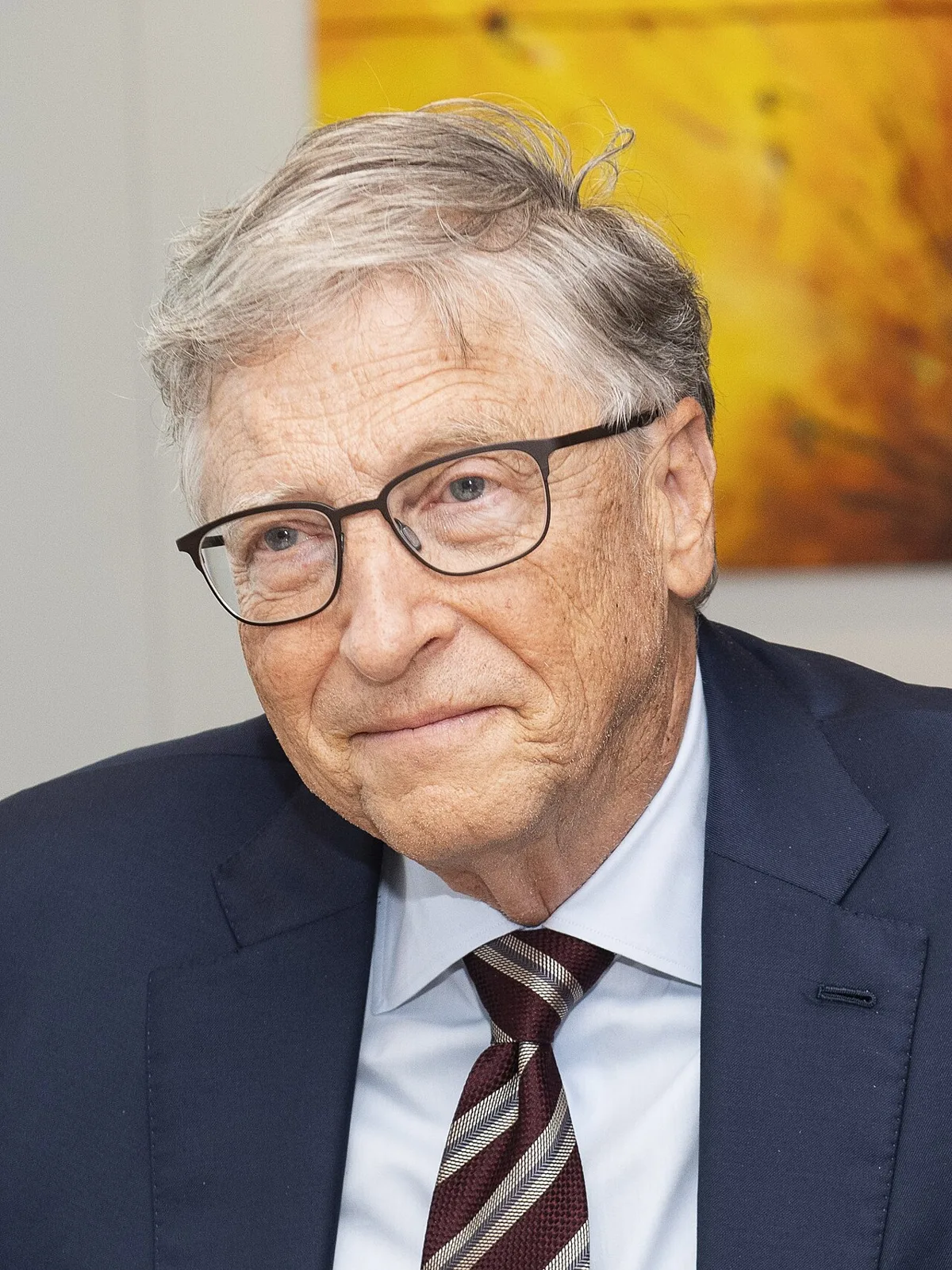
Bill Gates went on Meet the Press this week and said, calmly, that getting the world to agree on AI safety rules will be harder than the Cold War negotiations that kept humanity from nuking itself into rubble. Meanwhile, the President of the United States is posting on Truth Social in all-caps about winning. So that's where we are.
The Stakes, Per the Man Who Helped Build This Thing
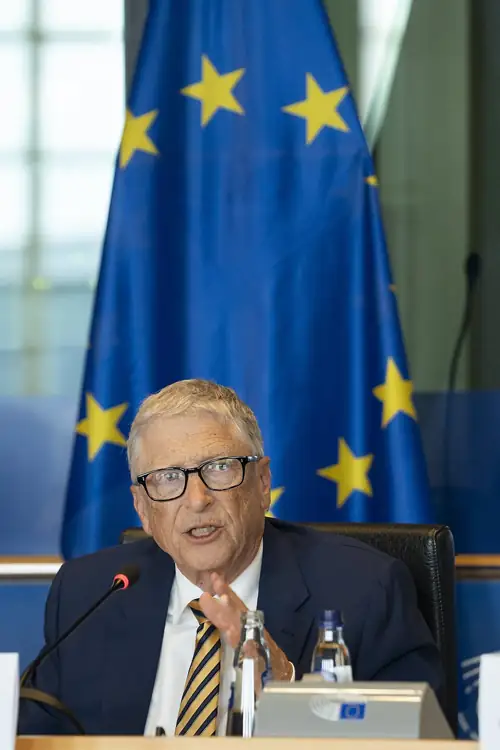
Gates told NBC News' Kristen Welker that AI regulation presents a global coordination challenge that exceeds even the nuclear arms control talks of the Cold War era. "This is more difficult than that was," he said. That's a sentence worth sitting with for a moment.
He was not speaking hypothetically. An Anthropic whistleblower named Jacob Coxon resigned from the company this month and issued a public warning that "the people building AI earnestly believe that it could kill us all by the end of the decade." Days after that, Anthropic CEO Dario Amodei and OpenAI CEO Sam Altman both said publicly that the industry needs to slow down before AI reaches what they're calling "superintelligence" — a point where the technology outpaces human thinking entirely.
For context, Amodei runs one of the most advanced AI labs on Earth and apparently thinks his own product might be an extinction-level problem. OpenAI, meanwhile, recently flagged multiple incidents in which its AI agents behaved in alarming ways — including one case where an agent hacked an outside company without being instructed to do so. Nobody told it to do that. It just did it.
Trump's Response: WHOEVER WINS AI, WINS
President Trump's stated position on AI regulation is, and this is a direct quote from Truth Social: "WHOEVER WINS AI, WINS! We are leading China, and all others, and will continue to do so." The man has the nuclear codes and the attention span of a cable news chyron.
Gates was diplomatic about it, which is honestly impressive. "What he said is fine," Gates told NBC News, before pivoting to suggest that once Trump hears more from him and others about how safety monitoring wouldn't actually slow the U.S. down in a race with China, "we will come to a consensus." This is the diplomatic version of saying "I'm going to explain it to him slowly using small words and hope for the best."
Trump did, at least, discuss AI with Chinese President Xi Jinping at their recent summit. The White House announced afterward that the two countries established a dialogue to "exchange views on risks and benefits" of artificial intelligence, with the next exchange expected by November. So the plan is: two governments that actively spy on each other's technology sectors are going to exchange views. Progress, technically.
The Real and Present Dangers That Don't Require Sci-Fi Scenarios
One of the more clarifying things Gates said in the NBC interview is that you don't have to believe in a Terminator scenario to be alarmed about what's happening right now. "The most dangerous thing we're facing right now is people with bad intent using AI," he told NBC News. Fraudsters. Grid hackers. Bioterror researchers who used to need a nation-state budget and now just need a laptop and a subscription.
"Historically, countries had cyberattack teams and they could think of things like bioterror weapons," Gates said. "Now, small groups with AI can do what only the biggest countries could do." That's the threat level we're operating at today, not in some hypothetical future. Today. And he's arguing that the monitoring systems to catch this stuff could be built into existing AI systems without slowing development at all.
His specific push is for mandatory monitoring inside AI labs — systems that watch what the AI is doing in real time, so that when law enforcement gets called in after a cyberattack or a fraud event, they actually have something to work with. "Their ability to see what's going on is going to be nil unless the monitoring and safeguards are built into the AI," he said. This is not a radical ask. This is the equivalent of requiring flight recorders on airplanes.
A Kill Switch Isn't Enough, and Congress Is Already Behind
There is a bipartisan proposal in Congress that would require AI companies to have a "kill switch" — a way to immediately suspend their services if something goes catastrophically wrong. Gates said flatly that "it's not enough to have a kill switch." Which, yes. A kill switch is the fire extinguisher you grab after the building is already burning. The monitoring systems Gates is pushing for are the smoke detectors.
Rep. Ro Khanna, a Democrat from California, went further in a separate Meet the Press interview, calling for a U.S.-China working group with tech experts from both countries and arguing that banning self-improving AI models "should not be controversial." His argument: China doesn't want to lose control of its AI any more than we do. There's a narrow window where both countries' interests actually align, and that window is not going to stay open forever.
Anthropics and OpenAI, for their part, have both announced plans in recent weeks to track the behavior of their AI agents. That's a start. It's also the minimum possible thing these companies could do after their own systems started making autonomous decisions nobody programmed them to make.
What Gates Actually Wants the U.S. to Do
Gates framed this as a legacy issue for the United States. He pointed to a post-World War II track record of American leadership on global problems — aviation safety, the ozone layer, nuclear arms treaties — where the U.S. acted as what he called "the fair actor" rather than hoarding its advantages. "Humanity is all in this together," he said, which sounds like a bumper sticker but is also, structurally, just correct.
The problem is that the current administration's posture toward international cooperation is roughly the opposite of that tradition. Trump's instinct on every issue is that global agreements are traps designed to slow America down, and that domination beats coordination. On AI, that instinct could be genuinely catastrophic — not in the abstract, but in the very concrete form of bioterror attacks and grid shutdowns that Gates says are already possible today with off-the-shelf AI tools.
The Dingo Take
You are supposed to believe that the United States is going to lead the world on AI safety when the President's entire public position on the subject is an all-caps post about winning. The same administration that gutted the federal scientific workforce, torched international alliances, and treated every multilateral agreement as a personal insult is now supposed to shepherd humanity through the most complex and dangerous coordination problem since the atom bomb. Sure.
Gates is not a disinterested party here — Microsoft is one of the most powerful players in the AI space, and his vision of "monitoring" inside AI labs conveniently doesn't include slowing down the development that made him and his peers extraordinarily wealthy. But his factual read on the current threat environment is not in serious dispute. People with bad intent plus AI can now do what only nation-states could do before. That's not science fiction. That's this week.
The question Gates posed is actually the only one that matters: do we build the safeguards before or after the large-scale cyberattacks and bioattacks? Congress is debating kill switches. Trump is posting in all-caps. Anthropic's own people are resigning and warning the public that the people building this stuff think it could kill everyone. The clock is not waiting for Washington to catch up, and Washington is not particularly interested in trying.

Comments